Victoria’s Great Forest Experience – Melbourne’s New Playground
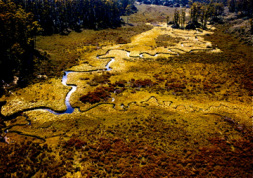
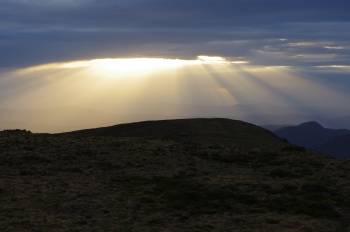
Baw Baw plateau
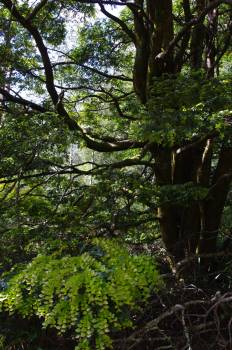
Just 60 kilometre’s East of Melbourne there grows some of the tallest tree’s on earth. In their high canopy a plethora of gliders, owls and the tiny Leadbeater’s Possum dwells. These forests have flourished along the great divide under rich rainfall patterns and provide most of Melbourne’s drinking water. The forests been scientifically shown to be the most carbon rich forests on earth due to their cooler climate and epic growth heights.
The new Great Forest National Park is a proposal to create a two tiered park system for bush users and bush lovers alike that protects and maintains this important ecosystem function. The park stretches from the Kinglake National Park right through to the Baw Baw’s and to the North East up to Eildon. The park will host a range of activities such as bike riding, bushwalking, bird walking, 4wd driving, camping, zip line tours and more.
This proposal comes from Healesville Environment Watch, My Environment and Friends of Leadbeatters Possum.
Changes are afoot to dramatically wind back cornerstone federal environmental protection laws. Under these changes, State Governments would be given sweeping powers to assess and approve major development projects. If implemented, these changes would be a disaster for our nation’s environment and wildlife.
In 1999, the Howard Government introduced the Environment Protection and Biodiversity Conservation (EPBC) Act. It was meant to protect environmental areas and wildlife that were so important, and so at risk, that their existence was of national importance.
Since it was introduced, the EPBC Act has saved only a few wild places from mining and other development. Many thousands of developments have gone ahead.
Australia’s environment is now under unprecedented attack. Nine open cut mines are planned for Tasmania’s pristine Tarkine forests. The Broome community are battling the construction of a massive gas hub at James Price Point that would mark the beginning of the industrialisation of the Kimberley . The Great Barrier Reef is becoming a coal and gas highway, and could lose its World Heritage status.
The State of the Environment Report 2011 paints a grim picture. More and more endangered species are moving closer to extinction, and we are losing our precious places.
40 years backwards
This is the most serious attack on environmental protection in over 40 years. It doesn’t take much imagination to see what the environmental implications of state decision-making would look like for our environment. In Queensland, Premier Campbell Newman has opposed any delays to coal projects, saying that Queensland is “in the business of coal”.
In Western Australia, four out of five Environmental Protection Authority decision-makers on the proposed James Price Point gas hub had to disqualify themselves because of conflicts of interest; the single remaining member, unsurprisingly, approved the proposal.
In Victoria, intervention by Federal Environment Minister Tony Burke was required to stop Premier Baillieu from overturning the previous government’s ban on alpine grazing, to reintroduce cattle into national parks under the guise of a ‘grazing trial’ that was likened to ‘scientific whaling’. Meanwhile, the New South Wales Government has changed laws to permit private hunters to shoot in national parks and allow fishing in critical grey nurse shark habitat.
The major environmental victories of past decades have largely been won by the Federal Government overturning bad development decisions by state governments. Without strong federal laws, the Franklin River would be dammed, the Great Barrier Reef would have oil rigs and Fraser Island would be a sand mine.
Yet later this year, the Council of Australian Governments (COAG) meets to agree to the framework for handing over of approval powers to the states. Decisions about renewing Regional Forest Agreements could be made at any time.
We need decision-makers to hear our voices now. Friends of the Earth is mounting a campaign − ‘Nature: Not Negotiable’ − to prevent the gutting of federal environment laws and to strengthen the federal government’s role in protecting the natural environment.
This campaign includes mobilising around the upcoming COAG meeting, organising with local campaigns, lobbying and community campaigning.
For more information on this work or to get involved, please email lauren.caulfield@foe.org.au
You can also find us on Twitter @naturenotneg or on Facebook at ‘Nature: Not Negotiable’.
Please support our campaign to ensure these powers are not undermined.
This article comes from The Age, journalist is Bridie Smith, April 19, 2012
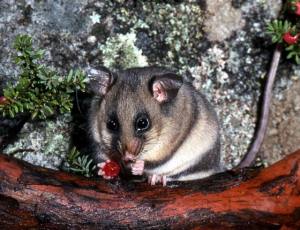
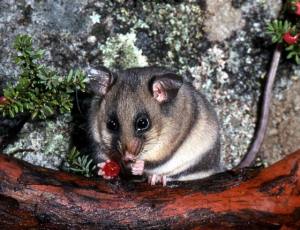
Mountain Pygmy-possum (Burramys parvus). Source: Department of the Environment and Heritage
POSSUM Researchers have intervened in an emergency move to deepen the gene pool of one of Australia’s rarest marsupials, the threatened Mountain Pygmy-possum. Studies showed as few as two or three males from the isolated Mt Buller population were successfully mating with females each year, contributing further to genetic depletion of the threatened species.
However scientists from the DSE and Melb Uni have combined to ‘genetically rescue’ the Mt Buller population by removing six males from Mt Hotham and introducing them to the females on Mt Buller.
They have since tested the results of this intervention – and this year found that half the offspring are hybrids (Dad from Mt Hotham, Mum from Mt Buller). It’s good news, as the hybrids are genetically more robust than pure Mt Buller animals.
This article was written by David Bain orignally published as the first of the Global Snapshot series, bi-weekly essays written by Protect Our Winters (POW) supporters, which give their local perspective of climate change.
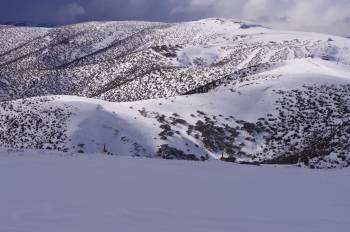
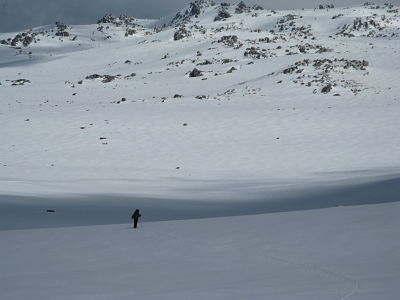
The home of our snow industry is a unique and highly specialised sensitive alpine environment. So sensitive is much of our alpine environment that motorised vehicles of any kind are basically not allowed outside of the resort boundaries.
This environment is unique partly as a result of the old age of the mountains and lack of mountain building, being in the middle of a continental plate. Only minor glacial activity has occurred, being last present between 10,000 and 30,000 years ago. The total area of the true alpine environment (above the tree line) is small, approximately only 770 km2, which is found as a series of ‘islands’ on top of mountains within a sub-alpine ‘sea’. In the order of some 6,500 km2 of alpine and sub-alpine areas annually receives some snowfall. Our endemic alpine species have largely evolved in isolation from other continents and often on isolated mountain tops only tens of kilometres apart.
The following comes from the Australian Alps national parks Co-operative Management Program.
“The Australian Alps Education Kit is designed for students, teachers and anyone else keen to learn about this spectacular region of Australia. These educational materials form an organised resource focusing on iconic, awe-inspiring and accessible areas within the Australian Alps.
The contents range from the resilient yet fragile plant communities that grow in the harsh alpine environment, to thecultural impact of the Snowy Mountains Hydro-electricity Scheme; and from the First People’s connection with the mountain landscape to the Alps’ cycles of weather and climate”.
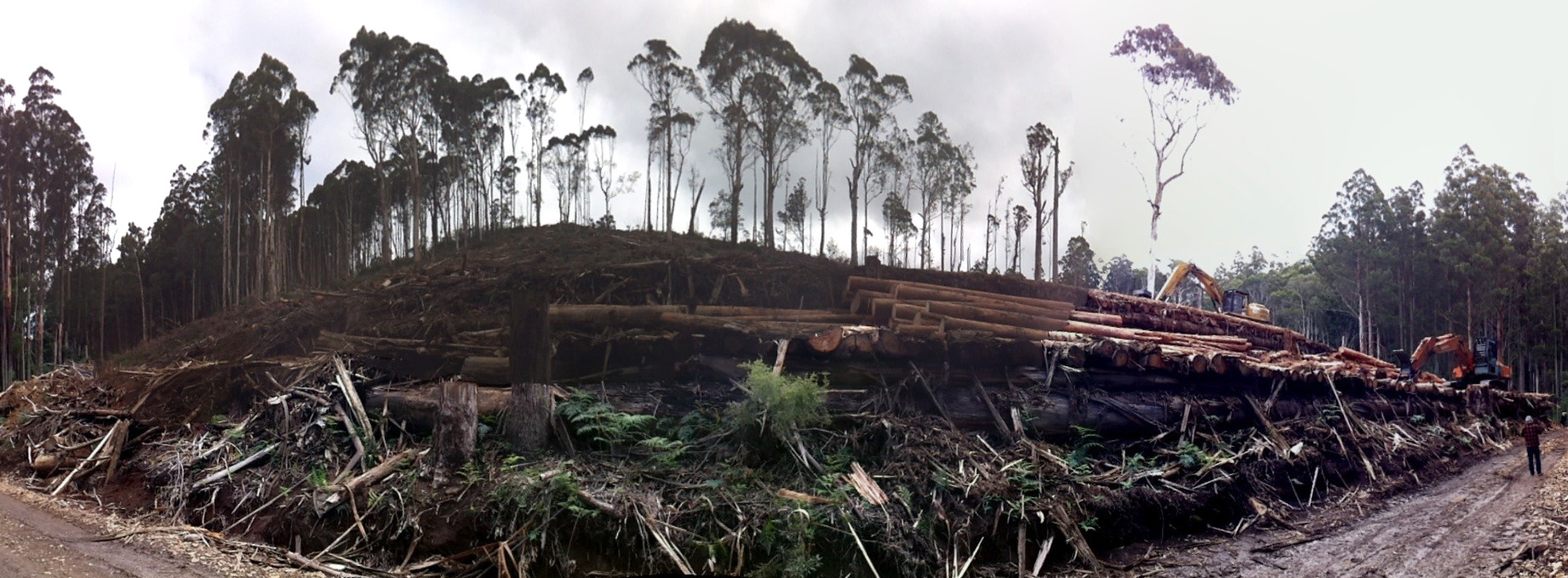
For the past two days, more than 30 people from the Central Highlands Action Group and local Toolangi and Healesville residents have been occupying a large logging coupe on Yellowdindi rd in Toolangi state forest.
Two 30m tree sits, which are suspended by ropes attached to two log-harvesters and two ‘bunnies’ with their arms locked through the tracks of a third machine have ensured that no clear-felling took place in the coupe on Monday January 16.
Much of the Toolangi forests were burnt in the fires of 2009. One Toolangi local said that “residents are concerned that following the Black Saturday fires in 2009 that clear-fell logging in the area will increase the risk of mega-fires due to the large amount of wood waste which is left behind in coupes. The resulting mono-species regeneration after logging operations is far more combustible than the mature age forests which are being removed. This is a recipe for further fire disasters”. They point to research by eminent forest ecologist Dr David Lindenmayer, which clearly indicates that clear-felling practices in the Central highlands notably increases fire risk and thus threatens the whole region.
Activists also point to other values of the forests: “These forests give us protection against climate change and provide habitat for native fauna which is such a feature of this area.”
Mountain Pygmy-possum (Burramys parvus). Source: Department of the Environment and Heritage
This article comes from The Age. Journalist: Bridie Smith.
Since 2007, the mountain pygmy possum captive breeding program at Healesville Sanctuary – the only one of its kind in Australia – has been breeding hybrid animals, with one parent from Mt Buller and the other from Mt Hotham.
The first hybrid litter was born in 2008. Now, Melbourne University researchers have shown for the first time that hybrid males are fertile – providing a vital new path for boosting the species’ genetic diversity.




Recent Comments