Search

Mountain Journal

Environment, news, culture from the Australian Alps

Tag

national parks

Parks closed during COVID-19 shutdown

WED April 8: As part of the shutdown to help ‘flatten the curve’ and reduce the numbers of C-19 infections, a large number of areas in the High Country are being closed over Easter and beyond.

Government advice continues to be ‘If you can stay home, you must stay home’, meaning no travel for holidays, camping, etc.

VICTORIA

In Eastern Victoria
• Alpine National Park
• Baw Baw National Park
• Howqua Hills Historic Area
• Mount Buffalo National Park

Are all closed from midnight on April 8 ‘until further notice’. Further details here.

NSW

NPWS has closed all campgrounds, camping, on-park accommodation venues and visitor centres in Kosciuszko National Park until further notice.

This includes ‘wild and backcountry camping’ in all national parks.

In line with government restrictions on non-essential travel, the following iconic attractions in Kosciuszko National Park are closed for Easter:

  • The summit of Mount Kosciuszko
  • Thredbo Valley track
  • Kosciuszko Lookout
  • Cootapatamba Lookout

Further information here.

ACT

All visitor facilities within the ACT Parks and Conservation Service managed estate have been closed until further notice in response to a temporary shut-down of non-essential services across the ACT.

To stop the spread of COVID-19, the following facilities are closed to maintain social distancing measures:

  • Tidbinbilla Visitor Information Centre
  • Namadgi Visitor Information Centre
  • Woods Reserve
  • All ACT public campgrounds
  • All playgrounds managed by ACT Parks and Conservation Service

Tidbinbilla Nature Reserve will also be closed, along with Namadgi National Park, which remains closed due to safety reasons following the Orroral Valley bushfire

All other parks and reserves across the ACT will remain open providing the community access to nature for recreation, health and wellbeing. Park visitors must observe social distancing whilst visiting parks and reserves. This means keeping 1.5 metres from others, avoiding large groups of people, avoiding peak usage periods and practicing good hygiene always.

Further details here.

TASMANIA

In an effort to prevent the spread of COVID-19 and keep our community safe, the Tasmanian Parks and Wildlife Service (PWS) has closed all national parks and reserves to public recreational use.

The closure of parks and reserves was in line with Tasmanian and Federal government measures to discourage the community from undertaking non-essential travel during this time. These closures include Wellington Park.

This includes:

  • National Parks
  • State Reserves
  • Nature Reserves
  • Game Reserves
  • Conservation Areas
  • Nature Recreation Areas
  • Regional Reserves
  • Historic sites.

All activities including day or overnight walks, mountain biking, hunting, other recreational activities and camping are now closed to the public until further notice.

Further information.


Fast tracking development in Tasmania’s wilderness

The ongoing attempts by the Tasmanian government to encourage commercial developments in the state’s national parks and wilderness areas continues. While the high profile ‘helicopter tourism’ proposal planned for Lake Malbena on the Central Plateau has dominated the conversation in the last few months, a broader threat to the integrity of the reserve system is becoming apparent.

This relates to the draft Land Use Planning and Approvals Amendment (Major Projects) Bill 2020, which could facilitate these type of developments by ‘fast tracking’ such proposals.

The Wilderness Society condemned the Tasmanian Liberal Party’s ‘plan to strip away Tasmania’s already questionable planning safeguards, to further reduce the public’s role in planning and fast-track development proposals in national parks’.

They say there are ‘30 or so national park privatisation proposals’ (commercial tourism) in the pipeline for the World Heritage Area’. If this legislation gets through parliament, there is a fear that many of these proposals could be fast-tracked and with very little opportunity for the public to have input to the decision making process.

Continue reading “Fast tracking development in Tasmania’s wilderness”

Re-homing not enough to stop Kosciuszko’s feral horse crisis

Like climate and energy policy in Australia, the alpine environment of the Snowy Mountains has fallen victim to a bizarre culture war. Conservative political parties have pandered to small groups of backwards looking constituencies, and ignored their obligations to the broader community. In the case of the Snowy Mountains, the NSW Coalition have sided with groups who think that wild horses have a cultural value that trumps their negative ecological impacts. So they have declared that feral horse populations should be protected and allowed to keep growing in numbers within the park. As a result, there has been no trapping of feral horses in the park since August 2017.

This is a poor decision on ecological grounds, and a major campaign has been mounted against this decision. Now the state government has ‘blinked’ and said they will start to remove some horses from Kosciuszko National Park and ‘rehouse’ them. However, the Invasive Species Council has warned that this plan will ‘barely make a dint in the growing number of feral horses running rampant in the park’.

The following media release comes from the Reclaim Kosci group:

Continue reading “Re-homing not enough to stop Kosciuszko’s feral horse crisis”

NSW Parliament petition highlights government inaction on Kosci horses

The NSW government’s Wild Horse Heritage Act has undermined 75 years of protection of water and alpine species by treating wild horse populations as a cultural icon that must be protected. Now, the repeal of the Act is is being debated by the NSW parliament following the tabling of a petition of more than 12,000 signatures.

While scientists and land managers are clear in pointing out the negative impacts of the horses, the NSW government has chosen to put politics over sensible land management decision making. The original Bill was proposed by the National Party. The current debate highlights the tension in the Coalition, whereby at least some in the Liberal Party can see the dangers of allowing wild horse populations to flourish in our alpine regions. However, Deputy Premier John Barilaro used the government’s majority to vote against the petition being ‘noted’.

Continue reading “NSW Parliament petition highlights government inaction on Kosci horses”

‘Eternal vigilance is the price of Freedom’

Tasmania has a world class conservation system. From the South West Wilderness to the Central Plateau, to the Ben Lomond tablelands, it is brimming with wonderful landscapes that are protected as national parks, world heritage or other forms of park. But these parks didn’t just happen. All of them are the result of tireless work by many thousands of people, sometimes over decades.

From the attempts to stop Lake Pedder from being flooded in the 1970s, the Franklin River campaign of the early 1980s, and the long forest campaigns that followed in places like the Styx, the Florentine, Lemonthyme, and the Great Western Tiers, through to the current attempts to ensure proper protection for the Tarkine / takayna region in the north west, people have campaigned for decades to see these areas protected for all time.

Climate change poses an existential threat to many of the natural ecosystems currently protected in the park network. But there is also a pushback by government and some vested interests and sections of the community against the basic notion of protecting these places.

Continue reading “‘Eternal vigilance is the price of Freedom’”

Tourism: Is more always better?

In New South Wales, the number of visits to the state’s national parks is topping more than 60 million for the first time. This is great news for regional economies – these visits generated as much as $21.35 billion in spending. It also puts pressure on our national parks and other natural areas. This highlights the need for governments to provide adequate funds for the upkeep of our parks and to manage the impacts of ever more visitors on the natural systems in the parks.

There is an interesting program underway in Colorado, which is seeking to decentralise the visitation of tourists rather than encourage more people to visit. Colorado is a huge tourism destination and this generates enormous income. However, it also causes problems for roads, resorts, national parks and local residents. In 2017, the Colorado Tourism Roadmap transformed the state’s call to encourage more tourists to visit into a more focused campaign promoting sustainable travel experiences.

Continue reading “Tourism: Is more always better?”

‘Kosciuszko National Park is lurching towards a crisis’

Wild horse populations pose a significant threat to alpine and sub alpine areas across the Alps. However in NSW, a campaign to have the horses protected because of their ‘cultural’ status means that impacts are growing significantly within Kosciuszko National Park. Now horse removal from the park has stopped for a second year in a row because of an intervention by NSW Deputy Premier, John Barilaro.

Andrew Cox, the Invasive Species Council CEO, has called this a “shameful back-down for a government claiming to prioritise protection of the environment.”

Continue reading “‘Kosciuszko National Park is lurching towards a crisis’”

National parks need ‘at least one per cent of state expenditure’.

As the issue of feral horses in Kosciuszko National Park demonstrates, winning protection of an area in a park is only the first bit of protecting wild places. They need adequate funding to allow land managers to protect their ecological values. This has been highlighted recently by the Victorian National Parks Association (VNPA), who have pointed out the many threats to parks (weeds and pest animals such as deer, pigs, foxes and cats, and human visitation, plus climate change).

The Coalition cut funding for parks while they were in power in Victoria and while funding has increased under the current ALP government, the VNPA believes funding needs to double if parks are to be adequately managed.

Continue reading “National parks need ‘at least one per cent of state expenditure’.”

Kosciuszko National Park turns 75

On April 18, Kosciuszko National Park will turn 75. We have to be grateful to the community members who argued for the creation of this park, and the government of the day who created it. Cattle were previously allowed to graze on the Main Range, the ‘roof of Australia’, and the damage has taken many decades to heal.

Sadly, seven decades on, the park faces threats from climate change and invasive species like wild horses. This release from Reclaim Kosci outlines the ongoing threat posed by feral horses.

Continue reading “Kosciuszko National Park turns 75”

Taungurung sign Native Title deal with VIC government

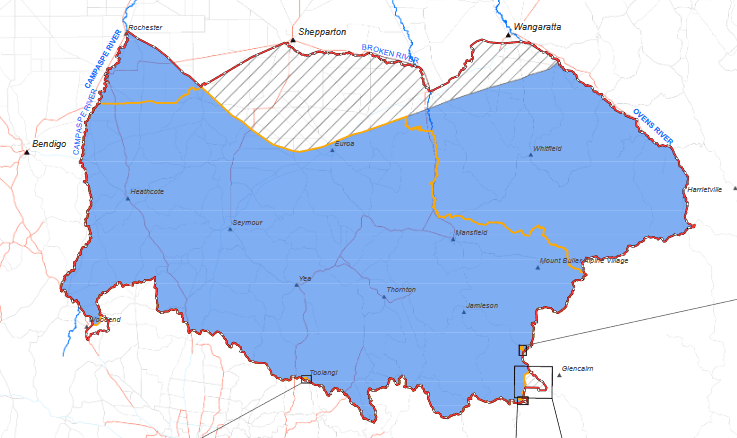
Victoria has signed the largest native title claim in the state’s history, recognising the Taungurung as traditional owners in across large sections of northern and north eastern Victoria and awarding a settlement of more than $33m. The agreement covers sections of the high country and Alpine National Park, including Mt Buller, Mt Cobbler and the Buffalo Plateau.

Continue reading “Taungurung sign Native Title deal with VIC government”

Keep It Wild

Australians have campaigned for decades to protect our remaining wild ecosystems. From the Franklin River to the Daintree, Arnhem Land to the Alps to south west WA, many hundreds of campaigns have seen the creation of an incredible conservation estate. But as the saying goes, the price of freedom is eternal vigilance. Now we must be ready to defend these wild places, which once seemed safely preserved, from a range of new threats. The obvious one is climate change. But there is also a more localised and immediate threat: there are many plans to open up reserves to logging, commercial tourism and mining.

These proposals are being resisted locally wherever they arise. But unless you’re a part of a local group it can be hard to know about what threats are arising and where.

Keep It Wild is a great initiative which seeks to bring together the various threats to the conservation estate to help people to get active.

Continue reading “Keep It Wild”

Emerald Link film launched

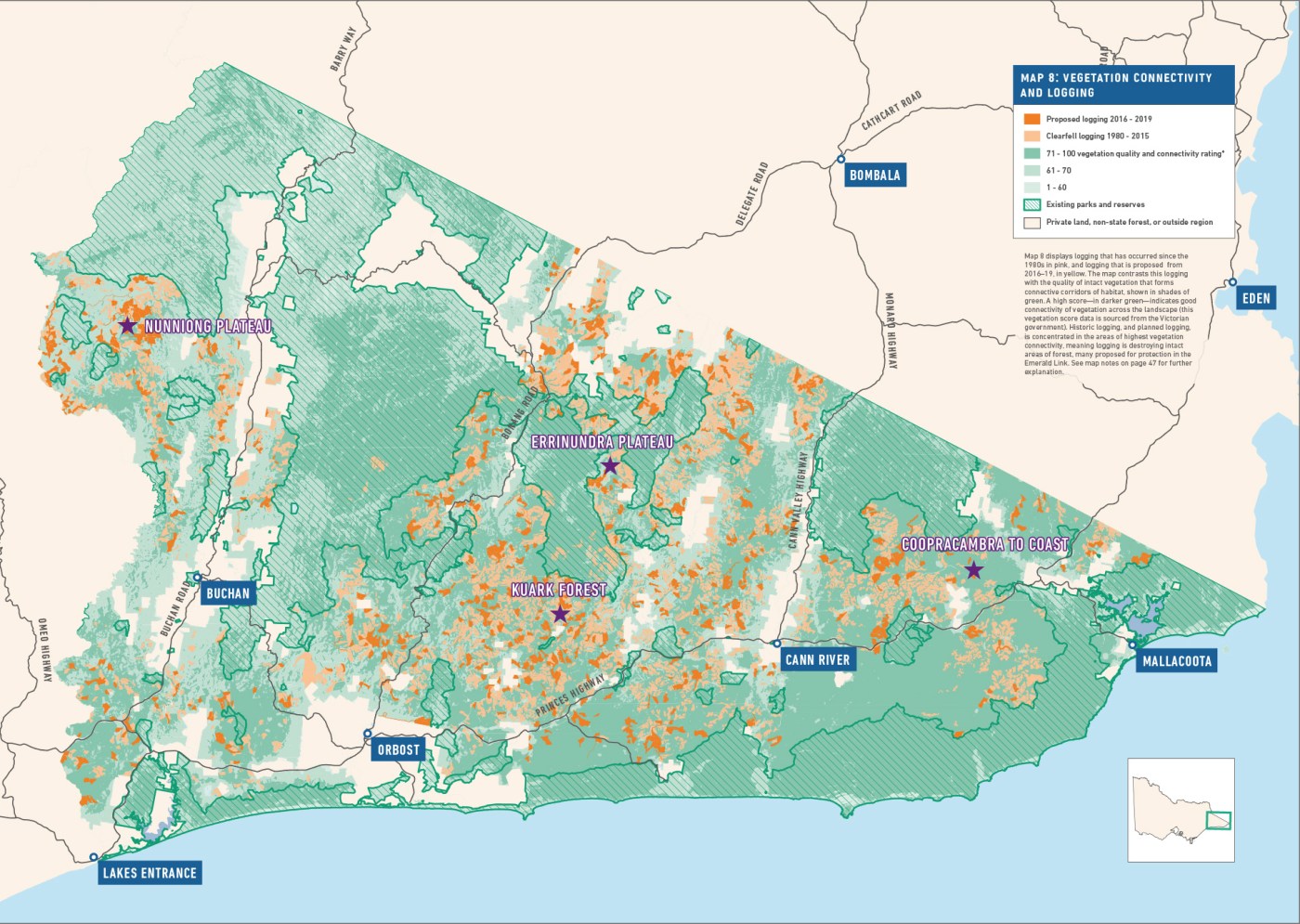
The idea of the Emerald Link – a park that would connect the coastline of far East Gippsland with the mountains in the Errinundra Plateau – has been around for a while now. This week a film on the vision was launched.

You can watch the film here >>https://www.emeraldlink.com.au/

You can get involved and active to make the Emerald Link a reality. Join us at this information night on August 15th in Melbourne. Info here https://www.facebook.com/events/1749030375132344/

Blog at WordPress.com.

Up ↑