I work with Friends of the Earth, and live in Castlemaine in Central Victoria, Australia. Activist, mountain enthusiast, telemark skier, volunteer firefighter.
Image: GECO. NB: this photo is from the Dec 12 action
Environmentalists have halted logging in state forest on the iconic Errinundra Plateau in East Gippsland. One person has climbed a tree more than 40 metres, and sits on a platform tied to machinery.
“Until recently this area of forest was reserved as a special protection zone, it contains a number of different forest types and is of high conservation value. It also contains old growth forest and is a known site for the endangered powerful owl.” Said David Caldwell, spokesperson for Goongerah Environment Centre (GECO)
“This area was made available for logging in 2011as part of changes to the informal reserve system. This process swapped a large number of forest areas reserved for specific values, for areas that don’t reflect the same value. This has been something of a lifeline to the logging industry, who have repeatedly shown poor management of Victoria’s forests at the expense of the taxpayer.” He said.
“This is another example of forest destruction in the face of evidence of threatened species. Our native forests are becoming degraded and without areas like this one, they won’t be able to provide our endangered animals with a chance to survive. This is a looming extinction crisis that is being assisted by forest agencies around the nation.” Said Miranda Gibson spokesperson for Still Wild Still Threatened.
Today’s action is the latest in a series of actions over the last week, known as Fearless Summer, a coalition of grassroots environment groups, committed to an end to industrial scale native forest logging and export woodchipping.
The following information comes from the Victorian National Parks Association. A number of significant environmental decisions will be made by the federal environment minister before Christmas, with the danger that they will slip through relatively unnoticed and unreported.
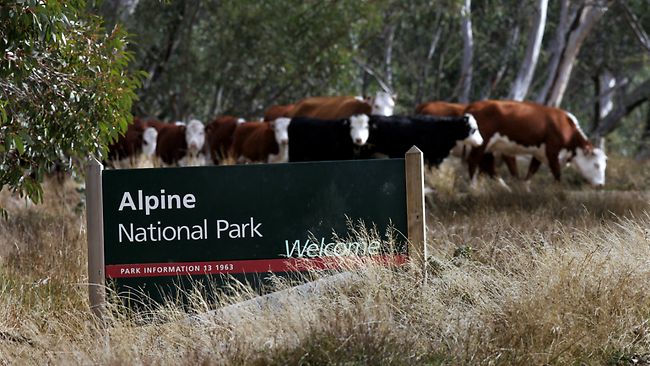
If approved, it can be expected that cattle will be introduced over summer. Last time the Victorian Coalition government introduced cattle to the Alpine Park, they did so without setting in place adequate scientific frameworks to the trial. They had been clearly told that grazing would not be useful in reducing fire risk, yet proceeded to implement their policy.
The fact that the government has withheld information from the federal minister in their current attempt to reintroduce cattle is hardly the basis for assuming this trial will be any more scientifically robust.
Over the next few days Australia’s environment minister Greg Hunt must decide whether or not he will let the Victorian Government put cattle back into the Alpine National Park.
After failing to return cattle to the Alps in both 2010 and 2011 the Napthine Government is again asking the federal government to approve a new cattle grazing trial in the Alpine National Park.
They plan to bring 60 cattle into the remote Wonnangatta Valley, a beautiful river flat that sits below the Howitt High Plains and has been ungrazed by cattle since 1988.
We need your help. Please take action today or as soon as possible:
We cannot allow this grazing trial to go ahead.
The Victorian Government wants to put cattle into the park simply because of a promise it made to some graziers that once held privileged grazing licences.
Their new attempt comes on the back of repeated attacks by the Napthine Government on the integrity of national parks including changing legislation to allow 99 year leases for private development, expanding areas for fossicking and prospecting and making significant cuts to park budgets.
We have also uncovered many serious flaws in the proposed trial:
There is no scientific design for the trial, and apparently no scientists are involved.
There has been no consideration of a location outside of the national park, even though there are many areas where such a trial could be conducted.
The application ignores the considerable evidence that cattle grazing does not significantly reduce alpine fires. There are far more important bushfire research projects on which to spend scarce research funds.
More than 60 years of research shows cattle damage alpine wetlands and the headwaters of many rivers, threaten nationally-listed rare plants and animals, and bring weeds into the National Heritage-listed Alpine National Park.
National parks are the cornerstone of our efforts to protect nature – not cow paddocks or private resorts.
When I went through the paperwork attached to the state government’s proposal to put cattle back into the Alpine National Park, one of the things that struck me was the fact that there was no data from the field about possible threatened plants or animals that may be impacted by the proposal.
in the Wonnangatta, looking north
The Wonnangatta is not the easiest place to get to in Victoria. Yet the Environment Minister has visited there on at least two occasions. Clearly this project is important to the minister. So it would be reasonable to assume that he would have ensured that some staff were sent to the Valley to investigate possible impacts on endangered species.
Yet in their proposal, the government relies only on desk top data searches of federal government information. Given that the government was roundly criticised for its poorly framed research methodology last time they attempted to put cattle back into the park, you would think they would at least make an effort to make the scientific case more robust this time.
But now, according to The Age, this lack of firsthand data isn’t just because of sloppy project design. It would appear that the government has deliberately withheld key information.
The state government has withheld from the Commonwealth a survey of rare and threatened plants of an area of the Alpine National Park earmarked for a cattle grazing trial.
It is believed scientists at the state’s biodiversity research body – the Arthur Rylah Institute – were asked to look for rare and threatened plants in different parts of the alpine park as part of research for the high country grazing project. Their results were outlined in an unreleased report from May 2012. But the survey was not included in a recent application by Victoria to the federal government for environmental approval of a grazing trial.
Instead an older desktop study – drawing on previously recorded data – was used to identify the extent of endangered species in the low-lying Wonnangatta Valley, where the latest trial is planned.
The unreleased 2012 plant survey found one nationally protected species of orchid known as pale golden moths and a small patch of endangered alpine bog and wetland in the valley. A large area of rare grassland and a rare plant known as spreading knawel were also found across the trial region.
The report suggests that fencing to protect the orchids, grassland and spreading knawel would be impractical and would not mitigate against the impacts of grazing.
No government is perfect. But deliberately withholding information in order to get an outcome you want is incredibly bad form. It begs the question: if this has happened in this case, how do we know it doesn’t happen routinely in attempts to introduce other aspects of environmental policy in Victoria?
Check here for a background on the recent upgrade of the walk.
It identifies the walk as being part of a bigger program:
Walk Victoria’s Icons is a trademark brand comprising a portfolio of four long distance walks located in iconic regions renowned for their outstanding natural landscapes, wildlife and cultural values across Victoria. With a vision to be compelling, world-class, year round sustainable walking experiences, the Great Ocean Walk, Grampians Peaks Trail, Falls to Hotham Alpine Crossing and Coastal Wilderness Walk represent the quintessential nature-based attributes of the State – from dramatic coastlines to rugged mountain peaks, from remote waterways and inlets to alpine and sub-alpine scenery.
As four distinct walks the Walk Victoria’s Icons walks are designed to capture discerning high yield experience seekers who have a desire to be immersed in exceptional natural beauty that is supported by high quality products and services.
It is seen as being a
guided 2 day walk of 25km, with potential for 4 days, offers an experience that will be as challenging as it will be rewarding.
So far, so good: more people out in the hills….
The Falls to Hotham Alpine Crossing Master Plan will be lead by Parks Victoria in partnership with Tourism North East, Tourism Victoria and Regional Development Victoria.
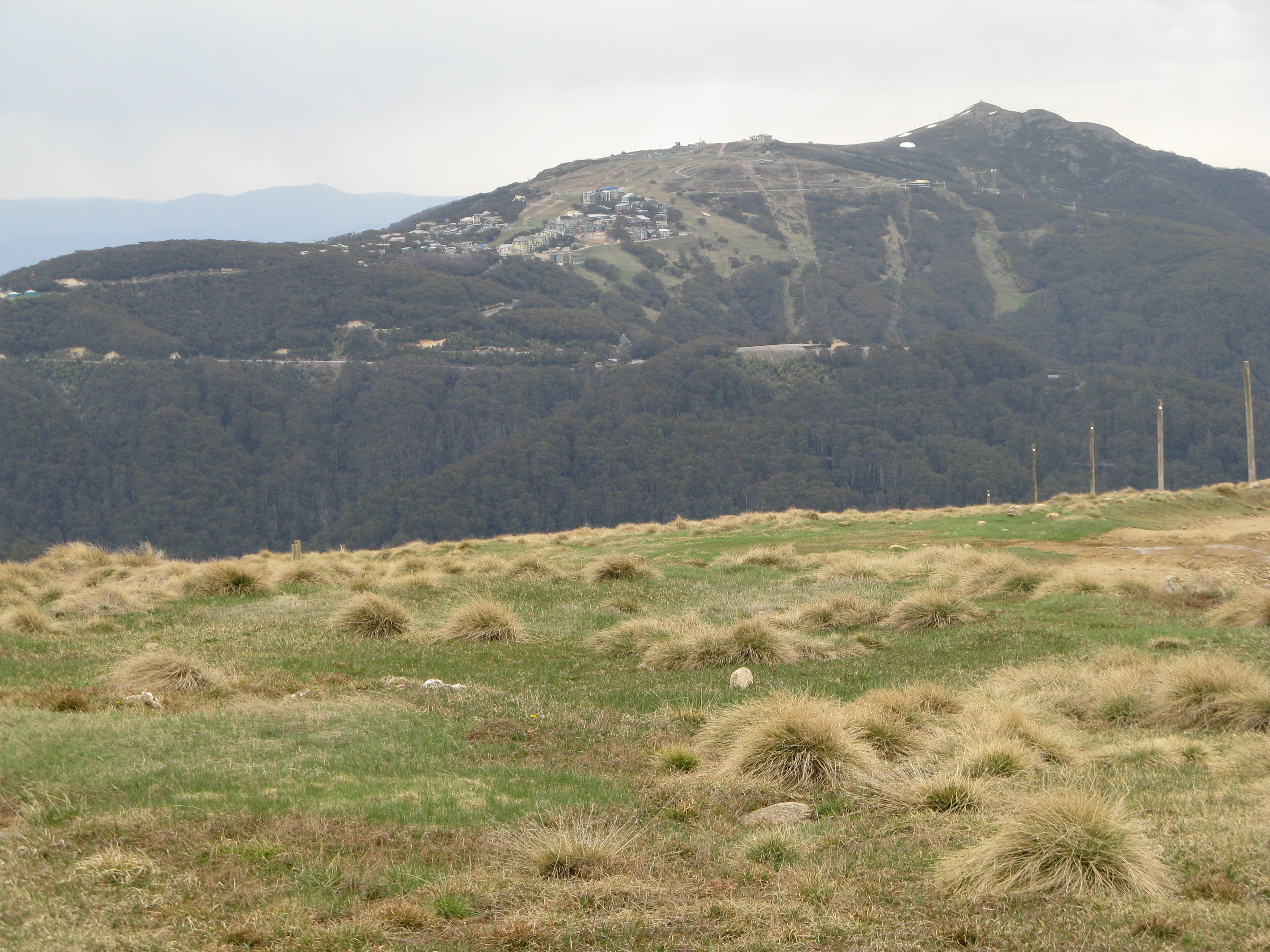
The preferred route goes from Falls Creek, around Rocky Valley dam to Wallaces hut, then across the High Plains, descending to Dibbins hut, then downstream along the Kiewa to Diamantina spur, up to Feathertop, and out to Hotham along the razorback.
The documents say:
The main driver for this project is the need for a resolved, design-led, strategic master plan and implementation strategy (the master plan) for the FHAC which considers regional tourism and commercial opportunities in the context of recent changes to public land policy, particularly tourism investment in national parks.
The tender documents show that private accommodation is planned to be developed. Included in the brief for the tender is the requirement that the master plan:
Identify settings where opportunities may exist for potential private sector investment in on-walk roofed accommodation and/or services;
Coming soon to a national park near you? Image: Cradle Mountain huts
They use the ‘precedent image’ of private huts along the Overland Track, Tasmania.
A final decision is expected by 2015.
What do you think?
It is great that the government is providing resources to further develop walking tracks to get more people out into parks.
It is orientated towards a market that is happy to pay to have ‘luxeries’ while in the bush, like high quality acommodation, so potentially brings a new group of people into the mountains, who would currently tend to stay in the neighbouring resorts.
However, it could be the thin end of the wedge in terms of developments within parks.
It will probably bring new walking track infrastructure to what is at present a relatively remote area with only a rough trail (the Diamantina spur).
‘Snow surf’ boards are hardly a common sight on our slopes. But they are showing up more in some classic backcountry films like Signatures, from Sweetgrass Productions.
The following item is lifted directly from the new The Drift publication, and features some quotes from renowned surfboard designer and rider Taro Tamai. The company Gentemstick makes snowsurf boards.
Image: The Drift
Taro Tamai: Of Gods and Mountains
ON DESIGNING GENTEMSTICK:
My shapes aren’t just mimicking surfboards, but like surfboards they have different shapes for riding different waves. I shape boards depending on snow, terrain, and riding styles.
The design should perform on any snow condition, whether it’s powder, groomers, or spring corn snow. I don’t focus on skateboard-like snowboards, which emphasize ollies, big-air landings and the spinning factor, but a design that focuses on the relationship between the rider and slopes.
Image: The Drift
ON SNOWSURFING:
What if someone sees the mountain differently than others? What if the same terrain appears different to each person who sees it? Obviously the design for riding that place will differ from one another. The reason I quit skiing— which I loved so much—for snowboarding is because the potential lines that I could see when on a snow-surfboard were drastically different from when I was on skis. The ultimate goal of surfing is to be one with the wave. The ultimate goal in snowsurfing is to be one with the mountains.
MOUNTAINS IN JAPANESE SYMBOLISM:
Traditionally, Japanese people felt the presence of gods in all natural elements: water, forests, fire or mountains. Mountains were one of the most important deific symbols and climbing was a religious ritual. Japanese mentality sees gods in every single pebble lying on the river shores.
The following media release comes from Still Threatened, Still Wild, and marks the beginning of a summer of actions to protect remaining old growth forests.
Today’s protest action continues to stop logging operations in a stand of forest at Stony Creek, East Gippsland, Victoria. Two conservationists remain at the top of tripods, blocking the road at different access points to the logging zone. While one person remains 30 meters above the ground in a tree sit in the middle of the logging coupe. Around 40 others remain in the area.
Department of Environment and Primary Industries (DEPI) workers attended the site at around 11am. The DEPI workers then cut down trees in an area believed to be part of the Snowy River National Park, in an attempt to drive around a blockade tripod. Forestry workers are currently in the logging coupe, below the tree sit, assessing the situation.
“Three conservationists are today putting themselves on the line, up tripods and tree sits, and risking arrest in order to halt the destruction of this stand of forest that is home to the endangered long footed potoroo” said David Caldwell of Goongerah Environment Centre (GECO).
“Continued funding from tax-payer dollars to this industry for the benefit of a few private companies, like Nippon Paper, should be of concern to all tax payers. Australia is not only losing millions of dollars to prop up this industry, we are also losing our irreplaceable native wildlife species” said Mr Caldwell.
“Today’s action has brought a national focus to the destruction of wildlife habitat that is occurring here in East Gippsland as well as forested landscapes around Australia. It comes the day after a court appeal was lost by My Environment which now allows the ongoing logging of endangered leadbeater possum habitat.” said Poppy King of Central Highlands Action Group (CHAG).
“These dedicated conservationists are committed to continuing today’s action as long as possible, in order to protect this precious forest from industrial scale logging. This is part of a nation-wide movement that will see ongoing actions across the country in a call for protection of our native forests” said Miranda Gibson of Still Wild Still Threatened.
This release is from Healesville based MyEnvironment, about the outcome of the recent case seeking protection for the Leadbeaters Possum.
Law fails to guarantee protection for threatened species
The Flora and Fauna Guarantee Act has never before been tested at the level of Appeal. By taking our case to Appeal we have given the law the best possible opportunity to show whether it can be effective in its stated purpose of GUARANTEEING the survival of unique native species.
In this, the law has failed.
This judgement gives the green light to ongoing destruction of Leadbeater’s Possum habitat in Toolangi State Forest at sites where we have photographic and video confirmation that the species is present. Obviously, this is a disappointing outcome for MyEnvironment but, more importantly, for Leadbeater’s Possum and all other species that rely on the protection of the Flora and Fauna Guarantee Act for their ongoing survival.
If the Flora and Fauna Guarantee Act is incapable of guaranteeing the protection of our state’s faunal emblem against a rapacious logging industry, we have to wonder what, if anything, does it protect?
We call on the state government to urgently review the Act to make it functional and effective in saving threatened species, including the Leadbeater’s Possum from extinction.
In the meantime, we call on VicForests and its contractors to demonstrate genuine commitment to their repeated protestations of concern for the survival of Leadbeater’s Possum by properly protecting all sites in logging coupes that contain known colonies of the species, including the three Toolangi coupes that were the subject of this case, where video and photographs of nesting and foraging animals have recently been obtained. Their conduct in coming days and weeks will be a public demonstration of their sincerity and decency.
We shall now take time to study the implications of the judgement for MyEnvironment, the group and its members, and to take advice on future action.
For quotes please call ; Steve Meacher 0447 330 863 or Sarah Rees 0438 368 870
For background on the Toolangi forest issue, check here.
Snow/ skiing/ boarding films have long been a staple part of mountain life. And while I love snow porn as much as the next person, I never felt very interested in the high profile ‘heroes and helicopters’ style that has long dominated the mainstream films.
It was only a few years ago when I realised there was a sub genre that actually spoke to my reality: backcountry films.
As our governments at state and federal level continue to ignore the reality and scale of climate change, and dismantle the limited actions we currently have in place to reduce emissions, this book seems rather timely for those of us who like our winters cold and our snow deep.
“This is the most important book on snow ever written. This is a wake up call. We need to accept our reality and get busy fixing climate change.” —Jeremy Jones, pro snowboarder and founder of Protect Our Winters
“The first in-depth report on how climate change is affecting the present and future of the ski industry and mountain communities, DEEP is a must-read for every passionate skier.” — John Stifter, Editor, Powder Magazine
“Skiing offers a good barometer of the trouble we’re in—and, as this book reminds us, one more good reason for wanting to face that trouble.” —Bill McKibben, author of Oil and Honey and co-founder of 350.org
In his stunning first book, veteran ski writer Porter Fox captures the 8,000-year-old sport of skiing, the miracle of snow and the shocking truth of how climate change could wipe out both in the next 75 years.
The narrative follows the unlikely rise of skiing from prehistoric Norwegian hunters to nobility in the Alps in the 1800s to present-day freeriders on the vaunted slopes of the Rocky Mountains. On his global tour of the most celebrated mountains in the Northern Hemisphere—from Washington’s Cascade Range to the European Alps—Fox talks to alpinists about the allure and mysticism of the sport and to scientists about climate change and its effect on snow—ultimately finding a story that is far larger than the demise of skiing.
For the seven million skiers in America who dedicate their winters to tracking storms and waking up at dawn to catch the first chairlift, the lifestyle change will be radical. It will likely be far worse for the rest of the world. Fox uses primary interviews and evidence, mixed with groundbreaking scientific studies, to explain exactly how and when the Great Melt will play out—and the tremendous groundswell that is rising up to stop it. DEEP provides firsthand accounts from skiers and scientists who are mapping a way to mitigate climate change, reduce human impact on our planet and repair the water cycle. As it turns out, their efforts to save snow and ice might end up saving the world.
The Weekly Times has reported that there is a new wild dog action plan for the High Country. Wild dogs are a major problem in farming areas adjacent to the mountains, and there have been considerable lobby efforts to get additional government support to tackle the problem.
Long term president of the Bairnsdale VFF, Rob Grant, who passed away in October, had long called for additional resources from the government. Rob pointed out that this is not just a problem for sheep farmers, citing many known attacks on calves as well.
Agriculture Minister Peter Walsh had previously promised to implement an aerial baiting program, establish a $4 million fox and wild dog bounty and reinvigorate the wild dog management committees.
Minister for Agriculture and Food Security Peter Walsh yesterday released the new Victorian Wild Dog Action Plan with set operational targets and local area work plans.
The Victoria Government will launch a new wild dog control action plan control in Omeo today.
A forum, organised by the Victorian wild dog control advisory committee and the Department of Environment and Primary Industries, was held at the Omeo Hall yesterday.
The plan aims to increase the effectiveness of our trapping program and increase the number of baits laid by 10 per cent to almost 20,000 in the coming year.
Local area work plans will be developed using local knowledge for each of the 15 wild dog management zones in East Gippsland and northeast Victoria, Mr Walsh said.
The action plan also includes commitments to improve access to fresh 1080 bait products in areas affected by wild dogs and examine ways of removing legislative and red tape frustrating the management of wild dogs.
In January 2013, it was reported that the Mountain Cattlemen’s Association (MCAV) was lobbying the state environment minister Ryan Smith to seek permission to reintroduce cattle to the area around the Wonnangatta station.
While spokespeople for the minister have been quoted in the media, there has been no formal statement by Ryan Smith and details on the trial have not been released to the public by the Victorian government.
“But it was the state of the park, the threat of high intensity fires from high fuel loads and the impact this could have on its ecology – particularly snow gums – and the infestation of weeds and feral animals that were most pressing on the minds of the cattlemen”.
Media reports have mentioned the ability of cattle grazing to reduce weeds in the Wonnangatta, however, the application only talks about the possibility of it reducing fuel loads. There is no mention of any strategies to ensure the reintroduction of cattle doesn’t bring a new set of weeds into the Wonnangatta. Does this shift from dealing with weeds and fire to just fuel reduction show that there is an admission that cattle make weed infestation worse?
The application says that the traditional owner group was consulted, and of course the MCAV was. What is strange is the claim that environment groups were consulted. Really?
Some observations about the proposed trial
Given that the government has identified fuel loads as a problem, it has not sought to find other ways to reduce fuel loads without a grazing trial.
The impact of weed spread due to grazing (one of the reasons cattle were excluded from the national park in the first case) is not specifically addressed in the proposal.
There is not yet an Environmental Management Plan (EMP) for the project. Given the experience in early 2011, when the Coalition secretly let cattle back into the High Country without a proper framework for how the trial would be managed, one has to wonder if the same thing will happen this time. The documentation says that the EMP will consider issues such as ‘pest plant and animal controls’: so let’s hope the EMP is produced before the cattle are introduced.
The study area covers around 2,200 hectares of land, with 4 ‘treatments’ to be carried out over different parcels of land: a control area, some areas being grazed, some areas grazed and burned, and some areas just burned. The documentation identified 10 ecological vegetation classes (EVCs) within the research trial area. It is not yet clear whether the 4 treatments will be carried out in each EVC.
Lack of consultation. Given that this proposal has been foisted onto the community without any attempt to explain the project beyond a couple of media grabs, it hasn’t got off to a great start if the government hopes to generate widespread support for the trial. The documentation says a ‘communications strategy’ will be created, with the development of ‘key messages’ that will inform the community on the progress of the trial. Note that consultation is a very different thing to communication.
Threats to nationally listed species. The application says the government only carried out desk top assessments of possible federally listed species in the research area. As is widely noted, animal and plant data for the region is not huge, but the government was happy to rely on what information was currently held by the federal government rather than sending a team to check the actual site. Mitigation measures, aimed to deal with any impacts on federally listed species that may be subsequently identified, will be dealt with via the EMP.
Traditional Owner (TO) attitudes to fire. One valuable aspect of the project documentation was a consultant’s report and ‘conceptual model’ of TO understandings of the role of fire in managing land in the High Country. The government is to be congratulated for commissioning this research.
So, we are a little bit closer to gaining an understanding of what is planned with the trial, although there are a significant number of areas where there is no clarity about what the government intentions are and big gaps in understanding how the project will be managed.
The federal minister is currently considering the application and will probably make a decision shortly.
Recent Comments