Search

Mountain Journal

Environment, news, culture from the Australian Alps

Kosciuszko National Park Wild Horse management plan released

The long awaited draft Kosciuszko National Park Wild Horse Heritage Management Plan was released today. A wild horse management plan was attempted in 2016 but NSW Nationals leader John Barilaro opposed the plan and prevented it from being implemented. Instead, in 2018 he introduced the Wild Horse Heritage Act, which protects the brumbies.

The draft plan has been released for public comment until November. Compared with previous management plans, it does provide a breakthrough in that it has an emphasis on horse removal from certain areas, but it also allows for the retention of 3,000 horses in the park. In an ecological sense this is clearly unacceptable.

Continue reading “Kosciuszko National Park Wild Horse management plan released”

What’s happening with the Falls to Hotham Alpine Crossing?

The Falls to Hotham Crossing is a lovely three day walk from the resort town of Falls Creek, across the Bogong High Plains, to Mt Hotham. Managed by Parks Victoria (PV), you need to book to use the designated campsites near Cope Hut and Dibbins hut. It is a hugely popular walk.

There are also plans to extend and reroute the Crossing, turning it a five day ‘serviced hiking opportunity’ in the Alpine National Park. After the finalisation of the Master Plan for the walk, the state government allocated $2 million of funds in the 2018/19 budget. Then additional funds were allocated to continue the planning for the project, including Stage 1 of the construction.

Parks Victoria say ‘The Falls to Hotham Alpine Crossing will be one of Australia’s outstanding alpine walking experiences that captures the essence of the Australian Alps – the solitude, the seasons, the breathtaking beauty and the stories of the High Country’. However there has been sustained opposition to the proposal because it will see development of private commercial infrastructure (including small accomodation ‘pods’) within the Alpine National Park.

PV are currently focused on completing the Environmental Values Assessment. PV say that the assessment will ‘ensure potential impacts are identified and that the appropriate avoidance and mitigation measures are put in place. The planning process is aimed at reducing current and future impacts on the values of the national park’.

Continue reading “What’s happening with the Falls to Hotham Alpine Crossing?”

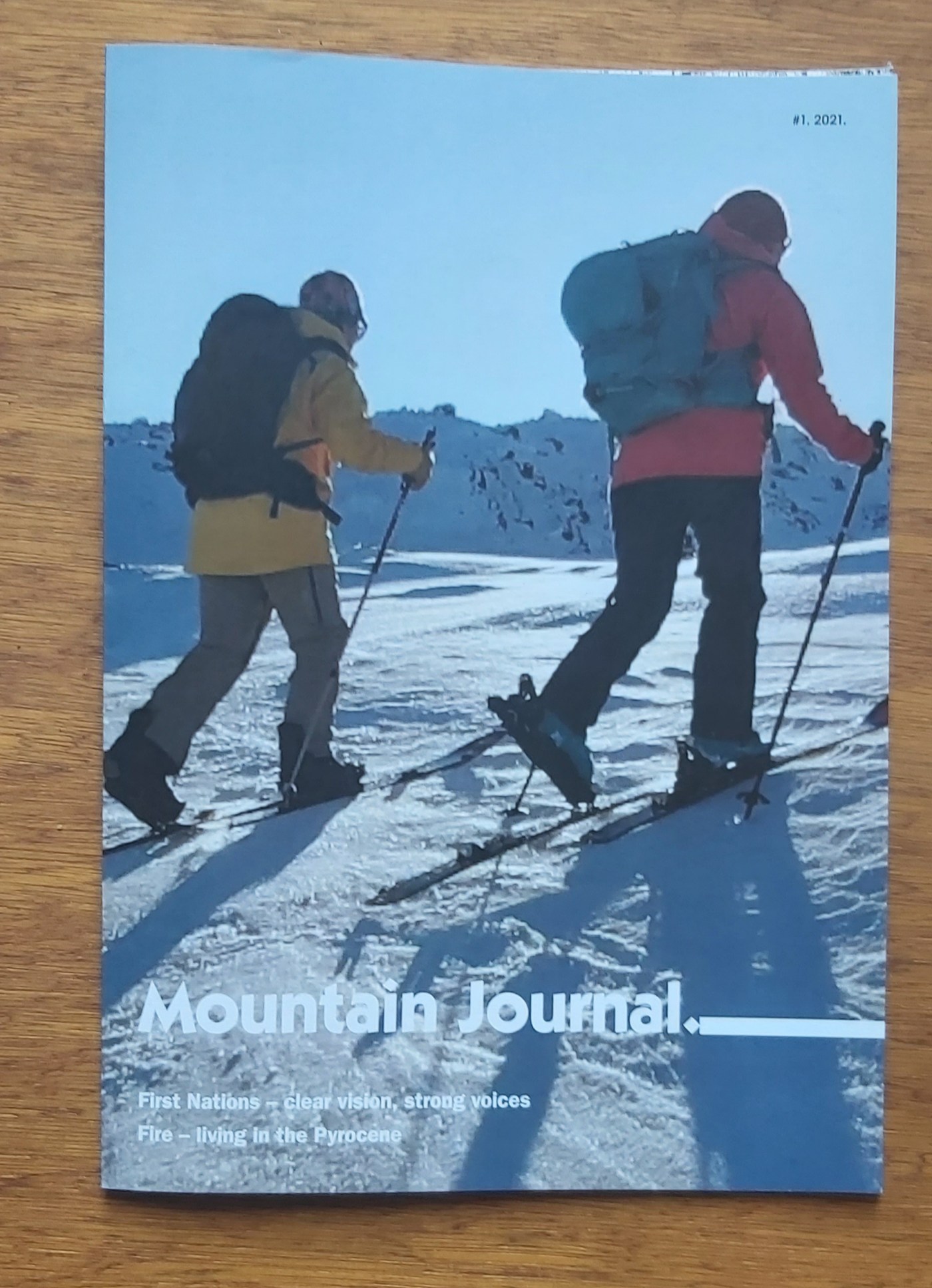
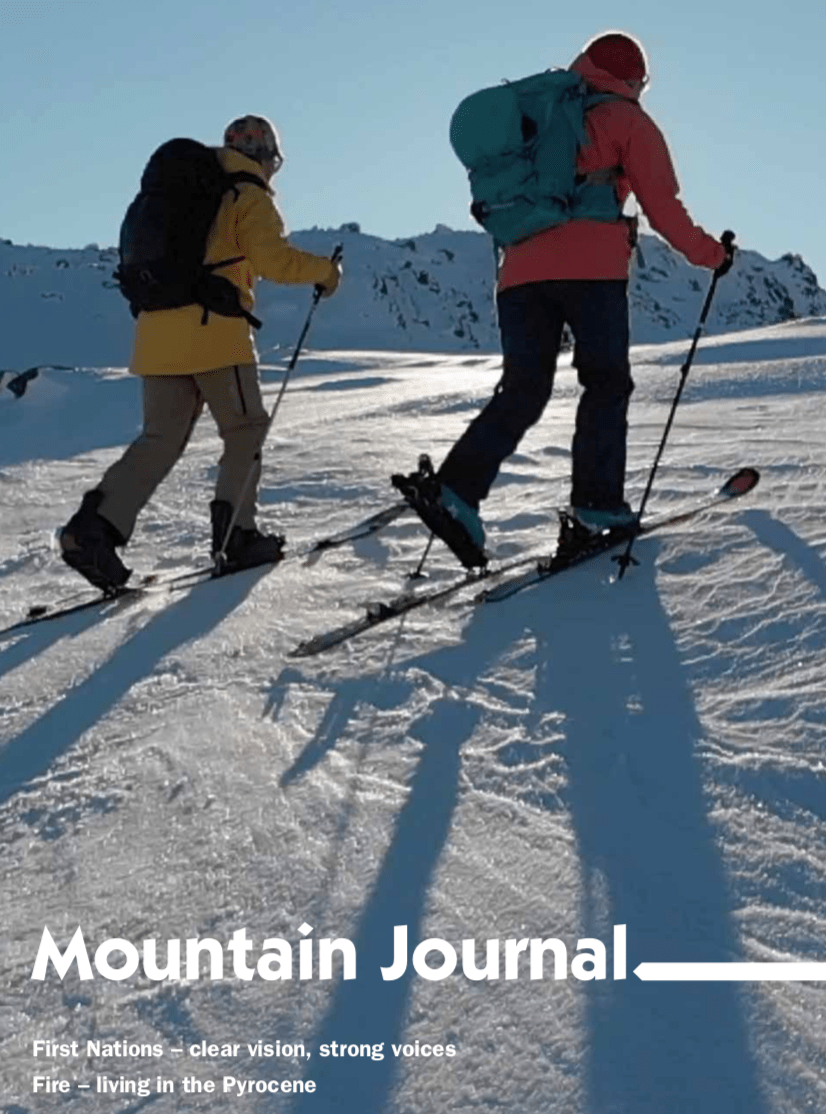
Mountain Journal print edition available

Mountain Journal started back in the summer of 2010. Inspired by great magazines like Mountain Gazette, the plan had always been to produce a print version. But I never got around to it – until now!

The first print edition is hot off the press, and will be (covid lockdowns permitting) surfacing in cafes, mountain huts and public spaces across the Alps soon.

The aim is to produce an Annual, taking content from the website, including some new content, and covering the key mountain/ environment issues of the year.

Continue reading “Mountain Journal print edition available”

Future fire regimes threaten Alpine Ash

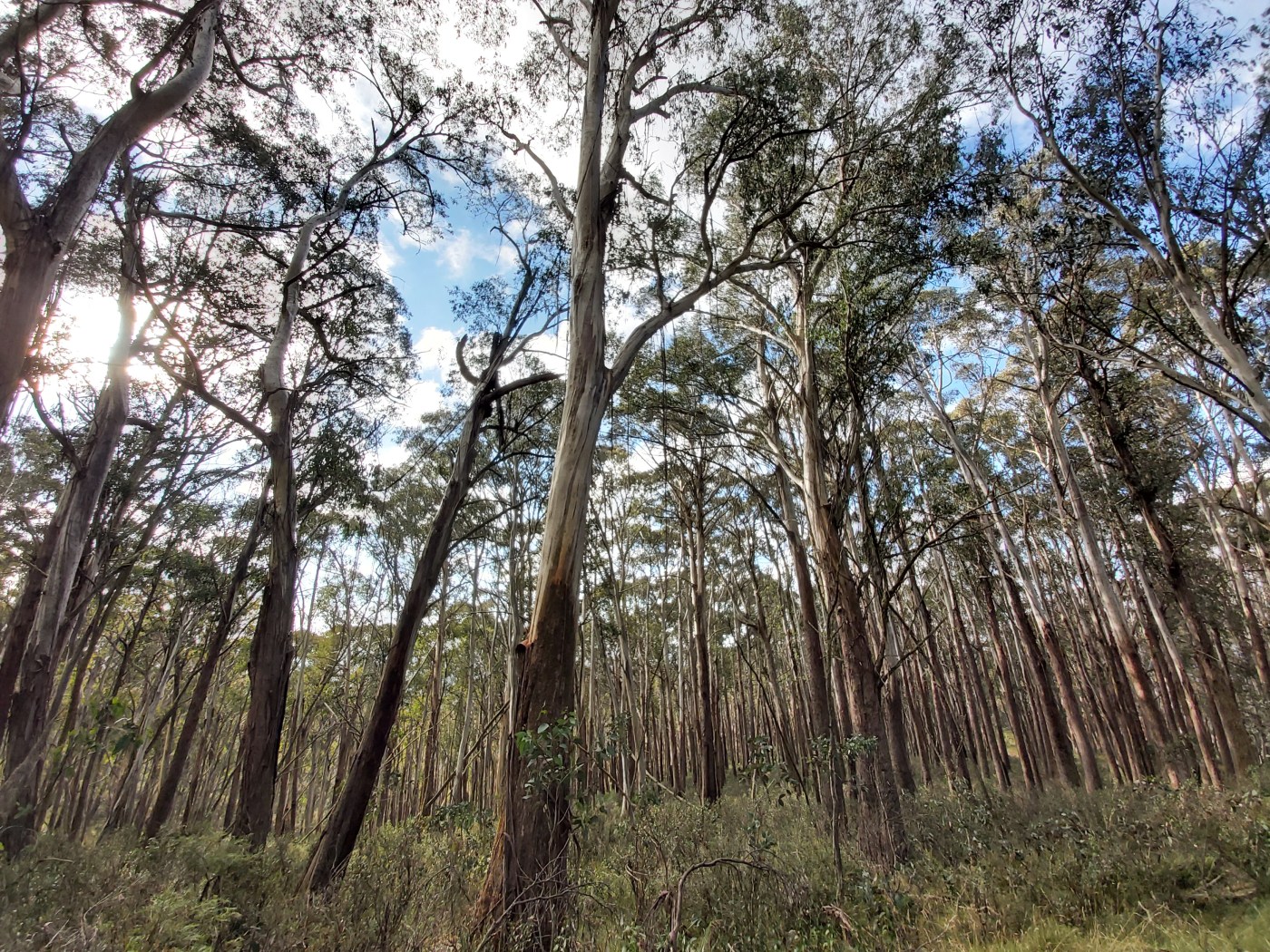
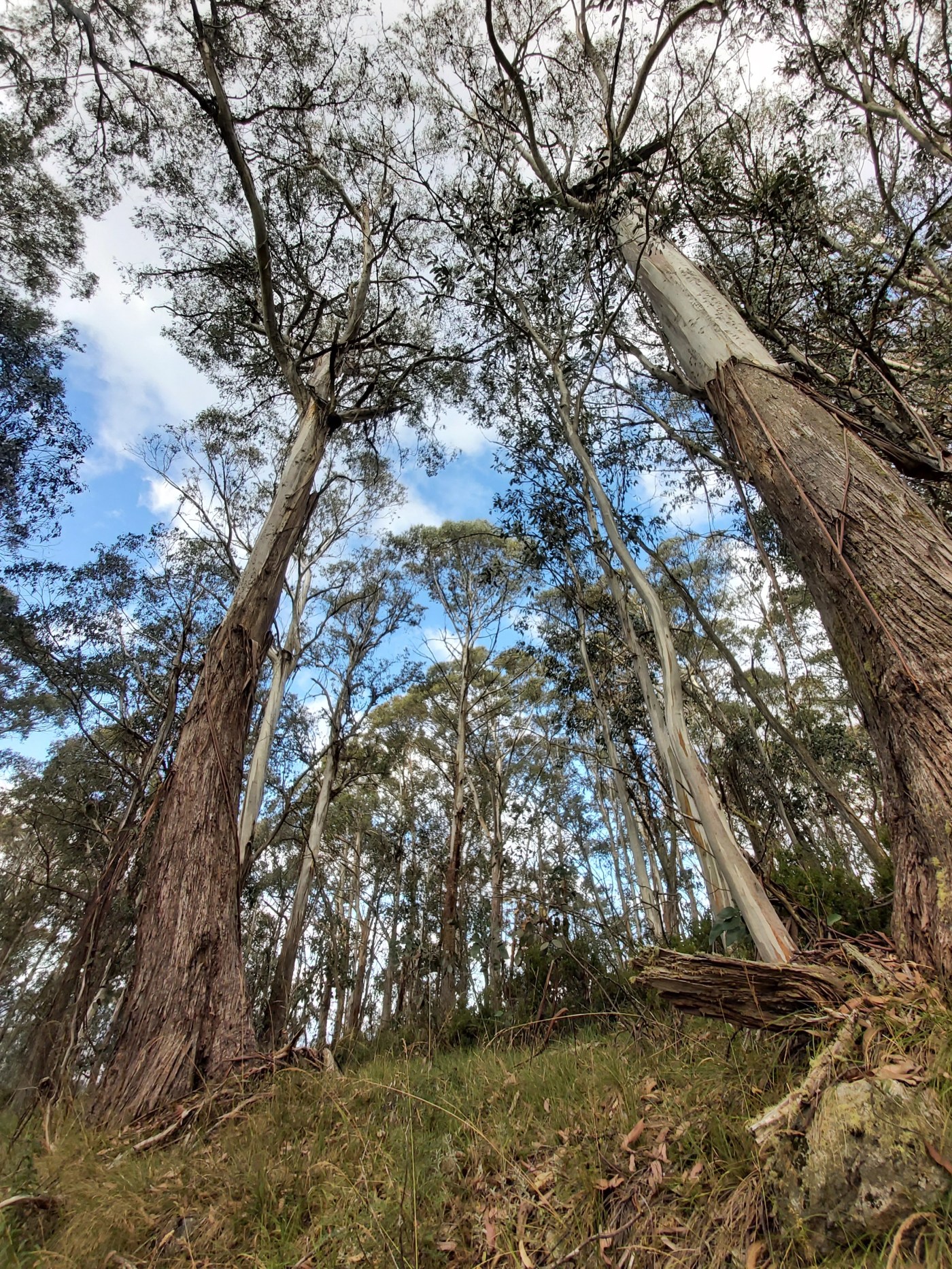
Alpine Ash (Eucalyptus delegatensis) is the classic tree of the sub alpine forests and tends to be replaced by Snow Gum woodlands at higher elevations. In Victoria it is also known as Woolybutt. It only exists in south eastern Australia (there is also a sub species in Tasmania). In Victoria, it occurs at altitudes between 900 and 1,500 metres above sea level.

It has had 84% of it’s range in Victoria burnt since 2002. Large fires occurred in 2002/03 in the north of the Alps, in 2006/2007 in the south. And during 2019/20, around 83,000 hectares of Ash forest was burnt, with 17,800 hectares of this being reproductively immature ash forest that burned at high severity.

We know that large old trees in ecosystems in Victoria which are dominated by Alpine Ash are in ‘rapid decline’. The problem is that Alpine Ash need around 20 years to reach reproductive maturity, so if fires happen more frequently than this, local extinction is possible because there is no seed stock to create a new forest.

New research shows us, yet again, that increased fire regimes threaten this vegetation community. Future fire regimes increase risks to obligate-seeder forests by Sarah C McColl-Gausden, Lauren T Bennett, Dan A Ababei, Hamish G Clarke, and Trent D Penman, and published on 23 September 2021 describes the impacts of fire on Alpine Ash.

Continue reading “Future fire regimes threaten Alpine Ash”

Major cost blow out in Snowy Hydro 2.0 scheme

The proposal to build Snowy Hydro 2.0 to strengthen capacity for energy storage seemed like a good idea at first. But as the details of the project emerged, especially the likely direct physical footprint of the project, more and more people and groups started to oppose it. (Background stories on the issue are available here).

After the release of the Environmental Impact Statement (EIS) the NSW National Parks Association said that the plan ‘proposes a completely unacceptable level of damage to Kosciusko National Park’.

However the federal government continues to pursue the proposal. The project received all approvals and is now being constructed.

Now it has emerged that there has been a significant cost blow out in the project, related to one of the major transmission links that is key to deliver its storage services to the rest of the grid.

A new report suggests different that different grid routes could be considered to either save costs, or increase benefits, including a new connection point that will reduce the environment impact on the national park.

Continue reading “Major cost blow out in Snowy Hydro 2.0 scheme”

Big win for campaign against Lake Malbena ‘helicopter tourism’ proposal

In big news, the campaign against the proposal for a controversial ‘helicopter tourism’ development in a remote part of lutruwita/ Tasmania received a significant boost today.

The Wilderness Society, supported by the Environment Defenders Office, has won an appeal against the proposal.

The proposal will now return to the Resource Management and Planning Appeal Tribunal (RMPAT), who will be asked to reassess it and take into consideration its impact on wilderness world heritage values.

For background on this proposal, please check here.

IMAGE: Dan Broun.

A cable car to Dove Lake?

The following story comes from the Tasmanian National Parks Association (TNPA).

‘Everybody had thought that the most preposterous aspect of the 2016 Cradle Mountain Master Plan – the cableway from the visitor centre to Dove Lake – had long been forgotten. Unfortunately the nightmare of another major intrusion into the naturalness of Cradle Valley is turning into reality with the Coordinator General recently announcing it to the annual conference of the Tourism Industry Council of Tasmania as a fait accompli.

Continue reading “A cable car to Dove Lake?”

Pack rafting the Central Plateau

Pack rafting is the sport of hiking and rafting using a portable raft carried on one’s back. Pack rafts are designed to be light enough to be carried long distances. It is a relatively obscure recreation here in Australia, although growing in popularity.

Combining pack rafting and paragliding on the Central Plateau in lutruwita/ Tasmania is probably even more obscure. But it makes for a good adventure.

Jason MacLeod reports on a recent walking/ pack rafting/ paragliding adventure intended to mark his 50thbirthday.

Continue reading “Pack rafting the Central Plateau”

National Threatened Species Day 2021

Every year on September 7, National Threatened Species Day is commemorated across Australia to raise awareness of plants and animals at risk of extinction.

There are currently 457 species of fauna and 1348 species of flora listed as vulnerable, endangered or critically endangered under Australia’s Environment and Biodiversity Conservation Act 1999 (EPBC Act). Many of these are found nowhere else in the world.

This is a summary of some of the threats facing mountain species.

Continue reading “National Threatened Species Day 2021”

Feasibility study into Tyndall Range walk released

In 2019, the Tasmanian premier, Will Hodgman, announced that ‘Tasmania’s wild West Coast’ had been chosen as the preferred location for the state’s next ‘Iconic Walk’.

The area selected is the remote Tyndall Range. This ‘iconic walk’ will be similar to the Overland and Three Capes Tracks, where private hut networks have been built and tours are run by commercial operators.

The Tasmanian Parks and Wildlife Service (P&WS) has announced that the ‘findings of a feasibility study into a new overnight experience in the Tyndall Range on Tasmania’s west coast ‘proves the proposal is feasible and will deliver a new and iconic multi-day walking experience’.

Continue reading “Feasibility study into Tyndall Range walk released”

VIC backcountry festival 2021 online program

Covid restrictions have forced the organisers of the Victorian Backcountry Festival to cancel the 2021 event. Since we can’t get to meet on-mountain for the festival this year, the organising team has pulled together an ‘on-demand’ pack of films and talks for your viewing pleasure over this weekend (September 4 and 5).

The content available from tonight at https://www.backcountry-festival.com/festival-program/

Continue reading “VIC backcountry festival 2021 online program”

Ecological recovery in Namadgi National Park

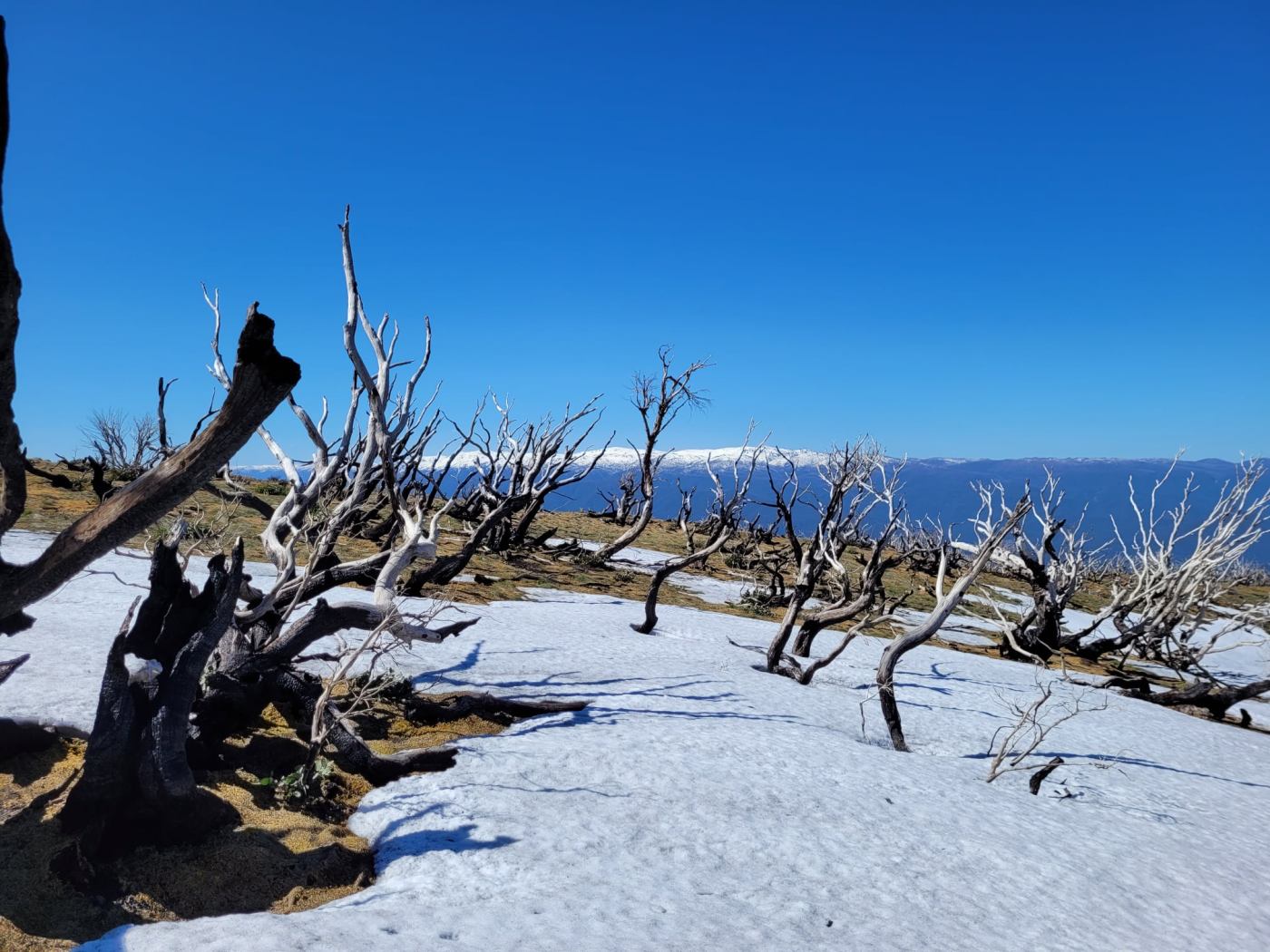
In January and February 2020, the Orroral Valley Fire burnt more than 80% of Namadgi National Park in the ACT, leaving large areas blackened and apparently lifeless.

Monitoring the recovery of Namadgi National Park from the Orroral Valley fire has occurred since the fire. This is managed by the Environment, Planning and Sustainable Development Directorate within the Department of Environment, Heritage and Water. They have just released a great visual report on the recovery of animals and vegetation communities in the park. It is mostly good news.

The report is available here.

Some highlights from the report:

Many Candle Bark forests and Snow Gums are recovering quite well.

The rate of recovery appears to be strongly affected by moisture availability.

Wetter sites, such as Snow Gum woodland near Mt Franklin Road, are recovering faster. Snow Gums on drier and rockier sites are demonstrating less recovery.

One exception to the general pattern of good recovery is Alpine Ash (Eucalyptus delegatensis), which is killed by intense fire and must regenerate from seed.

It is uncertain how well Alpine Ash will recover after two intense fires only 18 years apart; Conservation Research ecologists are currently assessing the degree of fire impact and the extent of recovery in Namadgi’s Alpine Ash forests.

Fortunately, some important stands of Alpine Ash were not affected by the Orroral Valley fire. A total of 2,415 ha, or 33% of the Alpine Ash forest in Namadgi, did not burn in 2020.

Some species can benefit from burning.

By killing shrubs, removing leaf litter and creating areas of bare ground, the fire resulted in ideal conditions for the germination of short-lived herbs and grasses.

Billy buttons (Craspedia sp.) covered the burnt slopes of Mt Gingera in November. Later they faded and set seed, to be replaced by other brightly-coloured species. By February, bluebells and paper daisies (Xerochrysum spp.) were the dominant flowers.

We may not see another flowering event like this for years or decades.

How are fauna populations recovering?

Although the fire took a heavy toll on animals, many survived, either in unburnt or lightly-burnt patches or by taking shelter beneath the ground.

The first teams onto the fire ground found a surprising number of birds (click unmute background audio to listen), mammals, invertebrates, frogs and reptiles,

Preliminary results are encouraging. The burnt areas of Namadgi still ring with an impressive array of singing birds.

Blog at WordPress.com.

Up ↑