Search

Mountain Journal

Environment, news, culture from the Australian Alps

Tag

endangered species

A new protector of the Mountain Pygmy-Possum

The Mountain Pygmy-possum (Burramys parvus) is one of our iconic alpine species. It lives in rock screes and boulder fields, and is also the only Australian mammal restricted to alpine habitat. There are only three main populations remaining.

It faces a number of threats: habitat destruction, climate change and predators. The construction of ski resorts in the alpine regions in which the mountain pygmy possums inhabit has been one of the greatest factors attributed to population decline.

This recent story from the ABC by Lucy Barbour outlines an innovative program which aims to protect the species from feral cats.

Continue reading “A new protector of the Mountain Pygmy-Possum”

Helping trees flee climate change

This article from the Canadian based magazine called The Walrus got me thinking. We know that climate science predicts that some species will migrate ‘uphill’ to try and find the climatic conditions they can flourish in as the temperature warms. This could see some sub alpine and alpine species becoming extinct as they face stiff competition from new species moving into their traditional range and with Australia only having mountains of low elevation, some species could simply be pushed off the top of the ranges.

Continue reading “Helping trees flee climate change”

Review: Mountain Ash: Fire, Logging and the Future of Victoria’s Giant Forests

David Lindenmayer is the renowned specialist on the critically endangered Leadbeater’s Possum and the Mountain Ash forests that are their home. He has collaborated with other researchers to produce a book which looks at the possums future in light of fires and logging.

While it is expensive (almost $60) it is an incredibly important contribution to our knowledge about these forests. It is available from the CSIRO.

The following review was written by Alex Mullarky, and originally published on the Wild Melbourne website.

Continue reading “Review: Mountain Ash: Fire, Logging and the Future of Victoria’s Giant Forests”

Summer of Citizen Science and Forest Defence

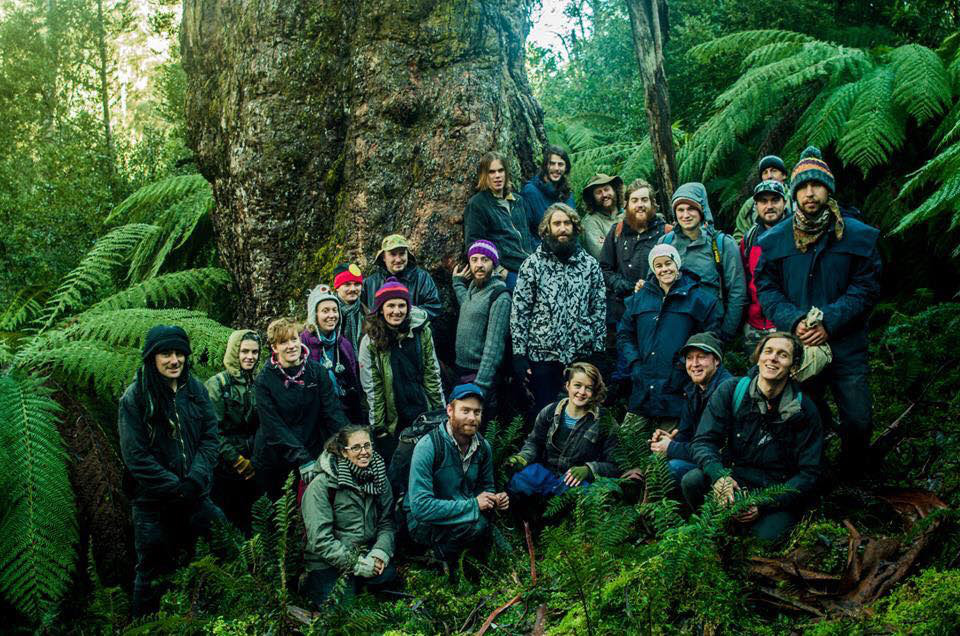
Goongerah Environment Centre (GECO), based in a mountain valley in far east Gippsland, is organising two weeks of ‘citizen science’ and a range of activities intended to protect the native forests of the region.

It runs from Friday, December 4 until Friday, December 18.

Continue reading “Summer of Citizen Science and Forest Defence”

Protecting the Kuark forest

The spectacular old growth forest of Kuark in East Gippsland provides habitat for threatened species such as the Sooty, Masked and Powerful owls, Greater gliders, Long footed potoroos and a rare rainforest type where warm and cool temperate rainforest blend together in an ‘over lap” assemblage.

The state owned logging company VicForests plan on conducting extensive clear fell logging operations in the forest this year and local conservationists are getting organised to halt the proposed destruction.

Victorian conservation group, Goongerah Environment Centre (GECO) are stepping up their efforts to protect these forests from logging. The group have launched a citizen science program and public campaign to collect data and publicise the Kuark forest in the far east of Victoria.

Check here for the full story.

Great Forest National Park. It’s Time.

A playground for Melbourne

Decided this election?

More than 30 environment, conservation, recreation, scientific and citizen science groups representing tens of thousands of Victorians have called on all political parties and candidates in the lead-up to the November 2014 Victorian election to clearly commit to the creation of a new Great Forest National Park in the Central Highlands.

Just 60 kilometres east of Melbourne grow some of the tallest trees on Earth. Their high canopies are home to wildlife such as gliders, owls and the tiny Leadbeater’s Possum.

Continue reading “Great Forest National Park. It’s Time.”

the Great Forest National Park

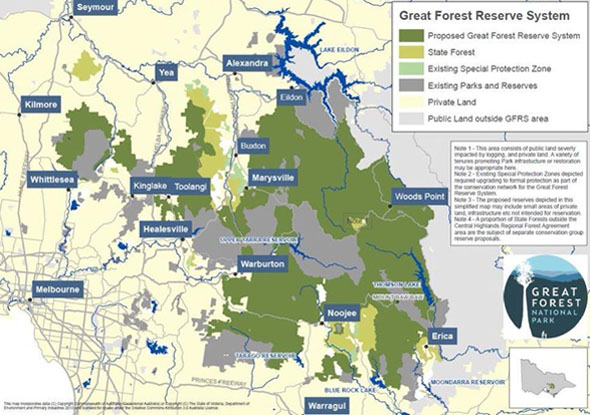
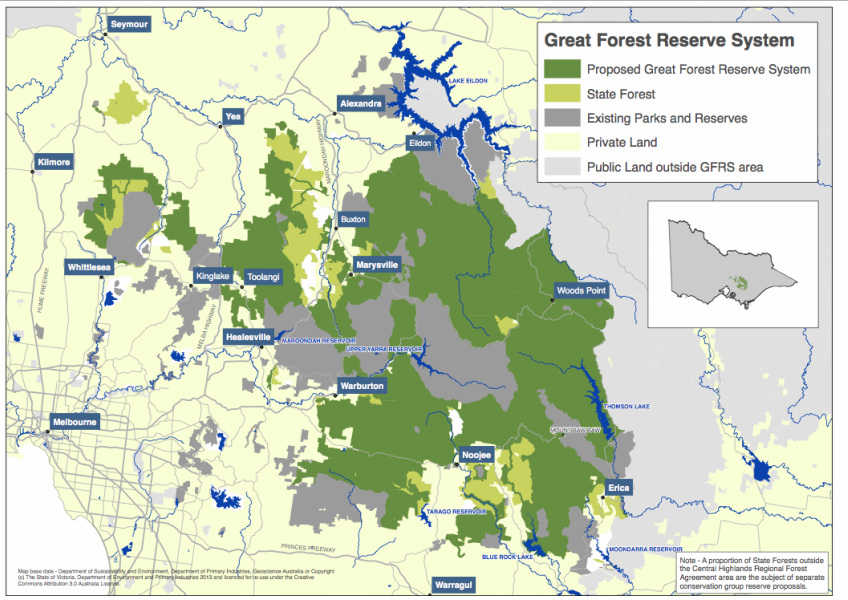
The Great Forest National Park (GFNP) proposal is a vision for a multi-tiered park system for bush users and bush lovers alike, on Melbourne’s doorstep.

It is a park that will protect and maintain important ecosystem functions critical for the health and well being of all Victorians. The proposal intends to amalgamate a group of smaller parks and add a recreational and ecosystem management plan overlay. The GFNP’s gateway in Healesville is only 60 kilometres from Melbourne’s MCG and stretches from Kinglake through to the Baw Baws and north-east up to Eildon. The proposal is backed by 30 years of research from Laureate Professor David Lindenmayer AO and his team from the Australian National University. The Park proposal adds approximately 355,000 hectares to the current 165,000 hectares in reserve. This will bring Melbourne up to a little over 500,000 hectares of reserve, nearly half the size of Sydney’s reserve system. It is an ambitious project that is gaining momentum by the day.

Continue reading “the Great Forest National Park”

New Wattle Species for Victoria

Parks Victoria reports that a species of wattle not previously found in Victoria has been discovered in the north east, in Mount Lawson State Park near the New South Wales border.

Acacia linearifolia is a wattle with very narrow, long and straightphyllodes or leaves. Local Parks Victoria Ranger Kelton Goyne discovered about six trees of this rare wattle in March this year when looking at planned burning options in the park.

Continue reading “New Wattle Species for Victoria”

Victoria’s Great Forest National Park. It’s Time

The vision for a Great Forests National Park, proposed for the mountains east of Melbourne, is gaining momentum.

logoThe Great Forests National Park proposal is a vision for a multi-tiered parks system for bush users and bush lovers alike.

The tallest flowering trees on Earth grow north-east of Melbourne. In their high canopies dwell owls, gliders and Leadbeater’s Possum, Victoria’s endangered faunal emblem, that lives only in the ash forests of the Central Highlands.

These mountain ash forests have flourished along the Great Divide under rich rainfall patterns. They provide most of Melbourne’s drinking water. They have been shown to be among the most carbon-dense forests on Earth due to the relatively cool climate and rapid growth.
GFNP map
The Park, stretching from Kinglake through to the Baw Baws and north-east to Eildon, will protect the forests of the Central Highlands. It will be a world class reserve in Melbourne’s backyard.

It is time for this great vision to be turned into a National Park.

More information here.


Alpine Researchers honoured for contributions to parks

This is from a few weeks ago, but is good acknowledgement of the efforts of researchers working to remove Hawkweed and control willows on the Bogong High Plains. Thanks to David Turner for spotting this one.

The release below is from Parks Victoria.
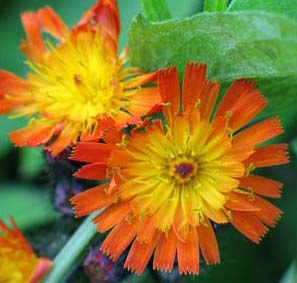
orange_hawkweedTwo Victorian researchers have been recognised for their outstanding contribution to managing highly invasive weeds in Victoria’s Alpine National Park.

Parks Victoria Chief Executive Dr Bill Jackson today acknowledged The University of Melbourne’s Dr Nick Williams, and Dr Joslin Moore from Monash University, as joint recipients of Parks Victoria’s inaugural Nancy Millis Science in Parks Award.

Dr Jackson said the award was being presented to the two researchers for their outstanding contribution to fostering excellence in applied science for the benefit of park management.

“Both projects demonstrated the researchers’ strong willingness to work closely with park managers to understand the extent and challenge of the weed problems. They also demonstrated leading edge science in solving difficult problems.”

“The work of Dr Williams and his team from The University of Melbourne has helped to protect the Alpine National Park’s biodiversity and transformed hawkweed control into a cutting edge and targeted program. This research partnership between Parks Victoria and Department of Environment and Primary Industries staff has significantly reduced Hawkweeds in the Alpine National Park, and the goal of eradicating it altogether is now a real possibility.”

“Dr William’s research and the work being done by all the partners on this project also benefits private landowners as hawkweeds have the potential to invade agricultural land and significantly affect agricultural production.”

Dr Jackson said Dr Joslin Moore and her team had achieved great results in controlling willow on the Bogong High Plains and as a result has had a major impact in protecting the Bogong High Plains environment.

“Willows are highly invasive and following the 2003 fires began germinating in large numbers. This posed a significant threat to an area within the Alpine National Park that is particularly important for its high biodiversity and landscape environment.

“As a result of a 7 year partnership with Parks Victoria, local Catchment Management Authorities and Falls Creek and Mt Hotham resorts, Dr Moore’s work has been fundamental in improving efforts to control willows on Bogong High Plains.”

Dr Jackson said both researchers had extensively documented their research in scientific publications, adding to the international body of work on effective methods of managing these extremely invasive weeds.

“I warmly congratulate Dr Williams and Dr Moore, and their teams who have contributed to this work, on making a real difference to managing invasive weeds in Victoria’s iconic Alpine landscapes.

“Caring for our parks is a complex task that involves many challenges including climate change, population increases and threats such as invasive pest plants and animals.

“We need innovative solutions and a good scientific understanding of how best to tackle these issues and how best to care for these important natural environments. Dr Williams and Dr Moore’s projects are part of Parks Victoria’s Research Partners Program that fosters collaborative applied research with universities and other research organisations.

The Nancy Millis Science in Parks Award

This award presented by Parks Victoria honours the late Professor Nancy Millis who was Chair of Parks Victoria’s Science and Management Effectiveness Advisory Committee since its inception 1997 and a member of Parks Victoria Board’s sub-committee on Environment.
Forests Forever Easter Ecology Camp

Spend Easter in the heart of East Gippsland 18-21 April, 2014

Every Easter for the past 30 years Environment East Gippsland has been showing people the best of East Gippsland’s beautiful and complex forests as part of its Forests Forever ecology camps.

Participants camp on the Brodribb River surrounded by peppermint and manna gums.

Over four days people can spotlight for nightlife, sample hearty home made soups, learn the history of the ongoing fight to save these forests and how they can help.

> Book online
> Download flyer

A range of guided short and longer drives and walks into the forests are led by experts in forest conservation, wildlife and rainforests.


NATURE’S ARK

East Gippsland has some of the most ancient and beautiful forests in the world. The area’s huge trees and rich dense understorey capture and store carbon, create rain and produce clean water in abundance.

Although they have been relentlessly clearfelled for the past 50 years, the remaining stands of unaltered forest are like an ark; habitat for some of Victoria’s most charismatic wildlife, like the Quoll, Yellow-bellied Glider, Long-footed Potoroo and large forest owls and Glossy Black Cockatoo.


CAMP HIGHLIGHTS

  • Be guided by expert ecologists and botanists into old growth and rainforests, spotlight for nocturnal animals.
  • Spend four days learning about East Gippsland’s ancient forests and the impacts of logging.
  • Camp by the beautiful Brodribb River in Goongerah.
  • This event has been organised by Environment East Gippsland and the Victorian National Parks Association.
  • All proceeds go to help the campaign to save these forests.


COST

  • Full 4-day weekend (18-21 April): $60 (concession $40)
  • One day only: $25 (concession $15).
  • Under 13s free.


HOW TO BOOK YOUR SPOT

The best way to book your spot is via the Environment East Gippsland website.

For more information please email forestsforever@eastgippsland.net.au (preferred) or phone (03) 5154 0145.

Please note: By participating in this event you agree to do so at your own risk. For more details visit www.disclaimer.vnpa.org.au


HOW TO GET THERE

Environment East Gippsland has produced fun maps to help you get to the Forests Forever Ecology Camp.

Download maps

last days for the Toolangi treehouse?

a view from the treehouse

On sunday 10 November, 2013, a young activist called Hannah Patchett launched a long term tree sit to highlight the immediate threats to the Leadbeaters Possum through continued destruction of its habitat. Logging threatens the survival of this species in the Central Highlands to the east of Melbourne.

A range of people have lived in the treehouse since then, bearing witness to the on-going destruction of the precious ash forests.

Now the treehouse has been issued with an eviction notice from the Department of Environment and Primary Industries (DEPI), which expires on the 9th of April. At this point it is expected that DEPI will remove the treehouse on or soon after the 9th.

A group of people connected with the treehouse are currently appealing to DEPI (Department of Environment and Primary Industries) to provide an ongoing permit for the treehouse, or to at least give some reason why a permit has been denied. At this stage we can only assume that the treehouse will be torn down and destroyed if a permit is not granted.

You can keep track of developments by following the treehouse on facebook.

Blog at WordPress.com.

Up ↑