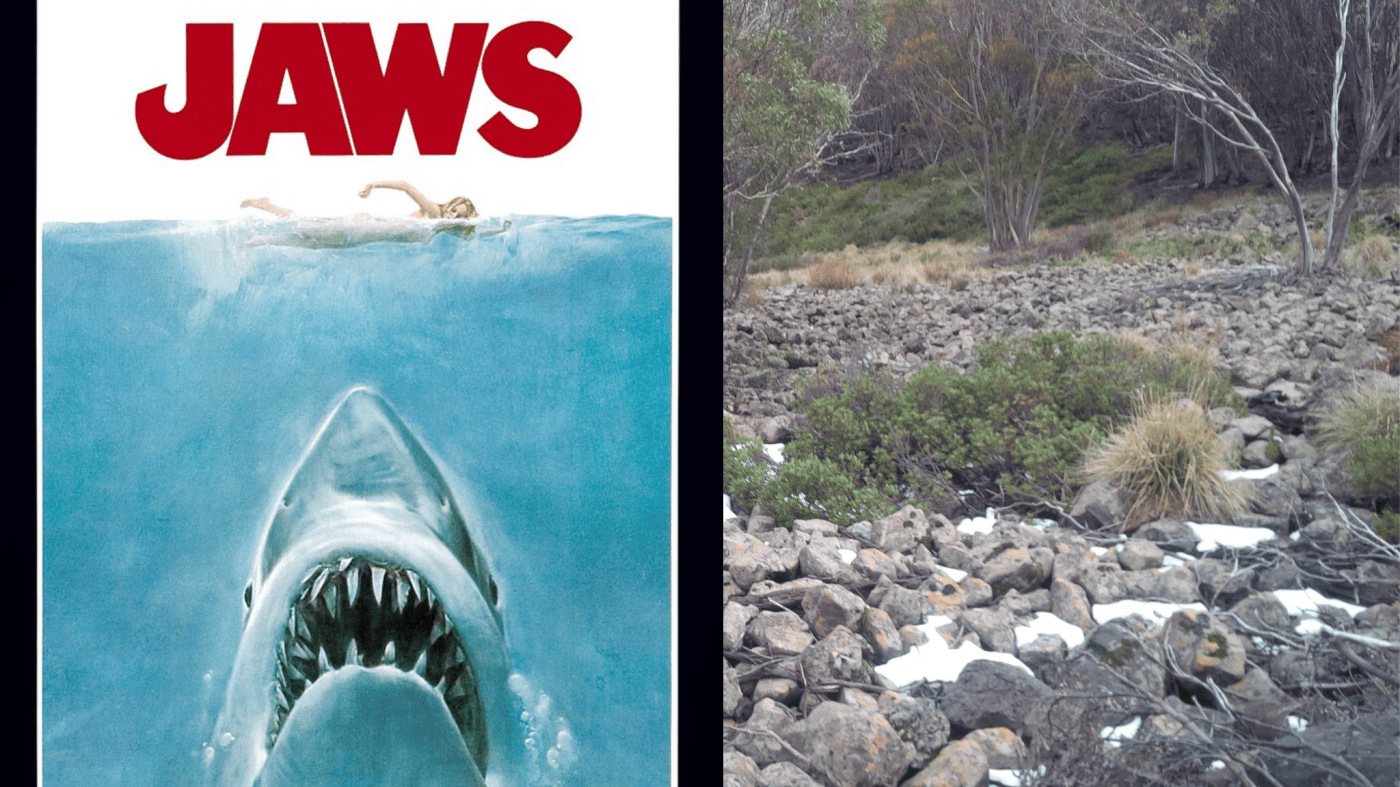
If you’re a pop culture fan, then you’re probably familiar with the film Jaws. Released in 1975, it was a blockbuster of its day, focused on a coastal community in north eastern USA. After a Great White shark starts eating random tourists, the local police chief realises he needs to catch the shark and plans to close the local beaches, which are crammed with summer visitors. But the Mayor persuades him to reconsider, fearing that the town’s summer economy will suffer. The local coroner backs the mayor, and so the deaths continue. But as the deaths continue, the mayor comes around and a chase ensures, with the shark eventually being killed.
The winter of 2026 is a perfect analogy to Jaws. With the hand of climate change clearly influencing our sad winter, the police chief is the climate activists talking about the reality of global heating, while the part of the mayor is played by the resort managers and ski companies, who continue their long denial about climate change, in the interests of ‘not scaring the tourists’.
Let’s recap
Winter has ended early. Most Australian alpine resorts are closing their ski operations up to a month early after a winter that broke multiple records for heat, with limited snow falls being washed away by rain. While resorts generally aim to stay open until the first weekend of October, Mount Buller, Mount Hotham and Falls Creek, together with Charlotte Pass, Mount Baw Baw, Selwyn and Tasmania’s Ben Lomond have already closed. The Australian backcountry festival, which happened last weekend in and around Mt Hotham, is meant to mark the beginning of spring touring season, but instead it was effectively the end of season 2026. As was noted on website Weatherzone, the snow depth at Spencers Creek in the Snowy Mountains dipped to 31.2 centimetres on September 3, the lowest on record for this time of year.
According to reporting in The Guardian, “the season was a shocker. This was the fourth disappointing season since 2020,” said Dr Andrew Watkins, a climate scientist and adjunct professor at the Monash University and a science adviser to the campaign group Protect our Winters.
“The problems were El Niño and climate change. It was not that dry this year, but the problem was the warmth. The heat just did us in.”
Watkins said winter temperatures had been too high and precipitation that might have fallen as snow had instead fallen as rain.
Climate scientists have been warning for decades that global heating will create a challenging future for Australia’s ski resorts and alpine habitats. Snow pack has been in decline since the 1950s, and winters are becoming more erratic, with more frequent ‘snow killing’ rain events. Writers at Weatherzone noted that ‘the underlying influence of climate change was noticeable this winter, and that the ongoing trend of atmospheric and oceanic warming across the world helped turn what might have been a mediocre snow season by historical standards into one of the worst on record.’
How the community responds
When you link ‘climate change’ and ‘snow pack’ together, especially if you’re mad enough to post those words on a skiing or ski resort forum, then you will get a lot of reaction.
Firstly there are the regular folks who get it. They understand the science, they know what is coming, and possibly, will react with a quick ‘like’ emoji.
Then there are the ‘cheerful deniers’, the people who can’t cope with the science, so revert to ‘we need to take the good and the bad’ type commentary. They seem to be in a happy Dorothea Mackellar type of denial – we have always had ‘droughts and flooding rains’ so this must be normal.
Then there are the Angry Bros, the (generally) male commentators who have a cultural allegiance to climate denial because they can’t bring themselves to accepting that the ‘greenies’ might have been right.
The ones that are the most disappointing are the resort and ski companies, who act like the Mayor in Jaws – don’t say or do anything that might upset the tourists. For instance, Josh Elliott, chief executive at the representative body Snow Resorts Australia said of this winter, “this is an abnormal season and shouldn’t be considered in isolation as a reflection of what future seasons will look like.”
He said skiing, snowboarding and snow play had still been available in NSW, Victoria and the ACT “since the June long weekend, with all resorts across Australia operating through the July school holidays and beyond”.
“What this season has shown is the importance and value of the investment resorts have made in snow making, with underlying demand for snow holidays remaining strong through July and August.”
In other words: ‘everything is fine. Nothing to see here, move on, move on’.
Most of the rest of the industry just played dead on the issue, focused on ‘bright siding’ the snow experience, rather than accepting that this winter is more like the ones we can expect in the future.
Yes, we will continue to have good and bad winters. And we will be skiing and riding for years to come. But as global warming races past 1.5°C, likely within the next few years, pushing climate risks and impacts to increasingly dangerous heights, we know that snowpack is in decline and winters are changing. Denial is no match to data.
This weird denial is sad and infuriating. I hope that in coming years the resort companies develop the intellectual honesty that will allow them to become partners in the work we need to do to look after the long term survival of the mountains we all love.
It is important to acknowledge that this is what climate pollution from coal, oil and gas looks like for our alpine regions, but that it’s not too late to change course.
As always, action is the antidote to despair. Find ideas for taking action here.




Leave a Reply