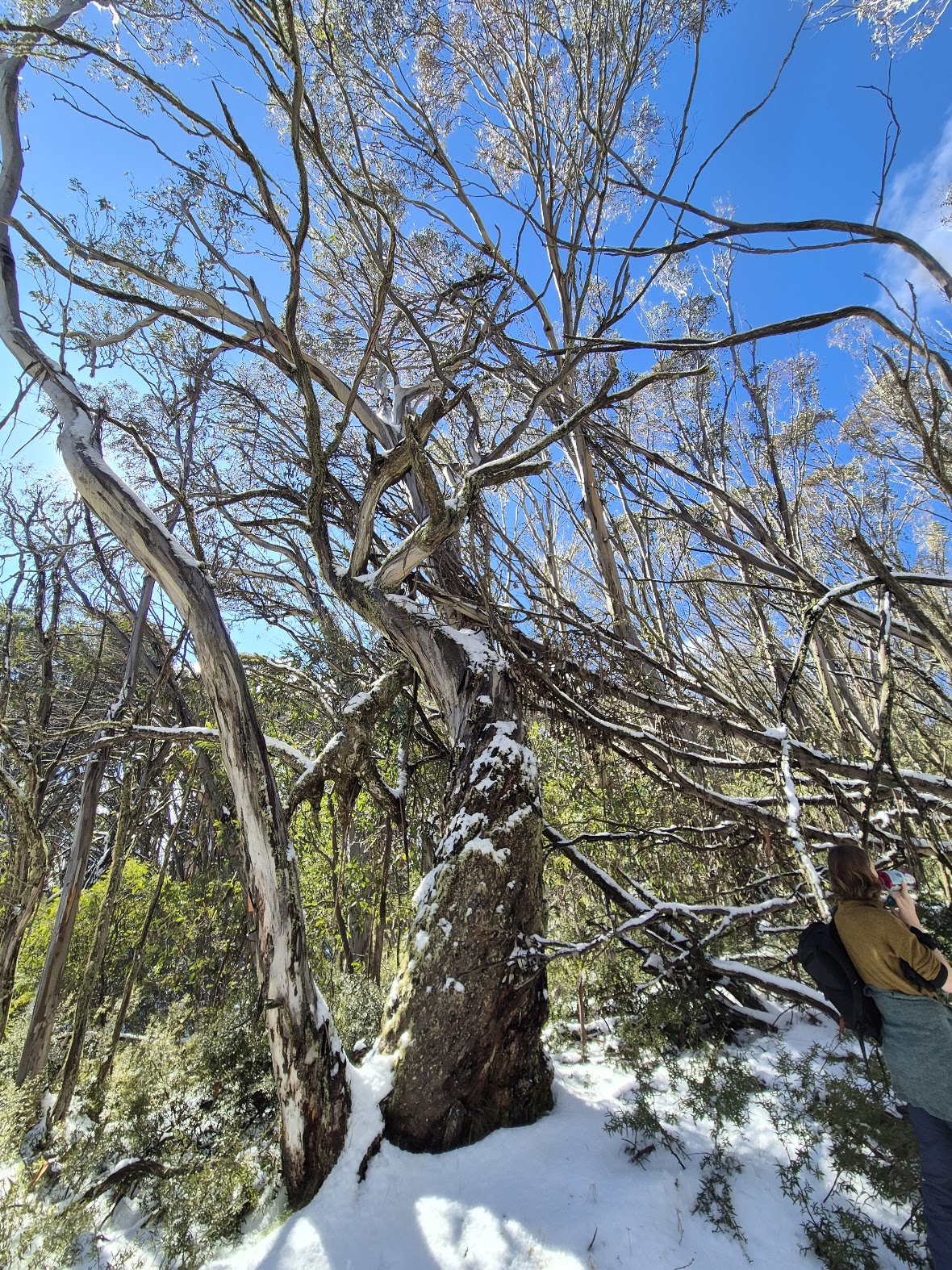
During the month of August, Friends of the Earth is inviting people to join a series of surveys to help determine the health of snow gum forests.
Snow gums are the iconic vegetation species of the Australian High country.
They are beautiful, vital for biodiversity and tourism, help hold snow pack which is released into river catchments, and hold deep cultural value for many people.
However, we are now seeing the beginning of ecosystem collapse across these forests – drought, dieback and successive fires have altered the structure, composition, and condition of snow gum woodlands dramatically. The surveys are intended to give a sense of how the forests are faring in multiple areas.
Here is a quick report on the second set of surveys, which happened on August 1 at Mt Stirling. It revealed that, in the small area surveyed, there has been widespread death of trees due to dieback.
Mt Stirling report
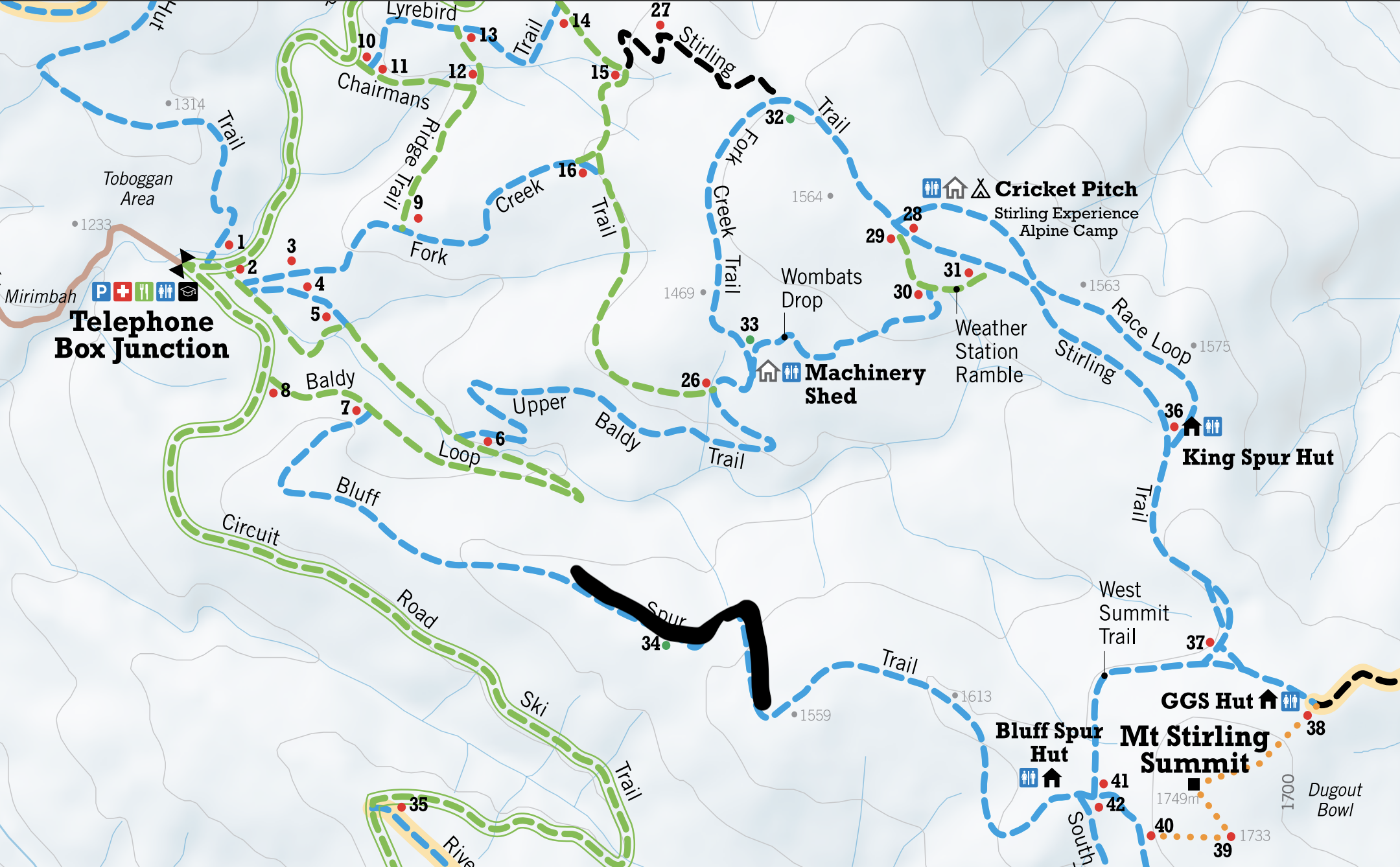
We surveyed a small section of forest along the Bluff Spur Track on saturday August 1. The results were a bit shocking because the forest looks healthy from a distance, yet when we started to assess individual trees, we found that many were either in decline or already dead, with the majority showing the impacts of dieback, which is caused by a beetle. Recent years have shown a rapid dieback or mortality of snow gums due to the increased activity of a native wood-boring beetle (Phoracantha mastersi). This has been linked to human induced climate change as winters are now warmer and summers are drier.
In the area surveyed, almost half of all trees were dead, most of which showed obvious signs of dieback.
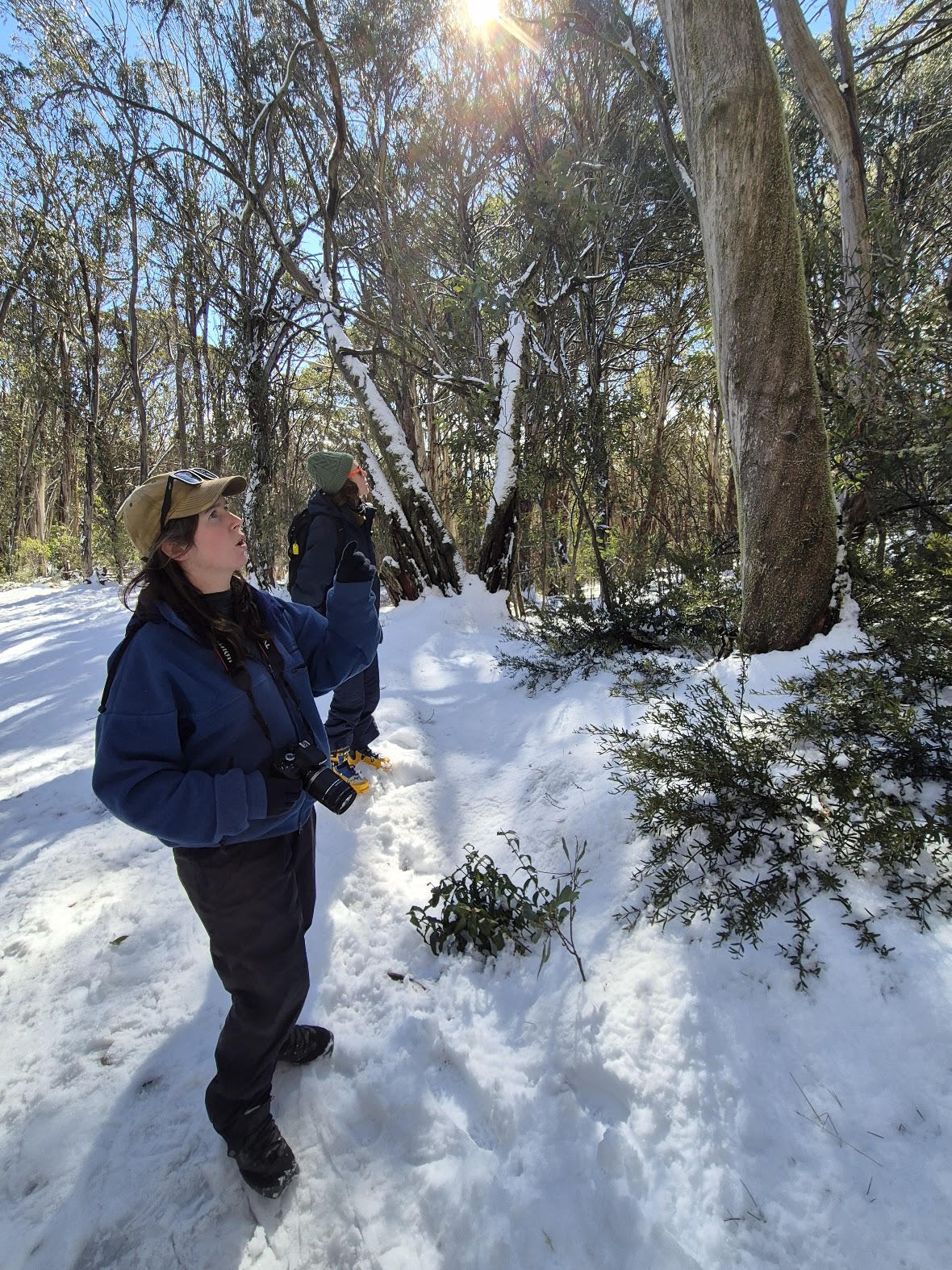
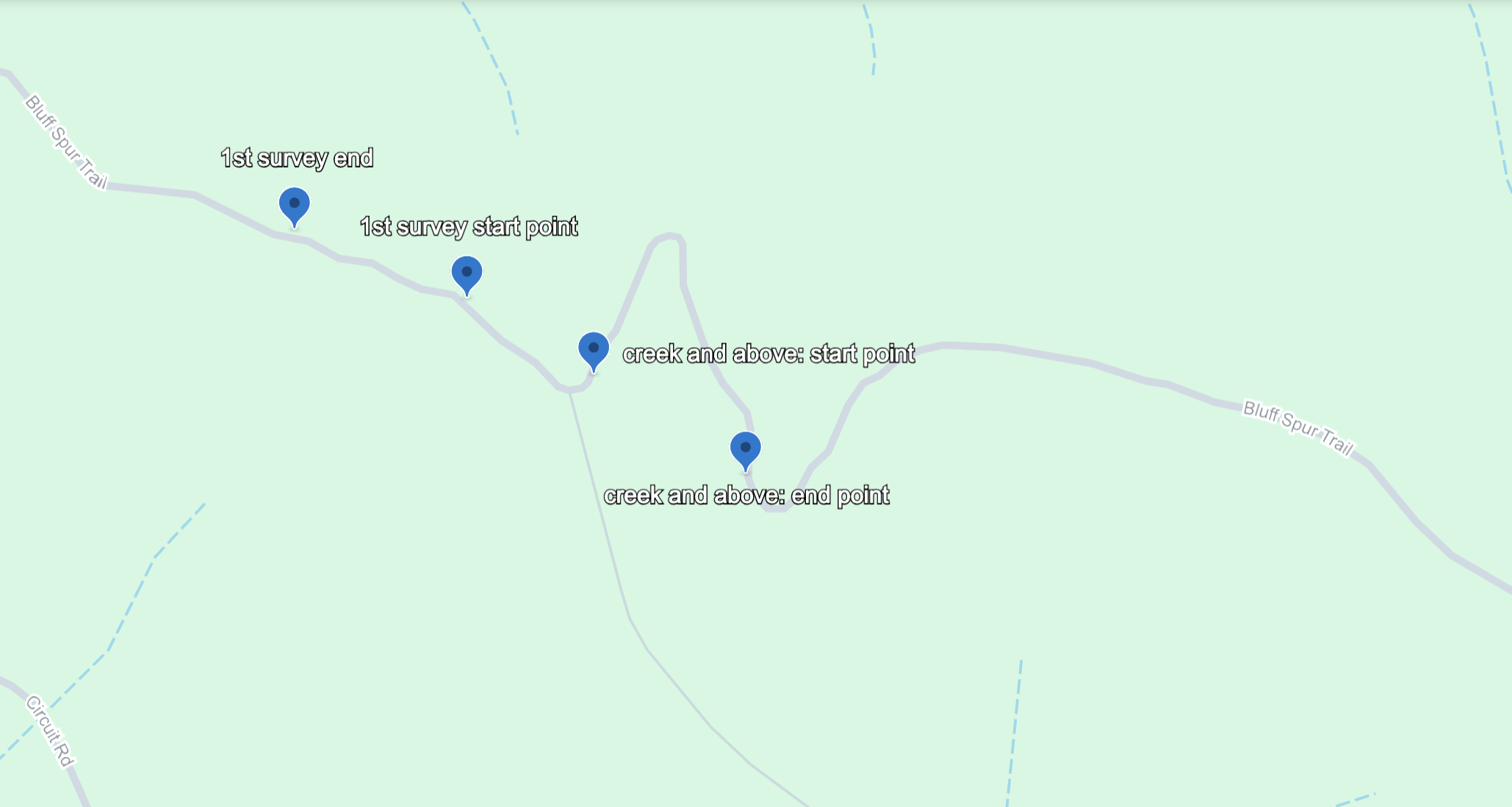
This survey followed the edges of the Bluff Spur trail, from roughly 1,460 metres asl to 1,550 metres asl. Because of the snow conditions (patchy and melting out, resulting in the release of the understory) we opted to survey from the trail rather than through the forest. We surveyed back as far as it was possible to identify the health of trees. We do not know if there is any sort of ‘edge effect’ in tree health due to the historic disturbance caused by the track clearing (which is many decades old). From observation it does appear that the data gathered is consistent with the general health of the forest further away from the track.
| Health of trees | Number of trees (percentage of total) |
| Healthy | 356 (32.2%) |
| In decline
In decline – dieback impact obvious |
256 (23.2 %)
222 |
| Dead
Dead – dieback impact obvious |
490 (44.6%)
354 |
| Dead – early recovery | – |
| TOTAL | 1,102 (100%) |
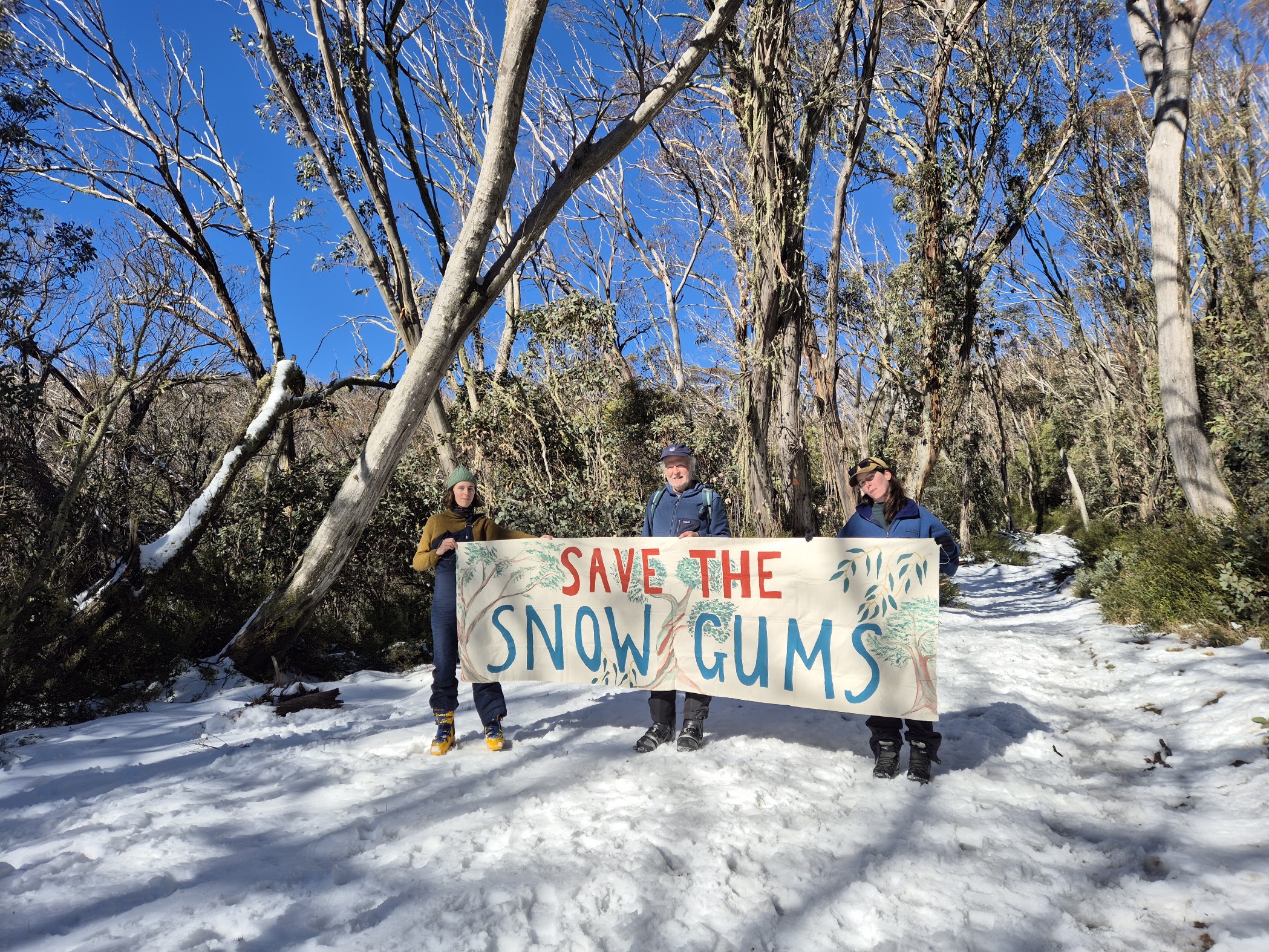
Notes from this survey
- This area was not impacted by the fires of the early 2000s, although other sections of the same ridge were badly burnt. Therefore there was very limited visible signs of fire scarring or damage. In later surveys we intend to visit fire impacted areas.
- given the surprisingly high level of death (44%) and decline (23%) that was recoreded, we intend to do additional surveys as soon as possible
- Mt Stirling has been impacted several times by ‘ice storms’, where heavy snow is followed by rain, leading to massive weight being placed on the branches of trees, causing widespread collapse of trees. The damage from these storms is obvious in the area surveyed, although many have started to recover in the canopy since the last round of storms.
- There was generally a healthy and thick understory of shrubs and extensive Mountain Hickory Wattle
Please get involved in future surveys
The surveys will happen through the month of August. To find out more and get involved, please check here.
For some reason environmental foundations won’t support this work. If you felt inspired to support our work with a tax deductible donation, you can do so here.





Leave a Reply