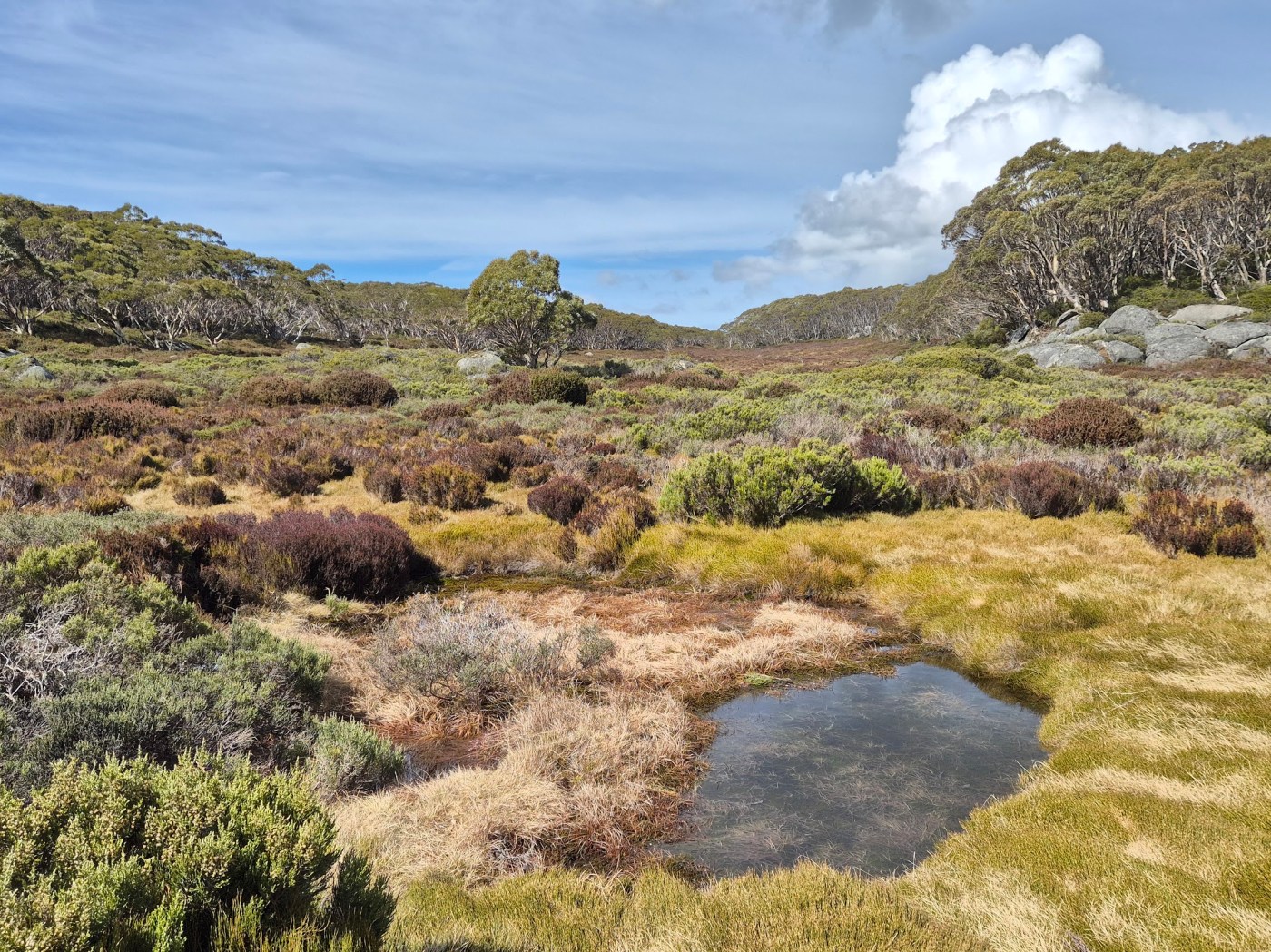
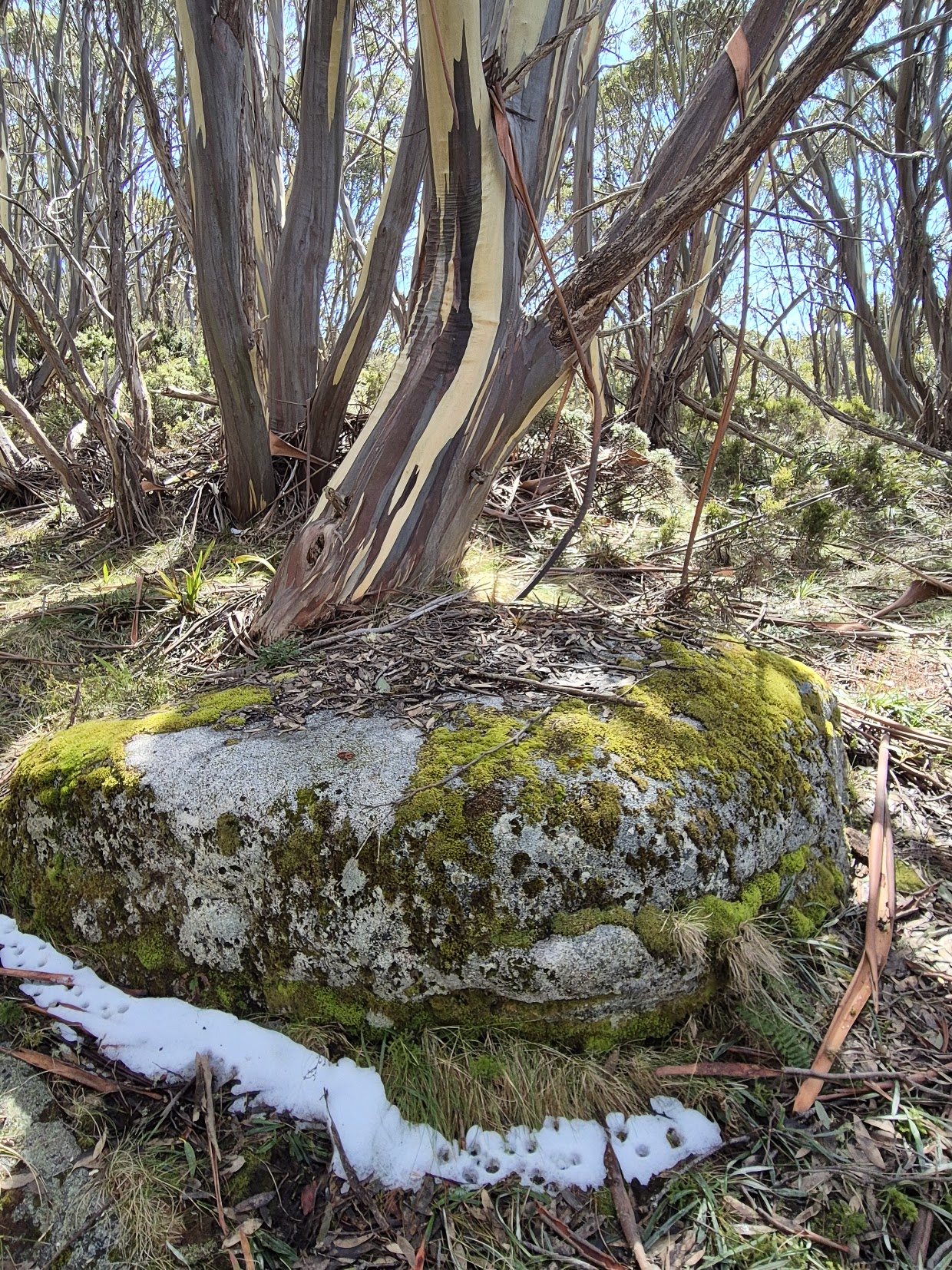
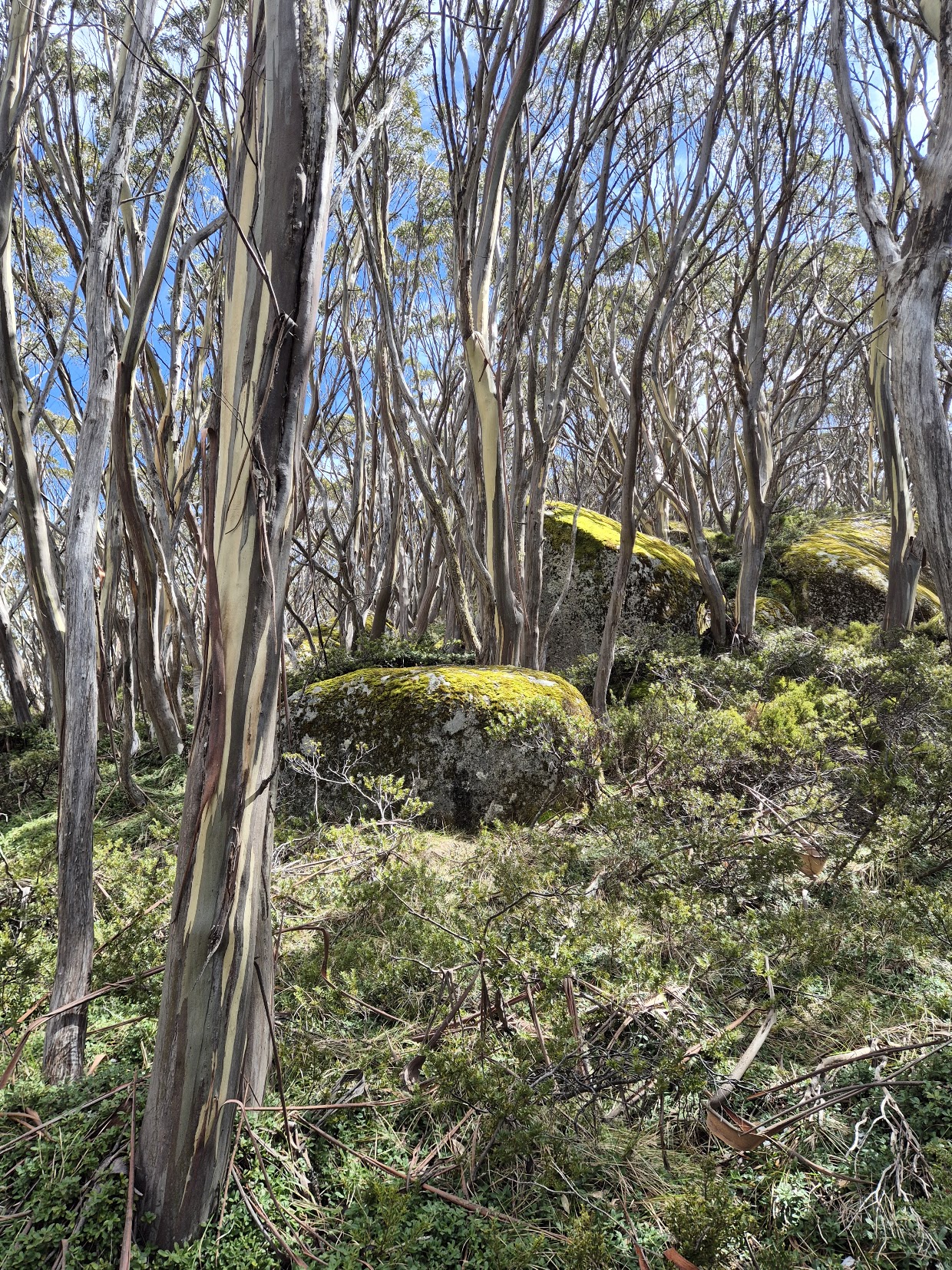
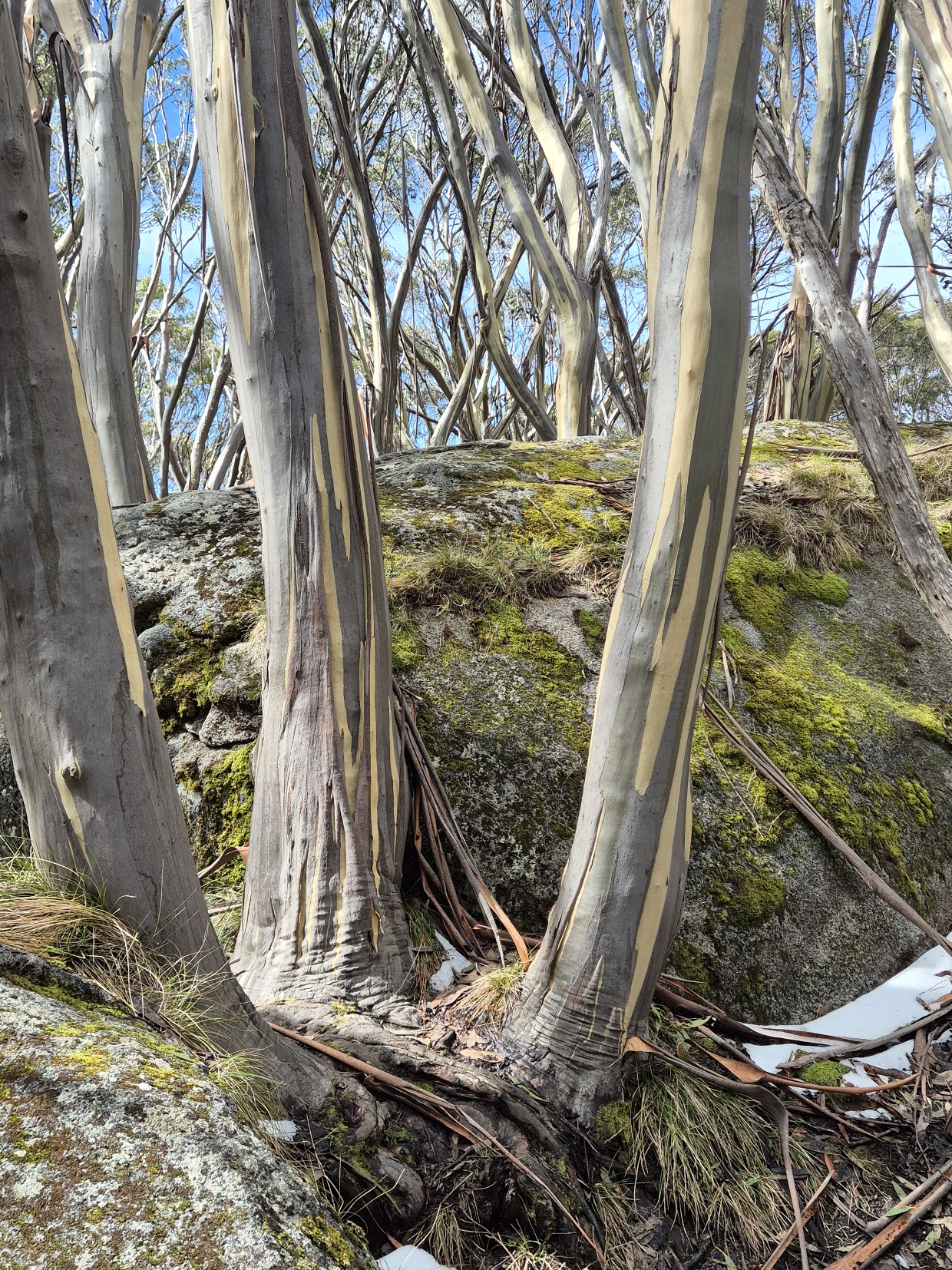
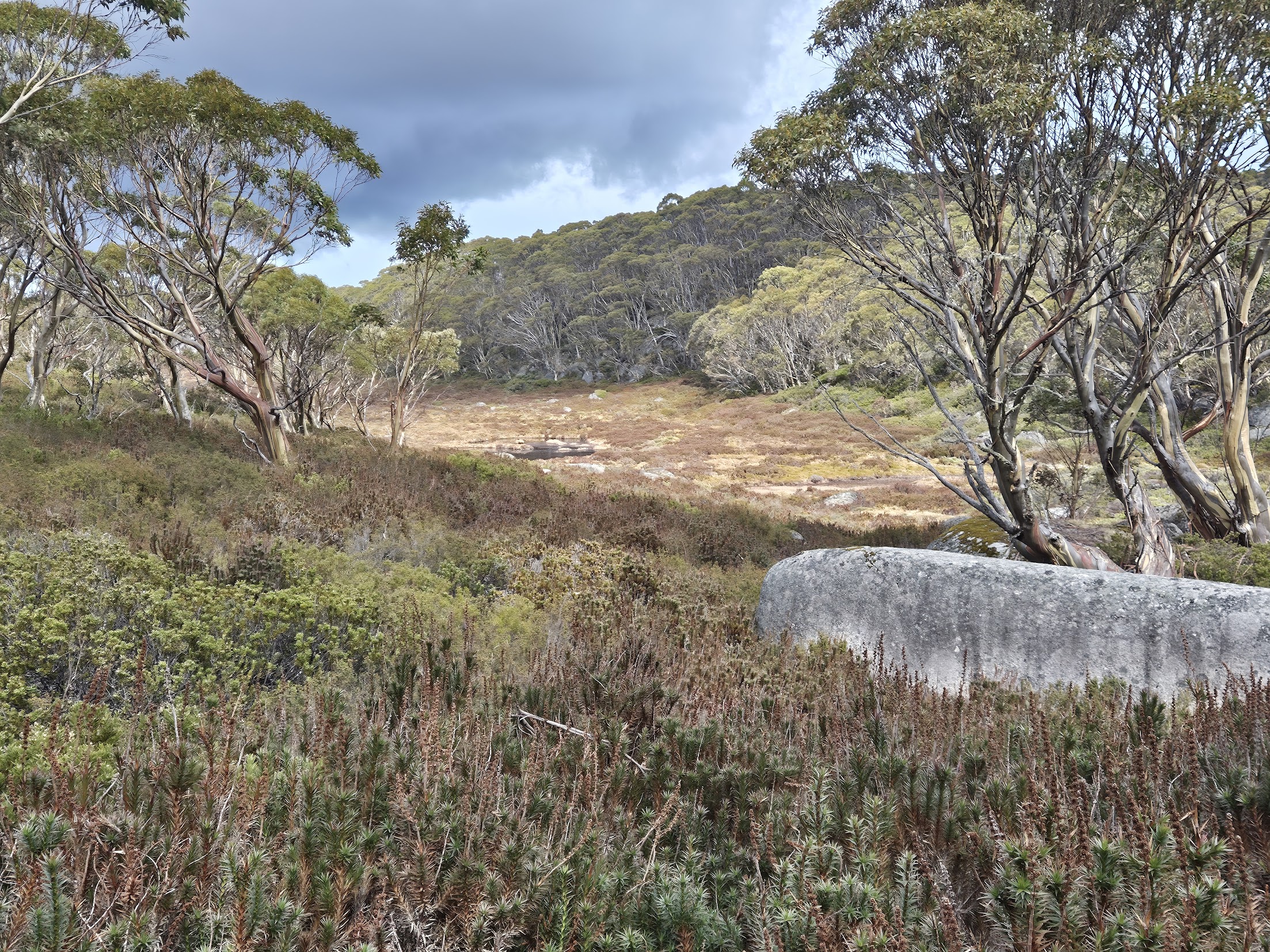
The bulky massif of the Baw Baw plateau is a serene bookend to the view as you look north from the Latrobe Valley. It is ringed by tall forests of Alpine Ash, Shining and Tingaringy Gum, Mountain Ash and Messmate. Despite years of intensive logging, the landscape still feels largely intact, as foothill forests give way to mountain vegetation and then the snow gums. The plateau itself is a gorgeous undulating landscape of ridge and shallow frost hollow valleys. The rare treat of seeing Nothofagus (myrtle beech) intermingled with snow gums adds to the magical feel of the place, as do the granite boulders and lime green carpets of moss that cover the rocks.
It is also important in terms of the animals that live here. The Baw Baw Plateau and parts of the adjoining Upper Thomson are recognised as being of global zoological significance. Animals in the park include:
- The endangered Leadbeater’s Possum, Victoria’s state faunal emblem. Inhabiting the Mountain Ash forests, they rely on old hollow trees and the dense understorey of wattles for nesting and feeding.
- The critically endangered endemic Baw Baw Frog.
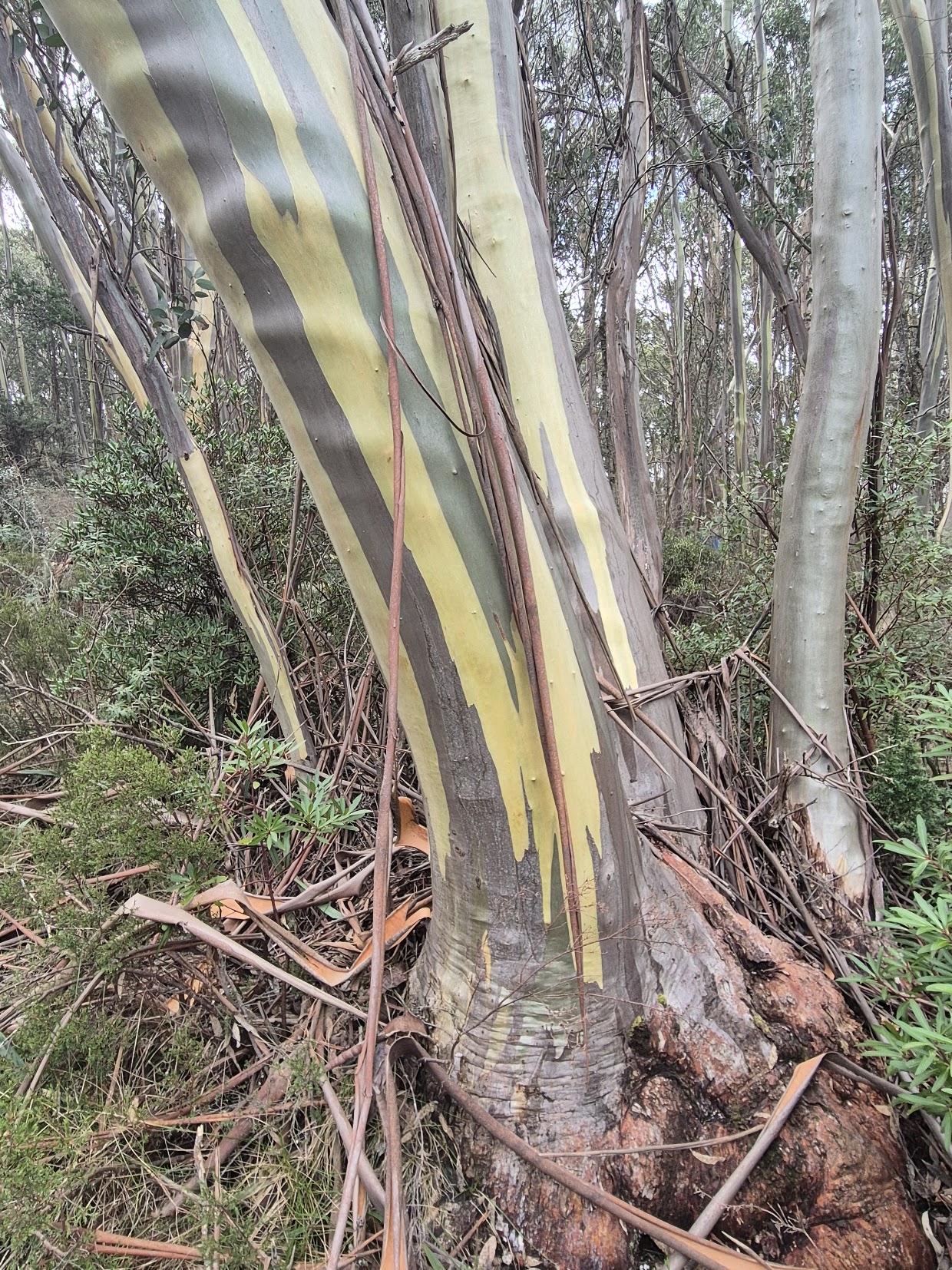
And the snow gum forests of Baw Baw are incredibly important. This area was terribly burnt during the Black Friday fires of 1939. Now the forests on the plateau are the largest area of long unburnt snow gum remaining in Victoria. While only a little more than 80 years of age, many trees are now of a size that the forests remind us of what much of the Australian high country looked like before the climate change driven fires that have dominated over the past three decades.
There is also quite limited evidence of dieback, which is killing snow gums across most of the high country.
When I discovered mountains in my mid teens, I learnt to ski at Baw Baw and Lake Mountain. Being poor and young we would walk up the road from the carpark to the chairlift then up to the resort (the chairlift is now long gone and people drive straight to the village) and we had many wonderful days and weekends scouring the plateau for backcountry turns from the ridges to the shallow valleys. For seven years I lived near Mt Toorongo, close to Icy Creek on the road to Baw Baw, and the plateau was our backyard, a 2 day walk from the farm over Toorongo and through the upper Thomson catchment and up to Mt Whitelaw. Later, when I returned to Melbourne full time, Baw Baw was my weekend escape. That first steady climb from the village and then the brisk walk across ridge to frost hollow and up to St Phillack saddle was as familiar as home. I could feel my body relaxing as I climbed that last slope to St Phillack saddle where the trees start to feel alpine and windswept and the understorey opens up. Long afternoons reading and lounging, leaning against the rocks or dozing in a meadow gave me a break from city life.
Later still I shifted my escape weekends to Mt Stirling. I needed something more ‘alpine’ and slowly abandoned the mellow rounded slopes of the plateau for grander views and the mountain feel of Stirling. I morphed from being a ‘south side’ person to a northerner. It’s different in the northern mountains – the vegetation is more open, the slopes rockier, the sun brighter. I missed the misty cool forests and fast running shallow streams of the southside, the endless grey spars in the canopy of the ash forests, the slow winding roads that link the valleys and mountains.
Life goes on, and my visits to Baw Baw became ever less frequent. Last weekend I found myself with a spare day while working in Gippsland and snuck up to Mt St Gwinear for a wander. Dim memories of that steady climb to the summit and the half glimpsed views of the Alps from the cairn through the regrowth trees kindled the memories. Spring camping, building jumps to get the best speed from mellow slopes, meeting some older guys brewing tea next to the rock shelter, like English gentlemen in a storm. The summer time flowers and long thin plateau clothed in multi coloured trees. In your teens and early 20s you are working out who you are, what you want to do, and who your people are. Baw Baw helped me work out many of those things.
The frost hollows seemed thicker with scrub now, but the small tarns still reflected the cumulus clouds that were boiling up over the plateau. The peculiar gurgling of the small streams that swirl around the boulders and empty the hollows, and the sudden silence as you step out of the trees into the open country was as familiar now as all those years ago.
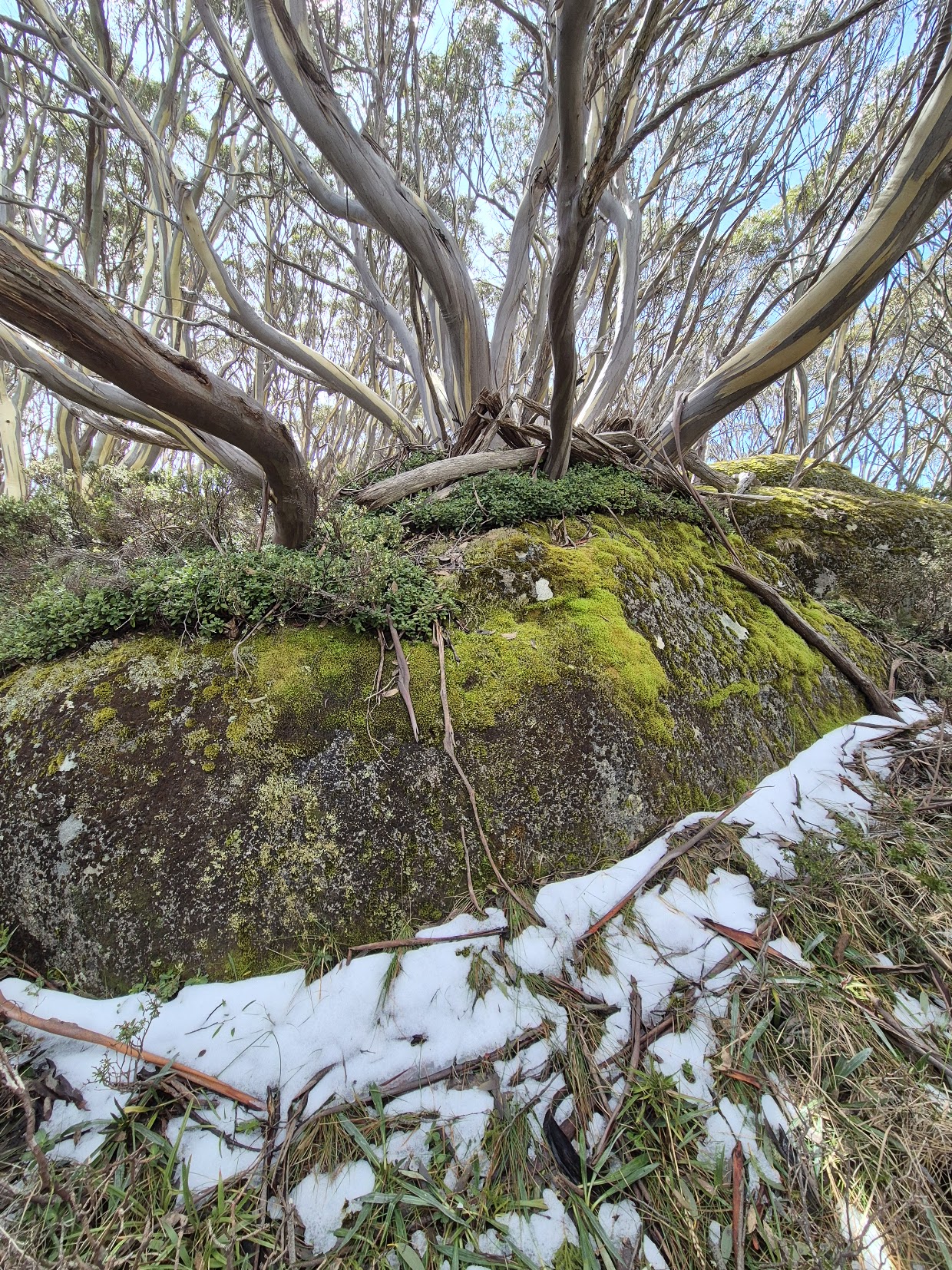
And the trees. How do you describe them? Stately, unique, charismatic, charming. Silently poised among the rocks and sheets of remnant snow. Starting to thin out as they move towards middle age. A pair of yellow tailed black cockatoos browsed through overhead, sending a steady rain of shredded fruiting buds from the trees. I felt entranced, then intoxicated, like I’d drunk a little too much champagne on an empty stomach. Here we are, in the stronghold of the snow gum country, steady and growing and breathing in the cool mountain air. In spite of the coal plant cooling tower you can glimpse through the trees and all the problems of the world, everything felt right in that slow delicious couple of hours of wandering and gazing.
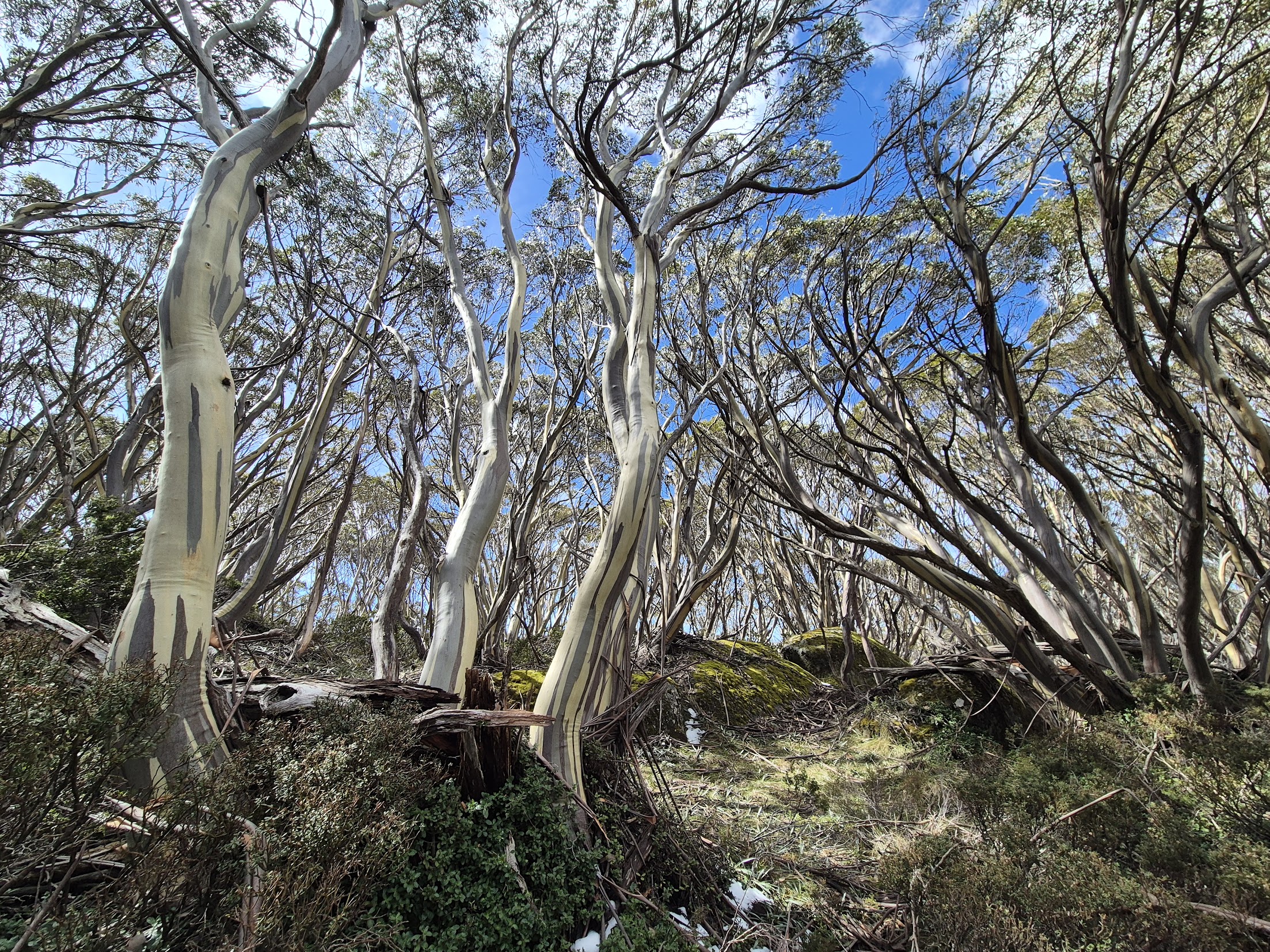
I cannot thrive unless I get into these sort of places. We all have somewhere or some ecosystem that resonates for us, that we feel aligned with in some way, a sense of rightness in our bones and spirit. It might be catching waves in a steady swell, or a tall forest, or a desert sky. For me its always been the mountains. I feel grateful that we still have these places, protected due to the hard work of those before us. I feel anxiety at the changes that are coming with climate change. I feel overwhelmed by the churn of the chaos in the bigger world. But in moments like these, the world feels right and time doesn’t exist. Just a steady cool breeze as air pushes across a rocky landscape, and the trees breathe quietly and the birds call and the streams empty into the valleys below.
Baw Baw National Park is part of an Aboriginal cultural landscape includes traditional Country of the Gunaikurnai and Wurundjeri Peoples.




September 17, 2026 at 2:44 pm
Hi Cam, I know the Baw Baw plateau very well. I met my wife there, in a Ski Orienteering event in 1972. Later we joined the Baw Baw Ski Club club.We helped our friend Fritz Balkau make the first decent contour map of the plateau. In the early days we had to drive to the car park, then catch the four-wheel-drive bus further and then finally reach the chairlift. If it was snowing heavily, you would be given a hessian sack for cover. At the top we had to ski down to the lodge.They were the days of waxed skis as we were ski tourers mainly. We explored many parts of the plateau and laid out the course of the 5K trail, which was later rather brutally widened by a ranger. After many years at Baw Baw, we moved to the Bogong High Plains, skiing out oft Wilkinson Lodge, near Mount Cope.