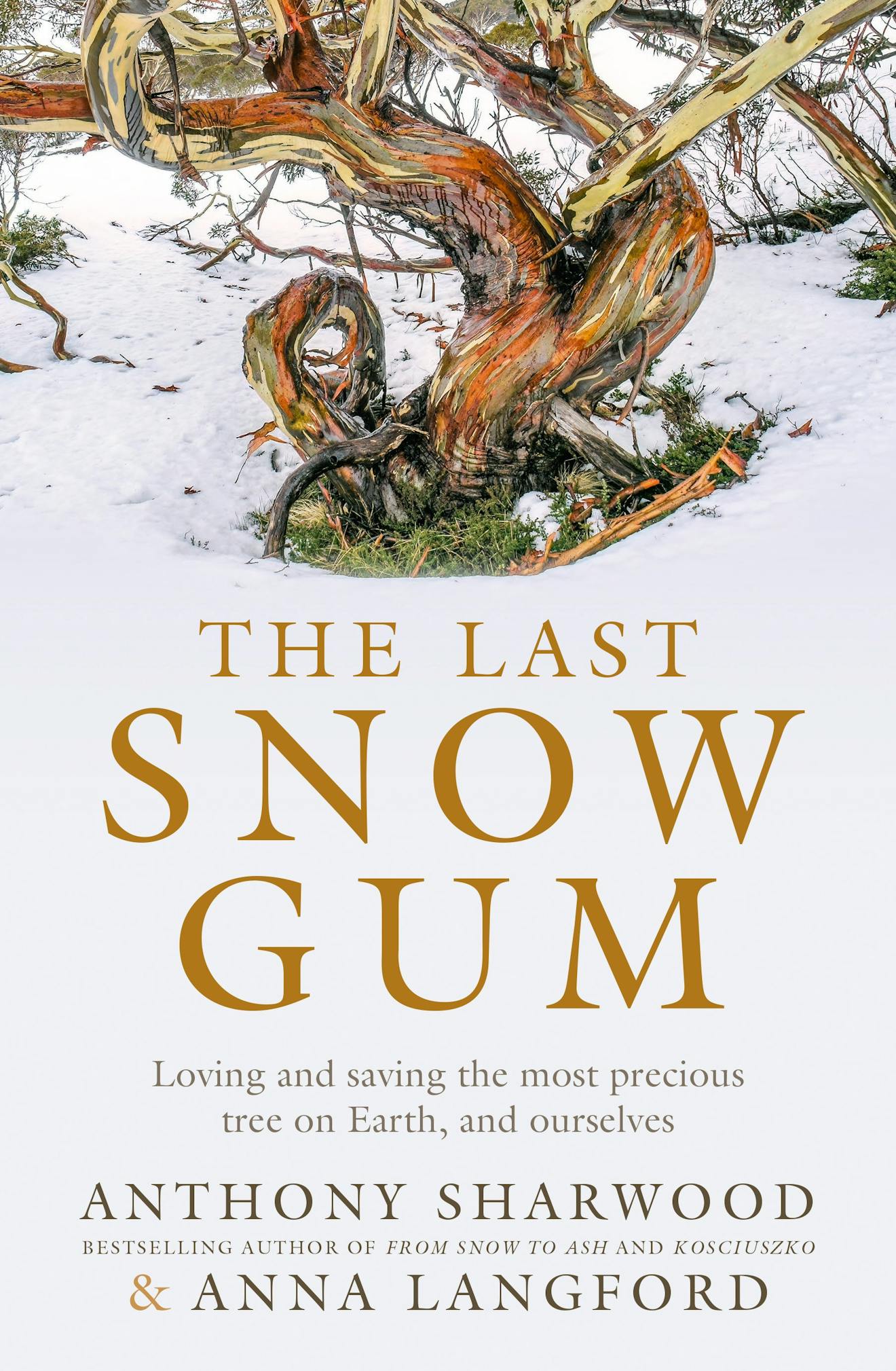
Where do I even start with a book like this? The Last Snow Gum. The Last. If you read Mountain Journal, you will know that a key preoccupation here is the threat to, and loss of, snow gums. I’ve spent a big chunk of the last six years working to gain protection for snow gum forests which are starting to collapse before our eyes. ‘Collapse’ means that, in many areas, the trees are dying, and the scale of the death is so intense that there are no new forests emerging. What were stunning twisting forests and woodlands are turning into wastelands of highly flammable dead timber, scrub and grass. This is happening right now, yet most people who know the mountains and visit regularly refuse to do anything about it. The ski resorts and the mountains more broadly are full of people who can see, who have time and disposable income, but they have chosen to turn a blind eye and ignore the obvious.
After 6 plus years of work, a revolving set of new environment ministers, dozens of mainstream media stories, endless lobbying and surveys, guided walks, forums and report writing, we are getting somewhere. But a little bit of political movement is not the same as real action to counter an existential threat.
Me getting angry or sad or shrill or ranty doesn’t actually change anything. So I try to hold onto my Reasonable Voice even as I watch the snow gums die in front of us. Watching an ecosystem die in real time is hard work and wears on the soul.
But these forests still feed me. The silence, the raucous noise of ravens sweeping through the trees, the sunsets, the impossible beauty of fresh snow on an old dry hot continent. Yes it’s a word that gets thrown around, but snow gums are iconic. I would also say they are charming, charismatic, solemn, stoic, stubborn and delightful.
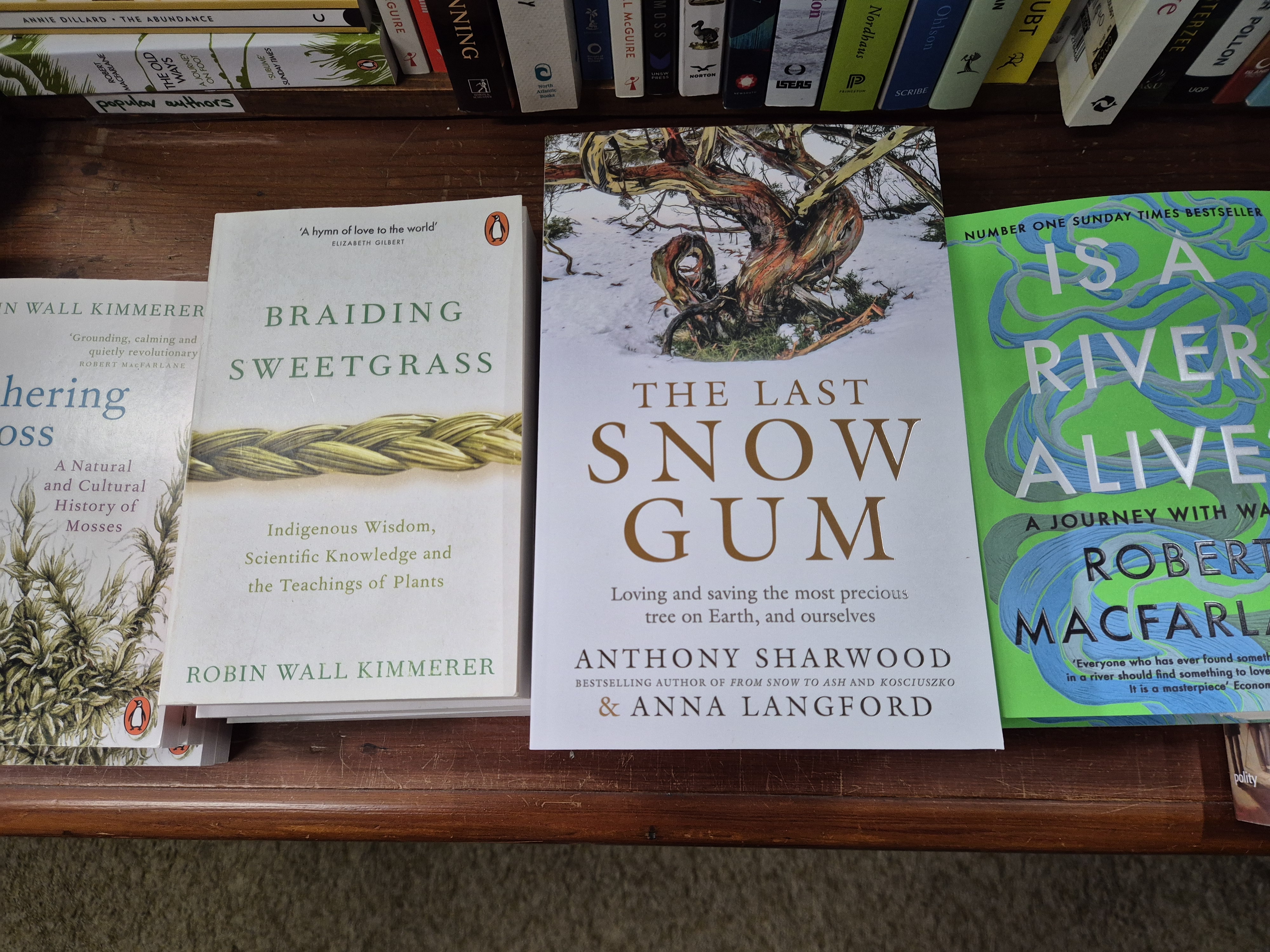
Which brings me back to this book, released in bookstores nationwide this week. At its heart, it is a long and detailed love song for this wonderful tree. It really does weave the loss and the beauty together into a compelling story. If you have ever spent time in the Australian mountains I would say that you need to read it, as the knowledge you gain will deepen your connection to these wonderful trees and the mountain country they inhabit. There are no ranty activists here, just people who love the mountains and the snow gums, and faced with the facts, the book is considered but alarmed.
I have read a number of books where people alternate chapters and normally it just doesn’t work. Ant Sharwood, a widely published author, has a wonderful and informal style of writing that seems to be based on wandering anecdotes and kernels of info that then weave back to the main narrative. Direct and chatty, talking directly to us, I like how he treats his readers as people who think and don’t need to be hand fed everything. Well read and at times scholarly he does love a long yarn and it’s always in service to a bigger story. In contrast, Anna Langford follows lines of emotion and personal connection to place, and also brings in a global perspective and a central guiding premise of politics, a systemic view. Her transition from a visitor to the mountains to inhabitant of land is laid out in a way that will resonate with many. The interactions between the two really works.
It all starts out nice and light, verging into the sensual and erotic, and places us firmly in the reality that this is a unique story: on the hottest driest continent there lives a tree so sublime it seems magical. Chatty stories explain the why and how of these trees, down to why the leaves don’t freeze in cold winters, and the concept of tree ribbons – groves of trees stretched across mountain sides that are linked to and influenced by the way snow moves around and is captured downwind of trees.
It then goes down the dark corridor of knowledge about what is happening to these forests. The twin threats of more frequent and intense fires and greater mortality from dieback, which is caused by a native beetle. Both of these direct impacts are influenced by the background drive of global heating. As with the Great Barrier Reef, simple land management responses won’t be enough to save the trees. Ultimately we must also tackle the ‘wicked’ problem of climate change.
But that journey, through the second part of the book, is enriching and inspiring in its own way. The long scholarly work of Diedre Slattery who has shared her sheer joy for the mountains through science, Matt Brookhouse, the ‘beetle guy’, who is leading the work to find a solution to the threat from dieback, Adrienne Nicotra, a plant evolutionary ecologist who manages the fascinating Australian Mountain Research Facility, and fire ecologist Phil Zylstra all are presented in a way that is illuminating and hopeful and grim at the same time.
An abiding theme in Ant’s books is that Australians are not very good at ‘seeing’ the mountains or the First Nations connections that bind people to the high country. We all know the story of the Man from Snowy River, but who knows the story of the people who lived on the Buffalo plateau and acted as a ‘druid’ class for pre invasion indigenous society? I would say that many of the best books – fiction or non fiction – treat Place as a key character. Tim Winton’s Dirt Music would be just a love story about people stifled by grief and regret without the looming presence of the West Australian desert and ocean seascapes. Equally the presence of snow gums in this book takes it well beyond a non fiction summary of facts into much deeper and richer terrain.
The transparency statement: Ant Sharwood and Anna Langford are my friends and I am referenced in the book. I know most of the people interviewed. Of course I will say it’s great.
I understand that as a mainstream author Ant has not written an ‘activist’ book. But its unique focus on the beauty of these forests combined with a succinct and authoritative summary of the threats they face makes it a perfect activist tome. I hope it engages and motivates droves of mountain lovers who have, until now, been unwilling to read the signs and decide to take action. To quote the late Edward Abbey, who reflected on his book Desert Solitaire, which inspired and mobilised a generation of people to care for a fragile and at risk ecosystem, I would say that ‘this book is not a travel guide but an elegy. Don’t drop it on your foot, throw it at something big and glassy’.
The Last Snow Gum, Loving and saving the most precious tree on Earth, and ourselves
Published September 2026, Hachette, and available in good bookstores everywhere.
https://www.hachette.com.au/anthony-sharwood-anna-langford/the-last-snow-gum




Leave a Reply