Search

Mountain Journal

Environment, news, culture from the Australian Alps

Author

Cam Walker

I work with Friends of the Earth, and live in Castlemaine in Central Victoria, Australia. Activist, mountain enthusiast, telemark skier, volunteer firefighter.

The Mountain Legacy Project

The Mountain Legacy Project, or MLP, is “an interdisciplinary collaboration focused on exploring change in Canada’s mountain environments. Utilizing over 140,000 images taken by land surveyors from 1861 – 1953, MLP researchers seek to re-photograph these images as accurately as possible and make the resulting image pairs available for further investigation”.

It compares the original landscape shown in the early photos with ones taken in the same place over the past few years. It allows you look at the changes in many thousands of places – mountains, valleys and so on – over time. And the results are incredible. While it documents the development of towns, roads, changes in land management, the impact of logging operations and wildfire, etc, the most striking aspect is the change to snowpack and ice fields during this time.

Continue reading “The Mountain Legacy Project”

Rabbits adapting to eat snow gum leaves

This is a worrying development. Research by the legendary Ken Green shows that rabbits are now moving into snowy mountainous areas by adapting to survive on snow gum leaves when there is limited availability of grass. These are generally toxic to most animals.

The following article by Alice Klein comes from New Scientist.

Continue reading “Rabbits adapting to eat snow gum leaves”

Mountaingrass music festival

Dates: 18-20 November 2016
Harrietville, Victoria

The first Mountaingrass was held in November of 2013 and is organised by the Australasian Bluegrass and Old Time Music Association Inc. (ABOTMA Inc.)  For over 27 years the small township of Harrietville has played host every year to bluegrass and old-time music festivals.

The original Harrietville Bluegrass and Traditional Country Music Convention was held in October 1989.  It was organised by a group of musicians including Nick and Janet Dear, Rod and Judy Jones, Philomena Carroll and Laurie Grundy. With help from other dedicated volunteers the festival grew into the peak event on the bluegrass and old time music calendar in Australia and came to be known simply as ‘Harrietville’.

Mountaingrass continues the tradition of bringing U.S. Bluegrass and Old-Time acts to play concerts and run workshops for fans and players of all levels. Mountaingrass also showcases a selection of acts from Australia and New Zealand and runs instrument and other workshops for players of all levels.

Check here for full details and to buy the tickets.

Summer Hawkweed Surveys

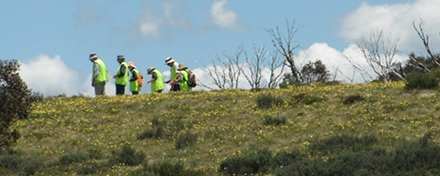
Many Mountain Journal readers will know that Hawkweed is a highly invasive plant species which can cause major environmental damage in alpine and sub-alpine areas of Australia if not eradicated early. Parks Victoria organises a series of Hawkweed surveys on the Bogong High Plains each year. If you love the Victorian Alps, the surveys are a great way to do something practical to support the ecological integrity of the mountains.

The following information comes from Parks Victoria:

Continue reading “Summer Hawkweed Surveys”

2016 Radical Reels tour

Catch the steepest and deepest in high-adrenaline outdoor sport films with the 2016 Radical Reels Australian tour. Hurtle down steep rocky paths, push the boundaries of human stamina and climbing exposure, paddle huge drops and massive white water, ski pristine backcountry steeps and fly into unchartered territory over the beautiful mountain ranges.

  Continue reading “2016 Radical Reels tour”

Atone for your carma by supporting mountain critter cause

Winter may be long over, but the snow is still there across the higher ranges of the Australian alps. It was a winter that went through so many boom and bust cycles and if all that rain had been snow, we’d be skiing until January. Long after the resorts have closed there is still decent and rideable cover in many places, but we are getting towards the end of season 2016.

Continue reading “Atone for your carma by supporting mountain critter cause”

Hound hunting for deer in our Parks?

Anyone who spends time in the High Country has probably seen a deer (or several). While not as well known as wild horses in terms of environmental damage, deer are a real problem for sub alpine environments.

Recreational hunters have often argued that they are a key part of the solution to the deer problem and have recently made these claims in the Victorian parliamentary inquiry that’s currently underway.

Continue reading “Hound hunting for deer in our Parks?”

Brumby damage in alpine regions rated ‘significant’

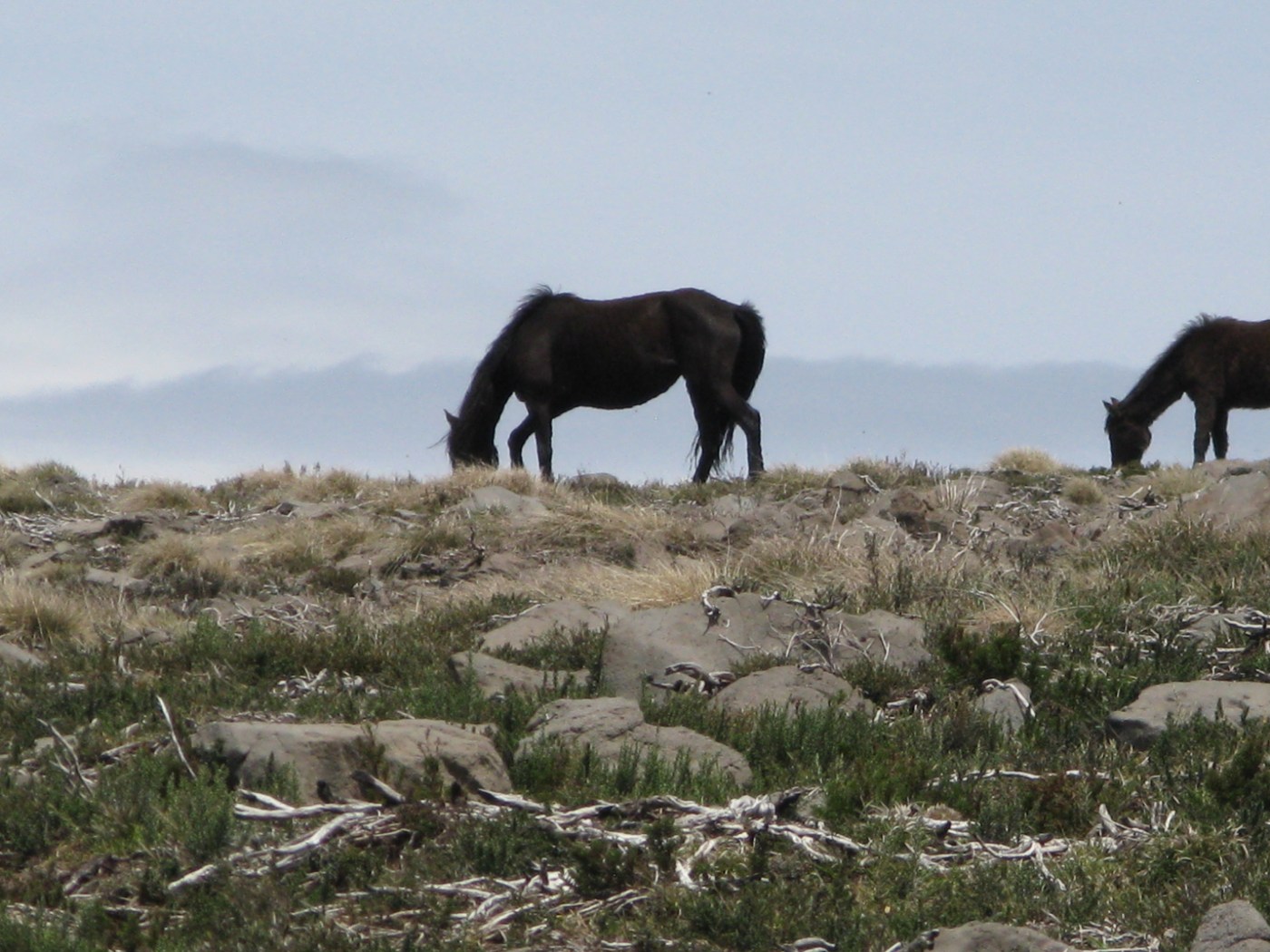
Brumbies (wild horses) cause a huge amount of damage in the Australian high country. While it is usually the herds in Kosciusko National Park that feature in the news stories and public debates, this recent piece by Nicola Bell from The Weekly Times highlights the problems in Victoria.

Continue reading “Brumby damage in alpine regions rated ‘significant’”

Nat Segal – Greenland and the future of skiing

In March of 2014 six women set sail from Ísafjörður, Iceland with the intention of sailing across the Denmark Straight and up the south-west coast of Greenland. They hoped to explore the remote coastline, pioneer new ski descents, and collect scientific data in some of the most incredible wilderness on earth.

Continue reading “Nat Segal – Greenland and the future of skiing”

Thirty years of co-operative management of the Alps

National Parks now cover much of the higher terrain in the Australian Alps, from the Baw Plateau to the east of Melbourne, all the way across the mountains almost to the outskirts of Canberra.

Those of us who enjoy these parks owe a great debt to the people who argued for the creation of the reserves in the first place, and to the generations of land managers that have looked after them.

While it is a discrete series of parks in Victoria, NSW and the ACT, there is also overall co-ordination of the parks through a Memorandum of Understanding (MoU) between the three state and territory and federal governments.

The MoU has allowed the Australian Alps to be managed co-operatively by the various agencies. Treating the Alps as a single bioregion makes a lot of sense, especially in a time of climate change. Yet like all good government decisions, the concept of co-operative management didn’t just appear. It took decades of work by a range of big picture thinkers and visionaries, and engagement in political processes at many levels that saw the creation of the agreement.

The current version of News from the Alps is dedicated to the co-operative arrangement and includes a potted history of the processes that lead to the signing of the MoU.

Whereas in the early stages after European colonisation, the Alps were seen largely as summer grazing grounds for cattle and sources of wood, gold and other materials, the history in the newsleter makes it clear that there was concern about the state of the Alps from the early to mid 1940s.

Continue reading “Thirty years of co-operative management of the Alps”

Strengthening Parks Victoria – Your vision for parks

Parks Victoria is asking the community to ‘share your experiences, expectations and aspirations for parks’ via a website and series of community forums. This is happening as part of the Strengthening Parks Victoria project.

PV says:

‘As part of the Strengthening Parks Victoria project, we will be looking at your stories, comments, and advice to us, to help better understand what values parks have to you, and what we can do to enhance your enjoyment of Victoria’s incredible natural settings.

This information will help us to celebrate with you the spectacular landscapes, habitats and places we have managed for nearly 20 years, and understand how we must evolve in the future to deliver the best outcomes for Victorians, visitors, our economies, and the incredible Country we care for.’

On their website you can:

Tell PV about how you enjoy and experience Victoria’s parks

Provide ideas on how to improve the experience of visiting parks

Alpine Ecology Course 2017

The Research Centre for Applied Alpine Ecology is pleased to announce details of its 2017 Alpine Ecology Course.  This is an exciting opportunity to learn about the plants, animals, land-forms and soils that make up alpine ecosystems. The course is designed for people who are involved in natural resource management or conservation activities in alpine and other natural environments.

It will be held on the Bogong High Plains from the 5th – 10th February 2017.

Further information available here.

Blog at WordPress.com.

Up ↑