On saturday August 24 there is a fund raiser event to raise cash for the further development of the mountain bike and walking trails around Dinner Plain.
Please see the poster for full details.
On saturday August 24 there is a fund raiser event to raise cash for the further development of the mountain bike and walking trails around Dinner Plain.
Please see the poster for full details.
I know I should probably stop bagging out our local ski resorts for being useless on climate change, but there are so many inspiring examples from overseas that show what is possible with a little bit of vision.
The following is an announcement about a new collaboration between an alliance of US-based mountain resorts, and Protect Our Winters.
The announcement is vague on the details of exactly what the alliance will do, and highlights ‘cross promotion’ opportunities, but at least it seems intent on putting climate change on the agenda for each of the resorts, and mentions advocacy as one of the activities that will be undertaken.
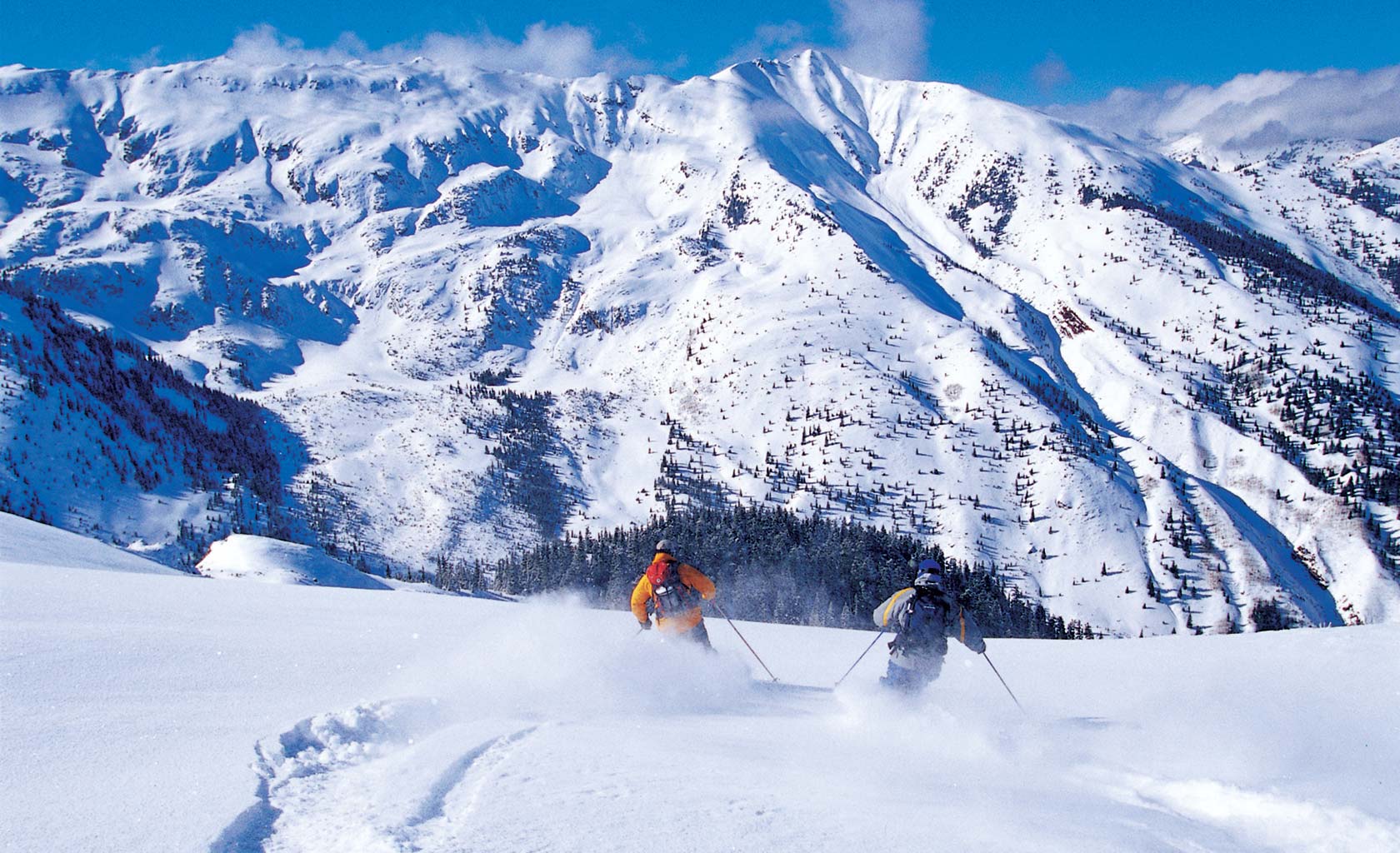 The Mountain Collective, an alliance of independent mountain resorts, and Protect Our Winters (POW) are proud to announce a new and innovative partnership with the mission of uniting the winter sports community on the important issue of climate change. Both groups have worked independently to promote this environmental cause, and this collaboration will make an even bigger impact.
Protect Our Winters is the environmental center point of the winter sports community’s fight against climate change. The Mountain Collective is comprised of six iconic destinations representing the core of the skiing and snowboarding world including Alta, Aspen/Snowmass, Jackson Hole, Mammoth Mountain, Snowbird, Squaw Valley/Alpine Meadows, and Whistler Blackcomb. Together, POW and these high profile resorts can impact the entire community and industry with incredible effectiveness.
“Through this groundbreaking partnership, The Mountain Collective has re-defined what a pass should be. It not only represents access to six world-class destinations, but the foresight to realize that climate change is a threat to our sport and with that access, comes a responsibility to protect it for the long term,” said POW’s Executive Director Chris Steinkamp.
“Partnering with a leading organization like POW serves to reinforce The Mountain Collective as the most forward-thinking alliance of its kind,” said Christian Knapp, vice president marketing, Aspen Skiing Company. “Together we can leverage the power of our brands to promote meaningful climate advocacy that resonates with mountain resorts and snow sports enthusiasts alike.”
The partnership will include ongoing advocacy and cross-marketing initiatives, education and community outreach to raise awareness and promote environmental sustainability. Additionally, POW members who purchase a Mountain Collective Pass will receive a year’s subscription to Powder magazine, and anyone who purchases a new Mountain Collective Pass will be offered a free one-year membership to POW.
The Impact of Climate Change on Winter Sports
The last decade was the warmest on record [NOAA, 2010]. Fewer ski days would not only reduce enjoyment for skiers, boarders and other winter sports enthusiasts, but also cause significant economic impact to an industry that supports 965,000 people and contributes $66 billion to the U.S. economy alone [OIA 2006, 2012]. Without action to reduce emissions, scientists predict that by 2039 the Northeast ski season will last less than 100 days and the probability of being open by Christmas will decline below 75% [Scott et al. (2008)].
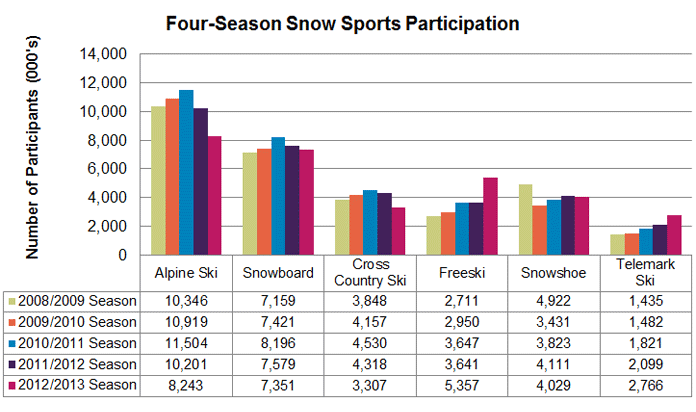 The following figures from Snowsports Industries America are some analysis of the most recent Northern hemisphere winter. The short message is that overall visitation to resorts is down slightly against recent years.
The report notes that “snowfall got a late start this season, really getting underway after the Christmas holiday. The lack of early season snow affected all snow sports except freeski and telemark.” With climate change predicted to increasingly impact on snow quantity, we keep getting glimpses of possible futures under global warming scenarios – of later and more erratic winters.
Here in Australia, we have had a very erratic winter so far, with good snowfalls being followed by heavy rainfall and warm conditions. In the VIC alps we lost almost the entire snowbase in mid July after solid falls early in the month. Just a few degrees in temperature can make all the difference to whether precipitation comes as rain or snow. And as the report Caring for our Australian Alps Catchments found, the Alps face an average temperature rise of between 0.6 and 2.9 degrees by 2050, depending on how much action the international community takes to combat climate change.
There are a range of reasons why people might ski or board, or do something else, and lift prices and overall costs of being in a resort is a big one. But poor snow conditions is another obvious one. Just ask anyone who manages accommodation in the Alps and they will tell you that snow falls correlate with booking trends. With less reliable snow, people are likely to do something else, or go overseas if they can afford to do so. Climate change impacts are a factor we ignore at our peril.
In the US there is a strong movement within the snowsports community which is working to encourage people and governments to act on climate change. Protect our Winters is the best known of these. You do have to wonder why the community here has been so slow to respond, and why we have so few prominent people speaking out? The one industry initiative Keep Winter Cool has dwindled off in recent years as resorts focus their attention on rebranding themselves as year round destinations. In climate change terms, this is called ‘adaptation’. But without ‘mitigation’ – action to reduce emissions, we seem doomed to the type of futures forecast in reports like Caring for our Australian Alps Catchments.
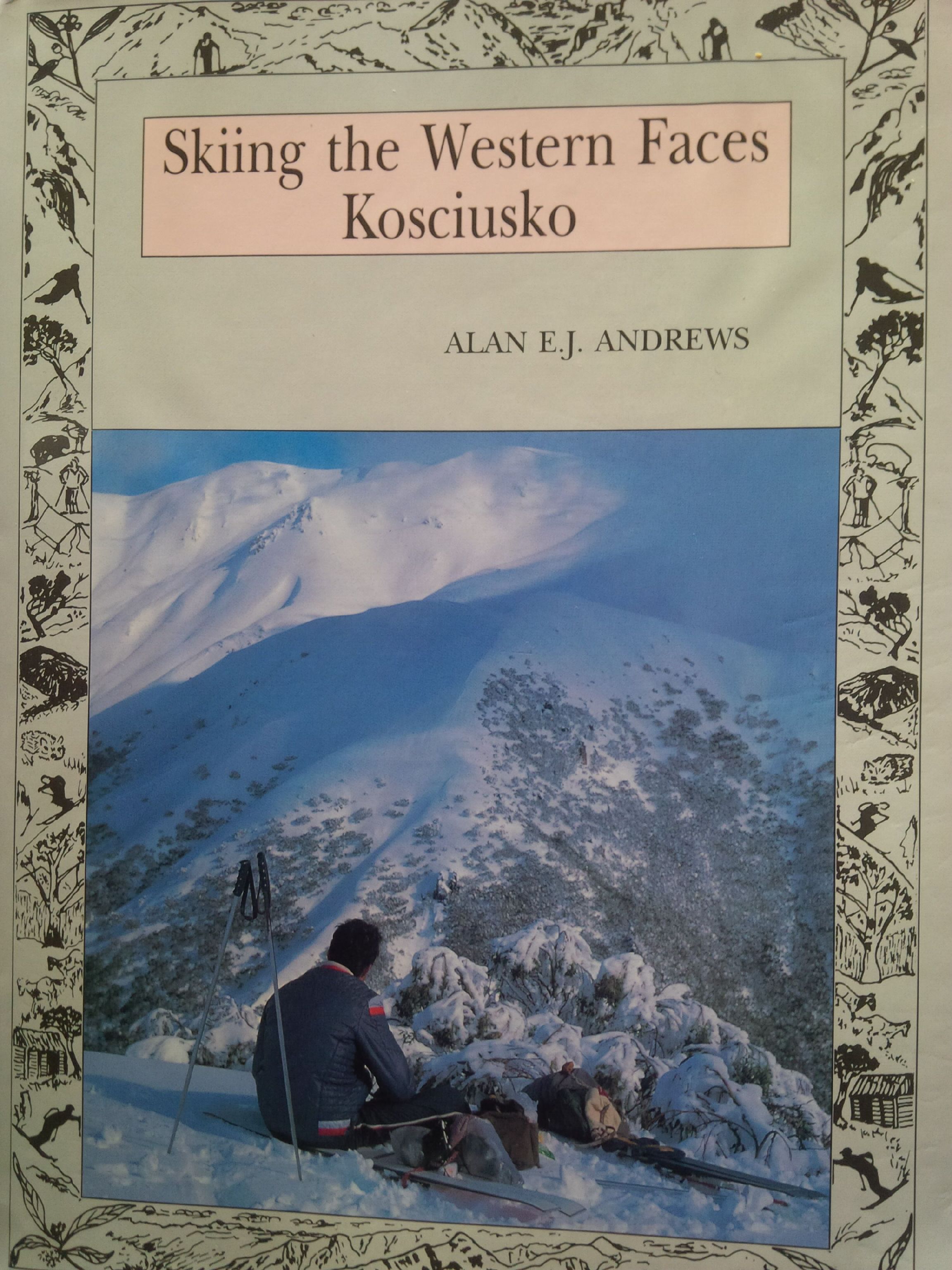 Anyone with an interest in skiing or boarding steeper lines on the Main Range of the Snowy Mountains will love this book. I can’t believe that it took 20 years from its publication before I heard of this wonderful book.
I was skiing with my friend Peter this winter and as we talked of the backcountry trips we had done and wanted to do, the western slopes of the Snowies came up. He mentioned Alan Andrews ‘classic’ Skiing the Western Faces Kosciusko, describing it as the Bible of skiing in the area, and providing the ‘tick list’ for anyone interested in the many lines that come off the western side of the highest peaks of the Main Range.
Two weeks later I was the proud owner of a copy, a publication of Canberra based Tabletop Press, which has an impressive collection of mountain themed books in its stable.
As Alan describes in the introduction, the book is not so much a guide to skiing the western slopes as ‘a companion volume that might instil in you or remind you of its joys’.
 Its winter, which means I am distracted by all things snow. I am also aware of a huge number of things that are happening around and in the mountains and just don’t have the time to post on them all.
So, finally, there is a mountain journal facebook page.
The plan is to use it mainly for alerts about other people’s events or items. Please feel free to post and ‘like’ on the page.
You can find it here.
Now here’s a surprise, the state government has stacked the new Alpine Advisory Committee dominated with pro-cattle-grazing members.
Published by the Victorian National Parks Association, August 2013
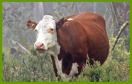
Victoria’s environment minister Ryan Smith has appointed a new Alpine Advisory Committee dominated by pro-cattle-grazing members, including MLC for Eastern Victoria and vocal cattlemen supporter Phil Davis MP.
The committee’s task is to review the long-running Alpine National Park draft management plan, which has yet to be released for public comment.
Some commentators see this as the first step towards a bid to try once again to reintroduce cattle grazing to the park, particularly if there is a change of government federally.
A representative of the Prospectors and Miners Association is also included.
The environment minister seems to have mistakenly signed off on the Mountain Cattlemen’s Association Christmas card list, instead of appointing an independent advisory committee.
No nature conservation groups are represented.
Who is on the commitee?
Chair: Ewan Waller.
Members: Philip Davis, David Packham, Peter Attiwill, Russell Mullett, Ronald Moon, Walter Wright, Mervyn McGuire, Geoffrey Burrowes, Stephen Dingwall, Andrew Dwyer, Christopher Commins, Christa Treasure, Trudy Anderson and Peter Roper.
The following information comes from the Weekly Times and highlights the heavy weighting towards grazing and other extractive interests.
The committee is being chaired by former Department of Sustainability fire chief Ewan Waller who revealed its scope allows them to give advice on forest and crown land in the high country as well as national parks.
Members include two former Mountain Cattlemen’s Association presidents Ensay’s Chris Commins and Glenaladale’s Christa Treasure and another MCAV member Neville Wright of Bobinwarrah plus Alpine Shire Mayor and Tawonga producer Peter Roper, and Trudy Anderson of Benambra.
Also appointed were retired CSIRO scientist and former forest chief David Packham along with retired forest ecologist Peter Attiwill, both known advocates for greater planned burning.
The Man from Snowy River film producer and Mansfield farmer Geoffrey Burrowes has also been selected and the tourism industry is represented by Andrew Dwyer of Jamieson and outback adventurer Ronald Moon.
Other members are Eastern Region MLA Philip Davis, Prospectors and Miners Association representative Stephen Dingwall, recreational fishing advocate Mervyn McGuire, indigenous consultants Russell Mullett.
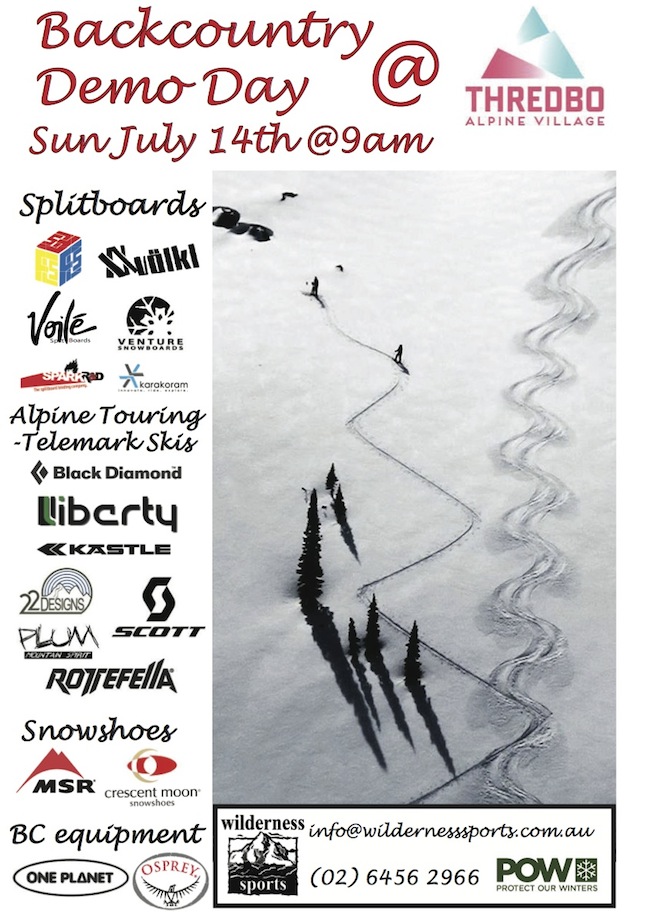 Wilderness Sports presents first ever Backcountry Demo Day in Thredbo10th of July 2013
From Mountainwatch
This coming weekend Wilderness Sports will host the First EVER Backcountry Demo Day to be held in Australia @ Thredbo on Sunday July 14 from 9.00am. (Further details shortly and part of a series)
In partnership with Thredbo we will offer an opportunity to try out the latest equipment for free and talk with experienced industry people as well as Wilderness Sports Backcountry guides about enjoying the mountains safely and how to explore more of the rugged and unique Snowy Mountains.
This is a part of a series of Backcountry Events to be hosted by Wilderness Sports and partnering companies such as First Light Snowboards and Protect Our Winters in order to encourage and educate safe and responsibly travel in the backcountry.
The Event will feature Split Boards; Alpine Touring gear; Snowshoe and Telemark Equipment. Clinics as well as backcountry gear for safety and education.
Split Board Brands – Voile; Venture; Volkl;
Alpine Touring Brands – Kastle; Liberty; Black Diamond; PLUM; Scott;
Telemark Brands – 22 Designs; Rottefella; 75mm and NTN;
Snowshoe Brands – Crescent Moon; MSR;
Backcountry Accessories – Black Diamond; One Planet; Osprey
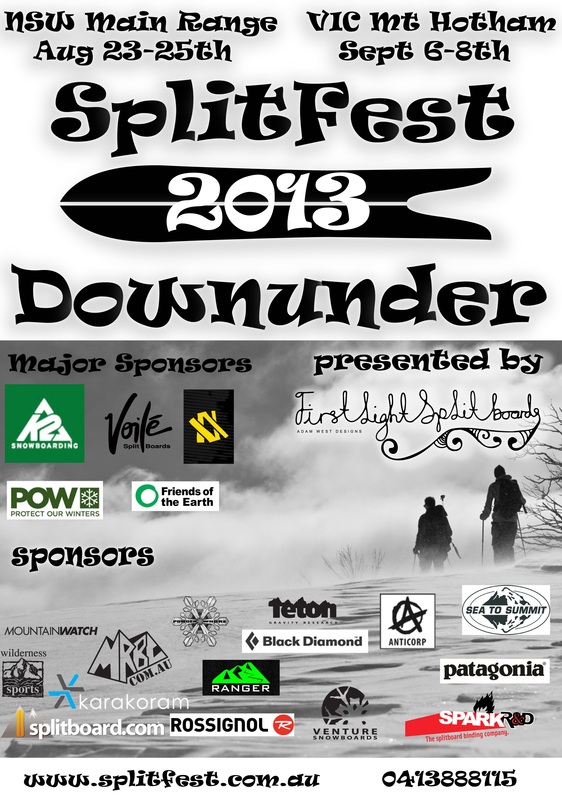 FirstLight Boards have organised the second Australian splitboard festival for this winter. This year it will happen in both Victoria and NSW.
A splitboard is a snowboard that can be separated into two ski-like parts, which are used with climbing skins to ascend slopes the same way alpine touring or telemark skis are. The two halves can then be connected to form a regular snowboard for descent. This set up enables snow boarders to get into the backcountry.
The NSW Splitfest DownUnder will be held on weekend of the 23rd of August in the NSW main range.
We will be holding the Friday night entertainment at the Banjo Paterson Inn Starting @ 6pm
1 Kosciuszko Road Jindabyne Snowy Mountains New South Wales 2627
These are free events, there are no guides, so you must be able to make your own terrain decisions.
The VIC Splitfest DownUnder will be held on the weekend of the 6th of September at Mt Hotham.
We will be holding the Friday night entertainment will be at “The General” starting @ 6pm
Lot 1 Great Alpine Rd Mt Hotham
The following is a media release from the Victorian Environment Minister Ryan Smith.
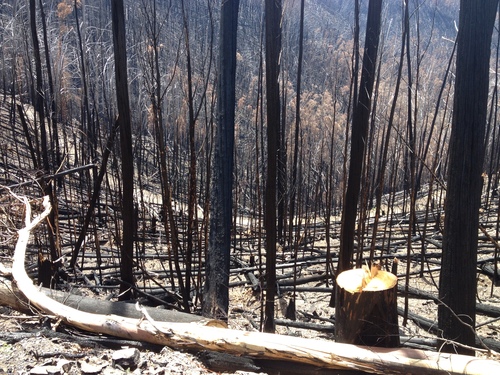
The Victorian Coalition Government has launched an urgent effort to re-seed about 2,000 hectares of Alpine Ash forest that was burnt during the Harrietville fire earlier this year.
Minister for Environment and Climate Change Ryan Smith said a helicopter was being used to spread Alpine Ash seeds across 198 hectares of State Forest and 1,876 hectares of National Park that was burnt in the fires.
“Areas within the Harrietville fire boundary have been burnt several times over the past decade and Department of Environment and Primary Industries and Parks Victoria ecology experts predict about 2,000 hectares will not be able to naturally regenerate due to the nature of Alpine Ash and its response to fire,” Mr Smith said.
“It is also important to re-seed the area to assist with stabilising the fragile soils in the steep terrain to protect water catchments, which supply communities downstream.
“We have already started the aerial re-seeding operation in the State Forest and will continue the work over the next few days if the weather conditions remain suitable.”
Parks Victoria Regional Director East Andrew Marshall said it was important to sow the Ash seeds before other plants regenerate so the Ash seeds can germinate in the spring.
“There will be some follow-up monitoring of some sites within the State Forests but in National Parks areas this is a once off opportunity to regenerate,” Mr Marshall said.
The cost of the re-seeding work is approximately $620,000 and is funded as part of the Victorian Coalition Government’s Harrietville fire recovery program.
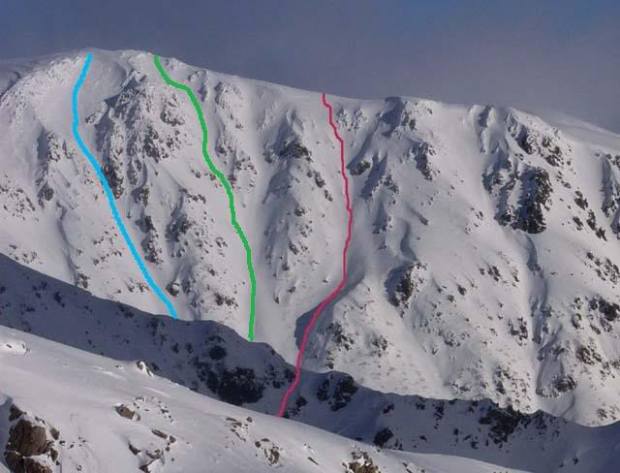
This is a great resource: the ‘gnarliest runs in Oz’, from the Huck & Dyno website (in two parts – Victoria and the Main Range in NSW).
The NSW feature has all the obvious things, and Victoria includes excellent coverage of places like Mt Buller, Feathertop and Bogong, and also some gems which are off the beaten track, like Mt Howitt.
A few years ago I put a lot of effort into expanding the ski wiki posts on backcountry skiing in Australia (mostly the VIC and TAS sections) but a big failure with this is the lack of images. In contrast to my effort, James and Sam, who are behind Huck & Dyno, have some gorgeous pictures of the mountains and general terrain, plus many of the actual runs. Visually beautiful.
I like their intro:
When you get down to it, Australia is the flattest driest continent on Earth. By definition, the skiing here is the worst in the world. … So it’s easy to write the place off as a land of sunburnt sweeping plains. Or, if you’re a skier, patchy cover, ice and crud, short shallow runs and snowmaking.
Even the highest mountain, good old Kosciuszko, is a hill with a road to the top… The very first time I ever went XC skiing, we made it to the top! Snowboarders were drinking beer up there! Fun for the whole family!
The enthusiastic might even bother to look over at the ‘Main Range’, hoping to see a craggier peak. But nope, Mount Townsend and Northcote and Lee all look pretty tame over there.
But then one day you’ll bother to climb the second highest peak, Mount Townsend, and have a look from the top of there and, HOLY CRAP, there it is…
So begins our investigation into the gnarliest lines in Oz.
With winter finally bearing down on us, I hope this inspires you. Get out there and enjoy!
The following article comes from The Age, journalists are Jason Dowling and Tom Arup.
Check here for the response from the Victorian National Parks Association. Check here for the VNPA Hands off our Parks page.
 The Napthine government has introduced sweeping changes to Victoria’s national parks allowing for 99-year private leases – in the same week Canberra is considering expanding its powers over the parks.
The state changes mean the historic Point Nepean Quarantine Station is in effect up for sale, according to activist Kate Baillieu.
The commercial real estate section of The Saturday Age carried an advertisement from real estate agents Jones Lang LaSalle to lease the Quarantine Station. The government has also asked for expressions of interest for private development of the 17-hectare site.
Matt Ruchel, executive director of the Victorian National Parks Association, said the new 99-year leases that will apply in all of Victoria’s national parks, including Wilsons Promontory, were deeply concerning. ”National parks are primarily for conservation, not development,” he said.
Environment Minister Ryan Smith said the 99-year leases would ”give investors greater certainty and a stronger incentive to develop innovative, high-quality proposals in our national parks”.
A spokesman for Mr Ryan said there would be exclusion zones where development would not be allowed in national parks.
In Canberra, the federal government is considering expanding its powers over national parks in response to plans by Coalition-led states to allow cattle grazing, shooting and logging in protected areas.
Environment Minister Tony Burke met as recently as Wednesday with conservation groups who want him to broaden his oversight over parks before the election.
The Australian Conservation Foundation and the Wilderness Society wants a ”trigger” to be legislated, meaning a heavy-impact project in a park would automatically need review under national environment laws, and giving the federal minister scope to block it.
The fate of national parks in Queensland, NSW and Victoria has come to the fore in recent years with cattle grazing, recreational shooting, and possibly logging, among state government proposals for parks. Currently, the federal government can only intervene in a national park if it is heritage-listed, or a protected plant or animal is threatened.
Mr Burke said the community was right to be concerned that places they have been enjoying are under threat. ”I share that concern and I’ll be looking into the ways I can stop these state governments from trashing national parks forever,” he said.
In 2011, Mr Burke proposed listing most of Australia’s 500-odd national parks – the domain of state governments – under federal environment law, which would have given him the power to reject new logging, grazing and mining projects. He later withdrew the proposed regulations after stopping a controversial cattle grazing trial in Victoria’s Alpine National Park using heritage law.
”Since then [the listing withdrawal] state Liberal governments are launching new attacks on national parks every few months. My view is clear, national parks are for families and nature. They are not farms, rifle ranges, mine sites or logging coupes,” Mr Burke said.
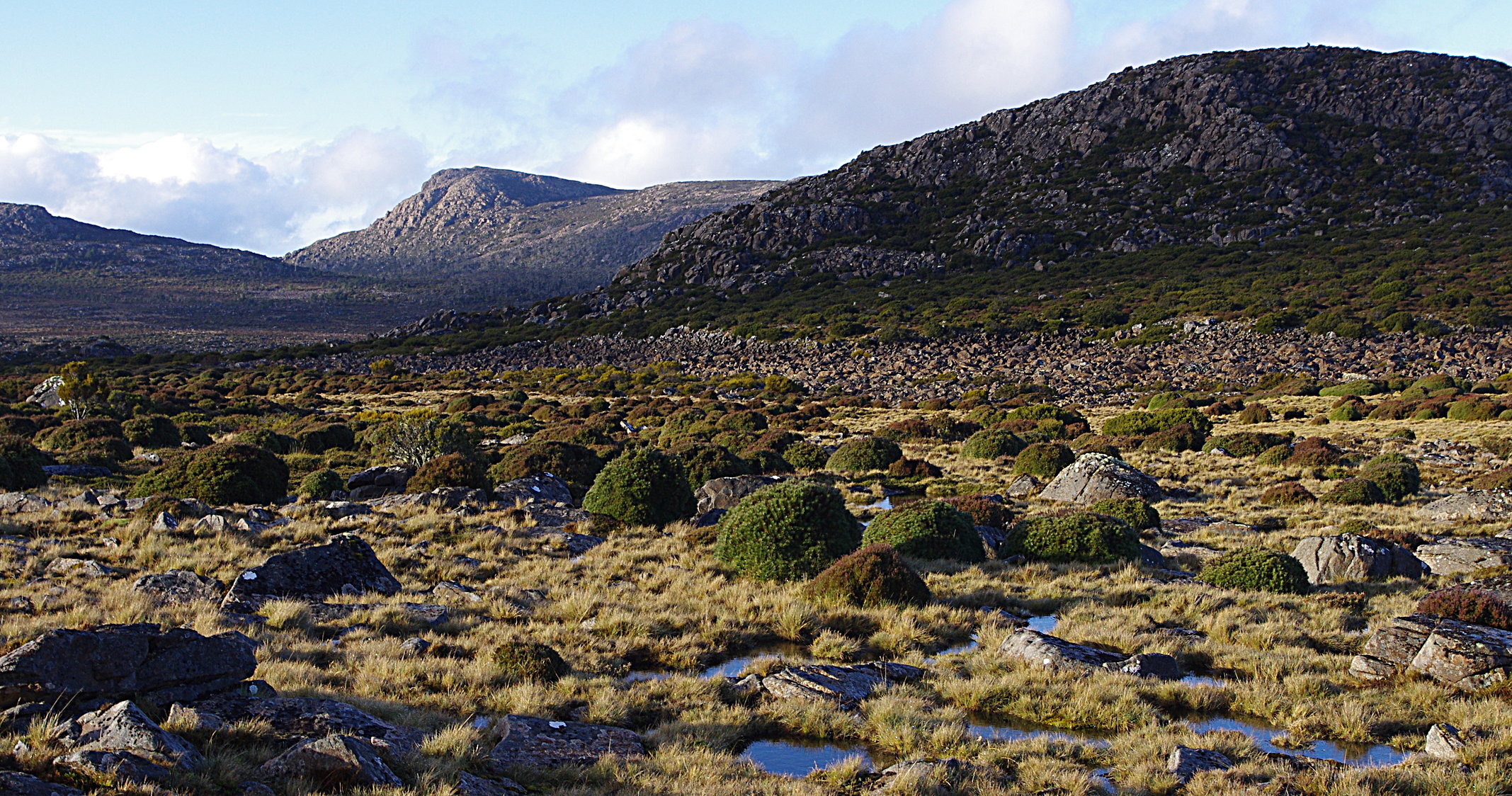
The north western end of the Central Plateau offers spectacular walking. Easy access to Lake McKenzie gets you into some of the most extensive alpine and sub alpine terrain in the state.
This heavily glaciated country is bounded on the north and west by big escarpments and deep valleys, and stretches off into more forested landscapes to the east and south. Two rough tracks get you into the Plateau proper, and there are endless possibilities for travel through this open and exposed mountain country.
This is a 4 day walk, which takes in the higher ridges of Turrana Heights and Turrana Bluff, through to the Long Tarns and back out via the Higgs Track.
Check here for the notes.


Recent Comments