Search

Mountain Journal

Environment, news, culture from the Australian Alps

Senate Inquiry into extreme weather – an opportunity to share your experiences

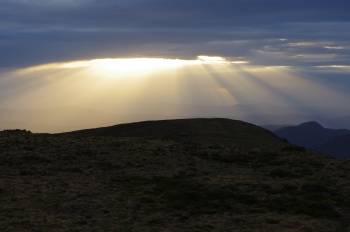
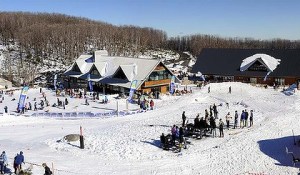
Mt Stirling
Mt Stirling

The federal Greens have been successful in getting a Senate Inquiry into extreme weather. This is a significant opportunity for the government to consider the impacts of climate change and extreme weather events on local communities, landscapes and economies in the Alpine region.

It would be useful if you or your business or group were be able to make a brief submission to the inquiry about the threat of extreme weather and climate change in your community, and the impacts it has already had or is predicted to have. See below for some ideas on making a submission.

Time is short – we only have until January 18.

You may also want to make a formal request for the committee to visit your area and host a public hearing to take submissions from people who live in or are reliant on good winters to keep the local economy strong.

The snow industry – the canary in the cage when it comes to climate change?

The winter sports industry/community is deeply dependent upon predictable, heavy snowfall, but climate change is expected to contribute to warmer winters, reduced snowfall, and shorter snow seasons.

A recent US study, commissioned by Protect Our Winters (POW) and the Natural Resources Defense Council (NRDC), shows that the U.S. ski and snowmobile winter sports industry is currently worth an estimated $12.2 billion each year, and has already felt the direct impact of decreased winter snowpack and rising average winter temperatures.

As the authors note in the report, “climate change spells trouble for all businesses dependent on winter weather including snowboarding, snowshoeing and skiing. The shrinking numbers of winter sports tourists also affect restaurants, lodging, gas stations, grocery stores, bars” and other businesses.
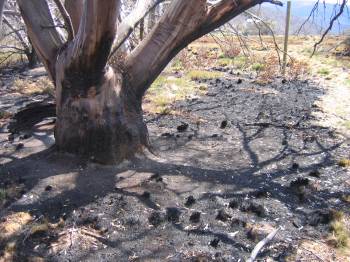
Bogong High Plains fires, 2007

Here in Australia, winters are already becoming warmer and more erratic, and this impacts on the quality and quantity of snow.

According to Dr. David Bain, in the high Alps from 1950 to 2007 there has been an increase in winter temperatures approaching 1°C, and over much the same period (1957 to 2011), Australia has seen a slow decrease in snow depth. The mid-winter snow depths have only decreased a small amount, whereas spring snow depth has dropped by almost 40%. The obvious impact here is that the resort season becomes shorter, making it more difficult to make a profit on infrastructure that is located in resorts year round.

While resorts have invested in extra snow making capacity and are seeking to build visitation outside of the winter months, the majority of infrastructure is based around winter sports. Snow making will become more expensive in coming years as energy prices rise, and this will impact on resort profit margins and hence viability. As was highlighted in the 2012 document the Alpine Resorts Strategic Plan, “cost pressures are a major problem for many on-mountain businesses and site holders”.

Science suggests that without determined action to reduce climate change, we can expect to see less and less reliable snow falls in coming years.
According to the government commissioned report ‘Caring for our Australian Alps Catchments’, the Alps face an average temperature rise of between 0.6 and 2.9 degrees centigrade by 2050, depending on how much action the international community takes to combat climate change.

Rain, snow and other precipitation is expected to decrease up to 24% over the next four decades, accompanied by more bushfires, droughts, severe storms and rapid runoff, causing heavy erosion. Additionally, what precipitation we get could become more erratic. For instance, it is likely there will be more storm events in summer, which could be expected to impact on outdoor recreation and especially organised events like bike rides and festivals. The 2003 and 2006/2007 fires in Alpine regions are an indicator of what could come with enhanced global warming. These shut down tourism across sections of eastern Victoria, with dramatic impacts on businesses reliant on summer tourism.

The Caring for our Australian Alps Catchments report says that our ski slopes could be completely bare of natural winter snow by 2050 unless concerted action is taken against global warming.

The erratic weather will also be felt in winter, with corresponding impacts on economies. The US report notes that in that country, the downhill ski resort industry is estimated to have lost $1.07 billion in aggregated revenue between low and high snow fall years over the last decade: if the snow is bad, many people will simply cancel their holiday. So even if there is some snow cover, erratic weather can still have impacts.

All of this will be a disaster for skiers, boarders and all who spend their time in the Alps.
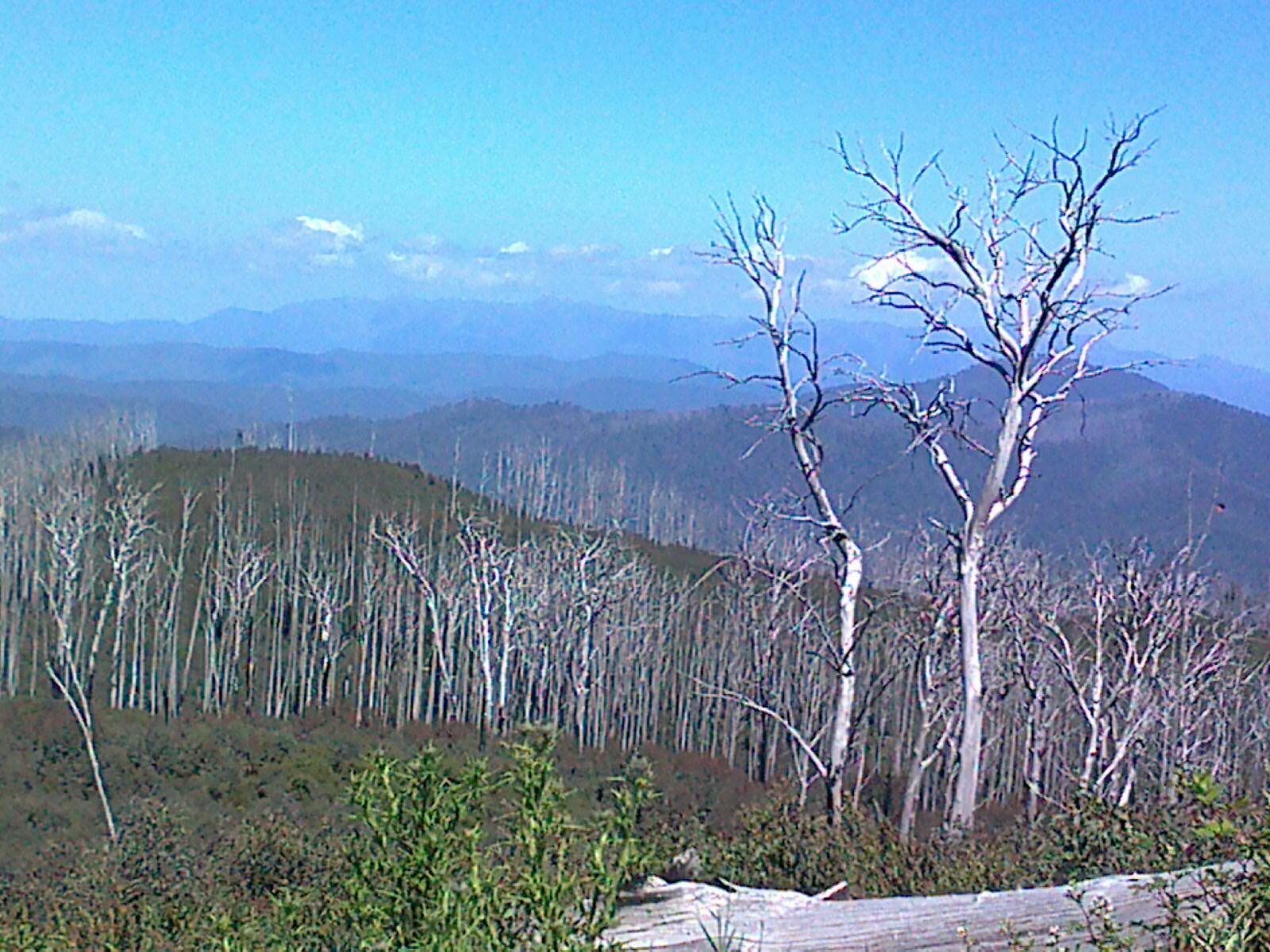
Buffalo Plateau from Big Hill

But it will also be devastating for local economies. In Victoria, the alpine resorts are estimated to have contributed $570 million and 5,800 Full-Time Equivalent jobs to the Victorian economy in winter alone for 2011 (source: Alpine Resorts Strategic Plan 2012, p13). The flow on effects of the industry is felt in towns throughout north east Victoria and around the Snowy Mountains, including the development of niche agriculture economies which is, in part, supported by snow-based tourism. To take one example of local benefits, the ‘gross regional profit’ of Alpine Shire was increased by about $130 million in 2011 because of the presence of the alpine resorts. The negative impacts of the bushfires on Murrindindi Shire in this same period indicate what climate change and extreme weather events could mean in future for all shires across the state.

According to the Economic Significance of the Australian Alpine Resorts report (2011), the combined benefit for the three Australian States with alpine resorts in 2005 is calculated to be $1.3 billion with 17,050 annual equivalent employment opportunities.

As the US report concludes: “all of this translates into less snow and fewer people on the slopes, which results in massive economic hardship for resorts, states, local communities, businesses and their employees.”
Please write a submission

In order to protect the alpine environments that we love and the many thousands of people and businesses who depend on a snow-filled season, we must act now to support policies that protect our climate, and in turn, our slopes.

You can read more about the Inquiry and make a submission here.

Some points you may like to make:

Apart from any direct impacts you are concerned about, you might want to mention that the latest science is showing that the impacts of climate change are happening faster than expected, and that communities will require funding to deal with the worst predicted outcomes. There must be greater community engagement about adaptation to climate change. However, responding to climate change (‘adaptation’) is not enough: we must also respond to the causes of climate change – by reducing emissions (‘mitigation’).

Check here for climate change scenarios for the Alps.

If you would like the Senate Inquiry to visit your town to hear your concerns about climate change and extreme weather, please check here.

Submissions are due on 18 January with the final report due from the Senate Committee on 20th March.

Mt Sugarloaf and The Gunns

The Gunns from The Twins (Buffalo plateau in background)

Leading up from the plains of north eastern Victoria, there are many hundreds of ridges that snake up to the Great Divide. It is the higher, alpine ranges that get most of the attention from walkers. Yet there are some great walking opportunities in the mid level ranges, although you will often have to share the trail with 4WDs and trail bikes.

One obvious trip in the Mount Hotham area is Mt Sugarloaf and the highpoint of The Gunns. This is the highest section of a range that starts just near Bright and climbs through Mt Ebenezer and gradually towards the Divide, reaching its highest point at Mt St Bernard.

Check here for track notes.

Public ski resort groomed for private sale

The following comes from the Victorian National Parks Association.

Media release. Thursday, 28 November, 2012

art-Lake-Mountain-Village-420x0Lake Mountain, Melbourne’s closest and most affordable alpine resort, will soon be given over to developers in a long‐term lease that effectively privatises public land.

“The Baillieu Government should not be acting like a real estate agent for land that belongs to all Victorians. It should be managing our natural heritage responsibly, for future generations,” the Victorian National Parks Association’s Phil Ingamells said today.

“The Baillieu Government’s announcement that it is handing over management of the Lake Mountain Alpine Resort to a private recreation company, in preparation for auctioning the leasehold, may be the first of many such developments. Our alpine resorts, national parks and other public land are all vulnerable to this policy,” he said.

Importantly the Alpine Resorts Act, which governs the management of Victoria’s alpine resorts, makes it clear that resorts are for the use of all sections of the community, not just the big spenders.

A recent State Services Authority inquiry into Victoria’s alpine resort management said the resorts need to provide for a far greater section of the community, not just high‐end tourism.

The inquiry also recommended that resorts such as Lake Mountain, which will be the first to lose their snow cover as global warming increases, should be placed under the management of Parks Victoria.

“But the Baillieu Government seems determined to hand our finest bits of public land over to private control, and make them playgrounds for the wealthy,” said Mr Ingamells.

“Developments in private hands inevitably grow. This is a short‐sighted move, and one that will be very hard to reverse. Victorians of the future will almost certainly look back at this time with great regret.”

Alpine Resorts Strategic Plan 2012 finally tabled in Parliament

The following comes from the Minister for Environment and Climate Change, so should be read essentially as propaganda.

I would be interested in any industry/ community/ environmental perspectives on the new plan.

From the Minister for Environment and Climate Change

Image: Brush Ski Club

The long-term viability of Victoria’s alpine resorts will be strengthened following the tabling in Parliament today of a new strategic plan by Minister for Environment and Climate Change Ryan Smith.

The Alpine Resorts Strategic Plan 2012 will shape the long-term direction of Victoria’s six alpine resorts of Mt Hotham, Falls Creek, Mt Buller, Mt Stirling, Mt Baw Baw and Lake Mountain, ensuring they remain attractive tourist destinations, financially viable and capable of attracting new investment.

Mr Smith said the strategic plan recognised the fact that the winter season was the economic engine of the resorts, however opportunities existed to expand their array of iconic non-winter events and investment opportunities.

Under the strategic plan, each of the resorts will prepare an alpine resort master plan ensuring their environmental values are protected and providing the commercial sector greater certainty about the resorts’ long-term directions.

“The Alpine Resorts Strategic Plan 2012 outlines a vision for the resorts and a plan of actions to ensure they are vibrant, growing and financially sustainable places well into the future and their environmental values are preserved,” Mr Smith said.

“The strategic plan sets out a more co-operative and integrated approach to investment, promotion, management and use across the resorts.

“The plan focuses on paying more attention to the long-term financial viability of the alpine resorts, focusing on the winter economic ‘engine’ and building on the year-round competitive strengths of individual resorts.

“Victoria’s alpine resorts make a significant contribution to the State economy, especially in regional Victoria and the Coalition Government is committed to ensuring they remain viable into the future.”

In 2011 the resorts were visited by more than 1.2 million people, contributed $570 million to Gross State Product and generated around 5,800 full-time equivalent jobs for winter alone.

Mr Smith said the alpine resort master plans would simplify planning and leasing decisions and allow high priority development opportunities to be identified through the Victorian Alpine Resorts Development Program.

“We need to make sure that resort services and infrastructure are delivered efficiently and with appropriate levels of accountability.

Investment opportunities need to be more co-ordinated and non-commercial activities will need to be reviewed,” Mr Smith said.

The strategic plan proposes a new financial management framework for the alpine resorts to sustain their significant economic contribution to the State’s economy and to their surrounding regions.

The strategic plan also outlines actions to build partnerships across sectors and increase access for Victorians of all backgrounds.

“Victorian alpine resorts are on public land and are managed on behalf of all Victorians, so it is important we ensure alpine experiences are accessible to people of differing cultural backgrounds, ability levels and economic circumstances,” Mr Smith said.

“Major initiatives include a focus on growing visitation by enhancing the visitor experience and further development of the resorts. This means maximising benefits from winter visitation, non-winter or “green season” visitation and more integrated marketing,” Mr Smith said.

Activities such as horse riding, bush walking, road and mountain bike riding, fishing, festivals and events and even high-altitude training are set to become a non-winter feature under the new strategic plan.

The Alpine Resorts Strategic Plan 2102 includes opportunities to improve the regulatory environment and initiatives to address impediments to economic opportunities in the resorts, including:
·    planning and leasing arrangements;
·    native vegetation offsets; and
·    bushfire and emergency management.

The Alpine Resorts (Management) Act 1997 requires the Alpine Resorts Coordinating Council to conduct a five-yearly review of its strategic plan.

Extensive public consultation was conducted as part of the development of the Alpine Resorts Strategic Plan. A total of 250 people participated in workshops in Melbourne and at the resorts, and 66 submissions were received which were considered during development of the strategy.

More information about the Alpine Resorts Strategic Plan 2012 is at http://www.dse.vic.gov.au

Snow gone? US ski resorts see melting future

Mountain Journal has previously covered some of the initiatives of US ski resorts attempting to become more sustainable and also respond to the threats of climate change.

This recent summary of the situation there mirrors whats happening in Australia – with resorts struggling with poor natural snow, attempting to provide cover through snow making, and re-braninding themselves as year round resorts.

This article comes from the Sydney Morning Herald.

Skier in Colorado, USA

Helena Williams had a great day of skiing at New Hampshire’s Mount Sunapee shortly after the resort opened at the end of November, but when she came back the next day, the temperatures had warmed and turned patches of the trails from white to brown.

“It’s worrisome for the start of the season,” said Williams, 18, a member of the ski team at nearby Colby-Sawyer College. “The winter is obviously having issues deciding whether it wants to be cold or warm.”

Her angst is well founded. Memories linger of last winter, when meager snowfall and unseasonably warm temperatures kept many skiers off the slopes. It was the fourth-warmest winter on record since 1896, forcing half the nation’s ski areas to open late and almost half to close early.

Whether this particular winter turns out to be warm or cold, scientists say that climate change means the long-term outlook for skiers everywhere is bleak.

The threat of global warming hangs over almost every US resort, from Sugarloaf in Maine to Squaw Valley in California. As temperatures rise, analysts predict that scores of the nation’s ski centers, especially those at lower elevations and latitudes, will eventually vanish.

Under certain warming scenarios, more than half of the 103 ski resorts in the Northeast will not be able to maintain a season length of 100 days by 2039, according to a study to be published next year by Daniel Scott, director of the Interdisciplinary Center on Climate Change at the University of Waterloo in Ontario.

By then, no ski area in Connecticut or Massachusetts is likely to be economically viable, Scott said. Only 7 of 18 resorts in New Hampshire and 8 of 14 in Maine will be. New York’s 36 ski areas, most of them in the western part of the state, will have shrunk to nine.

Rockies

In the Rockies, where early conditions have also been spotty, average winter temperatures are expected to rise as much as 7 degrees by the end of the century. Park City, Utah, could lose all of its snowpack by then. In Aspen, Colo., the snowpack could be confined to the top quarter of the mountain. So far this season, several ski resorts in Colorado have been forced to push back their opening dates.

“We need another six or eight inches to get open,” said Ross Terry, the assistant general manager of Sunlight Mountain, near Aspen, which has pushed back its opening day to Friday from Dec. 7.

The warming trend “spells economic devastation for a winter sports industry deeply dependent upon predictable, heavy snowfall,” said another report, released last week by the Natural Resources Defense Council (NRDC) and Protect Our Winters, an organisation founded to spur action against climate change.

Between 2000 and 2010, the report said, the $10.7 billion ski and snowboarding industry, with centers in 38 states and which employs 187,000 people directly or indirectly, lost $1.07 billion in revenue when comparing each state’s best snowfall years with its worst snowfall years.

Even in the face of such dire long-range predictions, many in the industry remain optimistic. Karl Stone, the marketing director for Ski New Hampshire (a trade group), said good winters tended to come after bad ones — the winter of 2010-11 was one of the snowiest in recent memory — and that a blizzard could erase a warm spell. The basic dynamic he lives with is unpredictability; some areas that were warm last week have snow this week and vice versa.

“Things can change quickly, thanks to one storm, and that’s usually how it works this time of year,” he said, noting the current on-again, off-again snow pattern.

On a warm day last week, when the thermometer reached 51, Bruce McCloy, director of marketing and sales here at Mount Sunapee, was generally upbeat about the coming season, but he could not ignore the brown slopes outside his office window.

“The real problem with a day like this is that you can’t make more snow,” he said. “There are only so many days until Christmas, and we need so many days at certain temperatures to get the whole mountain done.”

Even in the Rockies, it is difficult to find enough water to make snow. After last year’s dry winter and a parched, sweltering summer, reservoirs are depleted, streams are low, and snowpack levels stand at 41 percent of their historical average.

September view

At Sunlight in Colorado, the creek that supplies the pond that, in turn, provides water for snow guns has slowed to a near-trickle.

“It’s a nice day — for September,” said Greg Ralph, the marketing director at Monarch Mountain, which depends exclusively on natural snow. Monarch was scheduled to open the day before Thanksgiving but has pushed back that date to Friday.

Ralph estimated that 250 employees at Monarch have been “on hold” as the resort languished in the unseasonable warmth.

Concerns about global warming are intensifying at a time when the industry has seen little growth. While ski seasons have swung between epic and terrible over the last 30 years, the number of ski visits nationally from 1979, when the industry started keeping records, to 2011 has grown at a compounded annual rate of only 0.6 percent. Counting 2012 would put the growth rate closer to zero.

The chief reasons, according to people in the industry, are the aging of baby boomers, long skiing’s most active enthusiasts, and the fierce competition for time, whether from Caribbean cruises or computers.

Add something called “backyard syndrome,” in which urbanites who live in easy driving range of a ski resort — say, Bostonians, who live 90 minutes from Sunapee — are reluctant to head north unless they see snow at home. Even when live webcams show a resort blanketed in white, McCloy said, it is hard to move urbanites to the mountains “until they’re shoveling snow or they’re stuck in it.”

In response to these problems, ski areas have developed adaptation strategies to lure people to their resorts even if the skiing is marginal. Many have expanded into four-season destinations and offer an array of activities that do not depend on the weather: concerts, yoga, craft fairs, conferences, water parks and spas. Sunapee opened a new adventure park this summer with canopy ziplines, a treetop obstacle course and golf.

Snowmaking

The most basic strategy for coping with a lack of snow is to make it, and as of the 2009-10 season, 88 percent of resorts belonging to the National Ski Areas Association were doing so. Dramatic improvements in snow-making technology have helped resorts compensate for warming trends, and several have invested millions in new energy-efficient tower guns.

“So far, the technology has kept up with climate change,” said McCloy at Sunapee, one of those resorts that Scott in Canada predicted would be put out of business eventually by global warming. “In fact,” McCloy said, “it’s probably improving faster than climate change is happening.”

That may not be the case for long. “With nighttime minimum temperatures warming at a faster rate than daytime maximum temperatures,” the NRDC report said, “it is uncertain as to what extent snow-making will last as an adaptation strategy.”

Article originally from the NYT.

Girl rescued after 5m hiking fall


Cross Cut Saw

The following report comes from The Weekly Times, journalist:  Sarah Scopelianos |  November 26, 2012

A 15-YEAR-OLD schoolgirl was flown to hospital today after sliding off a hiking track in the Baw Baw National Park while with a school group.

The girl was part of a group of nine students and teachers who were hiking between Mt Buggery and Mt Hewitt (sic) when the accident happened.

The girl slid about 5m down a rock face and landed on a ledge.

An Ambulance Victoria spokesman said a paramedic was lowered on to the ledge from the Air Ambulance to stabilise the girl and then the pair were winched to safety.

The service was called at 10.09am to Wabonga, near Mansfield.

He said the girl had neck and back complaints and cuts.

She was flown to the Latrobe Regional Hospital in a stable condition.

review: A Night on a Mountain in Namadgi National Park

Whenever I fly from Melbourne to Canberra I try and get a window seat facing south, to get whatever glimpses I can of the High Country. The descent takes you over the wonderfully rocky, domed ridges of the Brindabella Ranges, scattered with frost hollows and ratty looking snow gum fringed ridgelines.

I haven’t been up into those mountains for years, but it’s on my perennial ‘to go’ list. Coming from the south I find the Main Range of the Snowies is normally sufficiently distracting that I don’t get any further north.

In the modern world of evolving media, the concept of ebooks has become popular. These can be books on specialised themes made by regular people, which are available in a print per purchase format, allowing an idea for a book to make it onto paper without the costs and commitment of producing a large print run.

A Night on a Mountain in Namadgi National Park is produced by Barrie Ridgway and available via Blurb, one of the online book companies. When you order it, a copy is printed and mailed.

The author says “this book is a textual and photographic portrayal of the beauty, vastness, peace and preciousness of wilderness in general and a unique Australian wilderness in particular. It is my portrayal of the need to preserve wilderness in its own right for the survival of all life on this planet Earth”.

It is a set of visually gorgeous photos taken as the author and his friends climb a peak in Namadgi Park to watch the sun set and spend the evening on the mountain. It reminds me of the ‘mountain viewing rituals’ described by deep ecological thinker Dolores laChapelle.

The book is primarily full colour photos, with some minimal commentary about the journey up the mountain and a plea to protect wilderness. It is a worthy addition to our literature about the Australian Alps, largely letting the landscape speak for itself, albeit through the eyes (lens) of someone with a great affinity for the place.

You can buy it via the Blurb website. Although this is expensive, it is a glorious book of 98 pp, with lots of gorgeous full colour pics at all scales, from the micro to the landscape level. The Softcover version comes in at about $50.

Flow mountain bike magazine

Outdoor magazines can get a bit obsessed with gear and new stuff. All the latest bikes, skis, boards, clothing. Flow magazine is a new, home grown entry to the rather crowded mountain bike scene, and its refreshing because it focuses on the people that are riding, without getting too obsessed with the latest carbon fibre frames.

Issue one is on sale now and has a feature on ‘why we ride’, with a series of reports on road trips and non pretentious profiles on ‘average’ MTB riders and clubs. I love the one about a truckie from Albury.

Chris Southwood and Mick Ross from Sydney are the co-founders of Flow Mountain Bike. It’s clear they are riders themselves and bring a lot of their passion for their sport to the magazine. And while it has some great photos from overseas, it has its sights set on Australia and what our terrain has to offer riders.

There is a great photo essay on riding in the Blue Mountains and beyond that evokes that shimmering heat of summer, a few test articles, coverage across the sport from the World Cup circuit to weekend warriors, plus some good columns from different riders. It’s a bit bloke heavy, but that may broaden out over time.

Chris and Mick say “Flow Mountain Bike exists to inspire; through our words, images and videos we want mountain bikers to find the inspiration to ride more, try something new, travel somewhere fresh, or make mountain biking more central to their life”.

They save the technical stuff largely for their website, which aims to be the “leading online resource for Australasian mountain bikers of all disciplines”.

While the website is useful, I have to agree with Chris and Mick: “nothing can replace the engaging experience of a good magazine”.

I also love the name. ‘Flow’ is the place you go to when your turns are working, or the swell is just right, or the track is perfect. It doesn’t matter if it’s riding, boarding, surfing or climbing, there is a wonderful space you slip into when you’ve hit your stride in your sport, and your gear, technique and skill, and the conditions bring it all together. It seems like this magazine is homage to that moment in riding when you’re truly in the flow. A magazine is a good thing, getting out there is really what it’s all about.

Check it out, and support it if you can.  It has a nice clean design and some great images. Available widely in newsagents or via subscription.

Backcountry journal – Spring Mission to Feathertop

Scoping the line, image: Sam Leitch

Recent warm weather has really burnt off much of the snowpack remaining in the Victorian Alps, especially on lower elevation and north facing slopes. But there are still some great slopes and gullies, especially those facing south and east.

The following trip report by Sam Leitch comes from Mountain Watch, and features some great images of spring conditions on Mt Feathertop’s impressive east face.

Anyone who has skied/ boarded this terrain will know Hellfire and Avalanche gullies, this is serious country which can be dangerous because of cornice collapse, slide avalanches, and ice, even occasional rockfall. Being east facing it can quickly become extremely icy once in the shadows. Graeme Nelson, a highly experienced skier died here in the winter of 2011.

With spring in full swing and plenty of snow, conditions were great, but as Mike Garrett found on his trip to the Blue Rag Range, things don’t always go according to plan.

Read Sam’s report here.

Blue Rag Range by bike

Image: MIke Garrett

A recent trip report from Mike Garrett about an epic bike ride (with skis) to the Blue Rag Range to check out what skiing was still on offer.

He says:

“Last year, Graeme (Nelson) and I had pencilled in a September man-date to the Blue Rag Range.

Visible from just about anywhere on Hotham, the Blue Rag sticks up like a red rag to a bull from the Barry Mountains between Hotham and Buller as a long ridge running east west. The heavily wooded northern faces visible from the chairlifts bely a host of south facing bowls, chutes and couloirs – and Graeme was, like me, certain that good snow would still be found there well after the season was over. The plan was to mountain-bike the 15km along the Dargo Road from St Bernard and camp out on the ridge for a few days picking off late September lines”.

A great winter has left some good snowpack in the backcountry. To find how much was left on the southern slopes of the Blue Rag, read Mike’s blog.

Environmental protection laws under attack

Nothofagus, Mt Toorongo, VIC

Changes are afoot to dramatically wind back cornerstone federal environmental protection laws. Under these changes, State Governments would be given sweeping powers to assess and approve major development projects. If implemented, these changes would be a disaster for our nation’s environment and wildlife.

In 1999, the Howard Government introduced the Environment Protection and Biodiversity Conservation (EPBC) Act. It was meant to protect environmental areas and wildlife that were so important, and so at risk, that their existence was of national importance.

Since it was introduced, the EPBC Act has saved only a few wild places from mining and other development. Many thousands of developments have gone ahead.

Australia’s environment is now under unprecedented attack. Nine open cut mines are planned for Tasmania’s pristine Tarkine forests. The Broome community are battling the construction of a massive gas hub at James Price Point that would mark the beginning of the industrialisation of the Kimberley . The Great Barrier Reef is becoming a coal and gas highway, and could lose its World Heritage status.

The State of the Environment Report 2011 paints a grim picture. More and more endangered species are moving closer to extinction, and we are losing our precious places.

40 years backwards

This is the most serious attack on environmental protection in over 40 years. It doesn’t take much imagination to see what the environmental implications of state decision-making would look like for our environment. In Queensland, Premier Campbell Newman has opposed any delays to coal projects, saying that Queensland is “in the business of coal”.

In Western Australia, four out of five Environmental Protection Authority decision-makers on the proposed James Price Point gas hub had to disqualify themselves because of conflicts of interest; the single remaining member, unsurprisingly, approved the proposal.

In Victoria, intervention by Federal Environment Minister Tony Burke was required to stop Premier Baillieu from overturning the previous government’s ban on alpine grazing, to reintroduce cattle into national parks under the guise of a ‘grazing trial’ that was likened to ‘scientific whaling’. Meanwhile, the New South Wales Government has changed laws to permit private hunters to shoot in national parks and allow fishing in critical grey nurse shark habitat.

The major environmental victories of past decades have largely been won by the Federal Government overturning bad development decisions by state governments. Without strong federal laws, the Franklin River would be dammed, the Great Barrier Reef would have oil rigs and Fraser Island would be a sand mine.

Yet later this year, the Council of Australian Governments (COAG) meets to agree to the framework for handing over of approval powers to the states. Decisions about renewing Regional Forest Agreements could be made at any time.

We need decision-makers to hear our voices now. Friends of the Earth is mounting a campaign − ‘Nature: Not Negotiable’ − to prevent the gutting of federal environment laws and to strengthen the federal government’s role in protecting the natural environment.

This campaign includes mobilising around the upcoming COAG meeting, organising with local campaigns, lobbying and community campaigning.

For more information on this work or to get involved, please email lauren.caulfield@foe.org.au

You can also find us on Twitter @naturenotneg or on Facebook at ‘Nature: Not Negotiable’.

Please support our campaign to ensure these powers are not undermined.

Info on the campaign is available here.

Our petition is available here.

a threat to the outdoor education course at Blue Mountains TAFE?

Many people with connection to the Alps have passed through the Blue Mountains outdoor education course. The following article comes from the Blue Mountains Gazette, and highlights a recently revealed threat to the course.

A threat to shut down the 15-year-old outdoor education course at Blue Mountains TAFE, as part of sweeping State Government cuts to education, was a short-sighted decision say angry Mountains adventure tourism operators.

The move, leaked on a College Alumni Facebook wall last week, was met with resounding disbelief by the tourism industry and current and former students.

“The quality of the course is exceptional. This doesn’t make sense. It is the Harvard equivalent of outdoor education courses.”

Mr Jones said tourists came to the region because of the huge drawcard of adventurous activities offered by companies like his.

“If you’re going to pick between Blue Mountains and the Hunter as a destination you would pick here because you can have this flagship experience (in canyoning, abseiling and rock climbing). Imagine if they stopped teaching hospitality at Blue Mountains TAFE what the implications of that would be?”

Aidan McGarry, owner of High and Wild which has been operating in Katoomba for 22 years, agreed, saying 10-15,000 people came to the Mountains annually for these types of experiences and he was “appalled” that the decision could be made without consultation.

“There’s a flow-on effect to the wider community. It’s where we get our employees from, it’s a really specialised industry. We’re not going to have any guides. I’ve got to talk to national parks to see whether they can cancel the (necessary guides) licence.”

Twelve years ago, Ben Griggs, now 37 and living in Queensland, completed the 12-month course at a subsidised price of $180 and says it changed his life.

“To me they’re trying to save money and I appreciate that, but I just don’t think they understand the value of that leadership training,” Mr Griggs said.

“I was not a particularly useful member of society and it helped me to step up.”

The course enabled him to work for more than a decade and he still supplements his current small business income as a video operator with adventure work.

“It’s not a course you can run anywhere. I know they run outdoor rec in other places but this one is made for the Blue Mountains. The tourism industry really does use those people.”

A course teacher Adam Darragh placed the original post on the Facebook site, a site he said was set up by a former teacher. He said he understood core TAFE funding would be cut to the course “because it was one of the most expensive (due to excursions)”.

“A big question I’ve got for Roza Sage and Barry O’Farrell is do they value jobs because this course has a high vocational outcome? We have organisations asking for our graduates before they have finished.”

Current course participant Tim Williams who hoped to get his diploma next year is “shattered” by the move and worried for other students, some who have come as far as Western Australia, to do the course.

“It is the only college in Australia offering all the guiding skill areas I needed to gain employment here in the Mountains. It’s really shaken us up. The staff within Blue Mountains TAFE’s Outdoor Recreation department are the most ethical and inspiring teachers and the wider community benefits as TAFE runs free and low cost guided tours for youth at risk groups and schools.”

Tourism operators told the Gazette that other courses were available at Lithgow and Sydney but none covered the final Certificate Four advanced requirements in abseiling, canyoning and rock climbing — skills the guides need.

“Ninety per cent of staff up and down Katoomba Street working in abseiling, rockclimbing and canyoning have done this course and were trained at the (western Sydney) Institute (based at Wentworth Falls),” Mr Jones, who is also a board member of the NSW Outdoor Recreation Industry Council and a director of Blue Mountains Lithgow Oberon Tourism, said.

“Outdoor recreation state-wide is an expanding industry and qualified staff are already being sought from interstate and overseas to fill the gaps.”

TAFE spokesman Craig McCallum said TAFE had made no decision on the course but he did not confirm whether it would run next year.

He said they were looking at the best ways to respond to the education cuts.

“We are in the process of consulting with our staff as to the best ways the Institute can respond to reform changes announced by the Minister for Education on September 11. TAFE NSW – WSI is also awaiting the final recommendations from the Smart and Skilled skills reform . . . to meet the current and future jobs and skills needs in western Sydney and NSW.

“The Facebook page to which you refer is not an official page of TAFE NSW -WSI and is not administered by the Institute.”

Randall Walker, Chairman of Blue Mountains Lithgow and Oberon Tourism estimated guided, active adventure and tour experiences contributed about $25m of the $500m annual tourism industry but added he “had no reason to believe the department was closing”.
Blue Mountains MP Roza Sage responded to criticisms by saying she had “sent through to the minister’s office concerns from the community that have been raised with me”.

“Any changes will be introduced after a period of engagement and consultation with relevant staff and other stakeholders . . . the advice that I have received is that all courses are being reviewed, and at this stage there is no decision made.”

Mr Darragh said he was “excited if the decision hasn’t been finalised”.

Blog at WordPress.com.

Up ↑