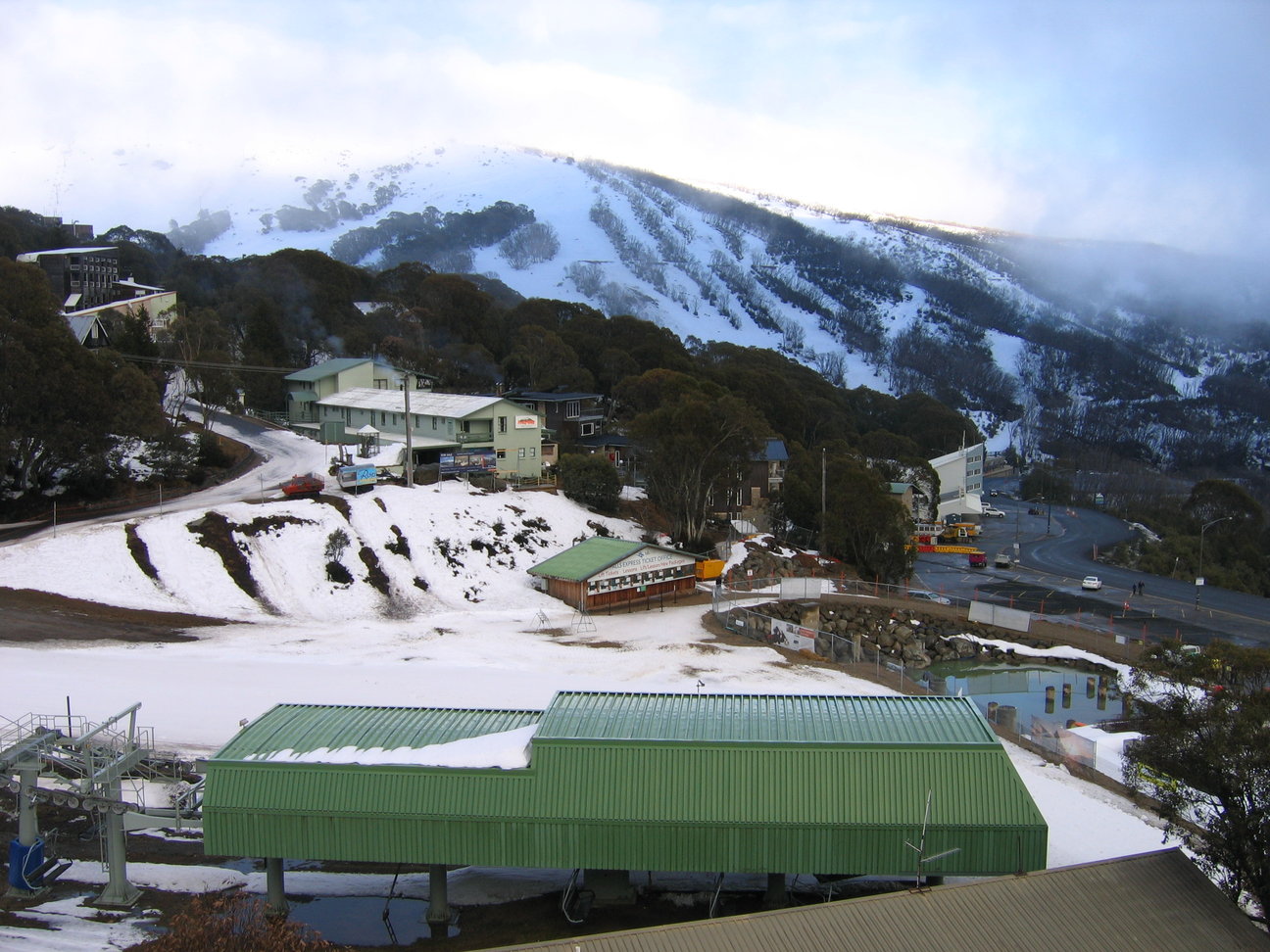
I normally do a quick pre season assessment of developments around the resorts when it comes to environmental initatives, but given the lack of new initatives, it hardly seemed worthwhile this year.
One pleasing note is that a growing number of resorts are upgrading their snow making equipment to more energy efficient machines.
In autumn, Falls Creek got a bit of media coverage about the new fleet of snow guns they had brought in from Italy.
Falls Creek Maintenance Manager Geoff Sorensen said: “our ongoing quest to make snow using less energy is coming to fruition. This winter we’ll replace energy-hungry guns with more efficient, low-energy snow guns and we will be trialling Techno Alpin’s TF 10 from Europe”.
“This is the first time it will be used in the southern hemisphere by a company renowned for its snowmaking expertise. Our weather can be more marginal (for snowmaking) down under and harsher than what is experienced in the northern hemisphere alpine resorts.
The TF10 snow gun is a fully automatic, low-pressure type fan gun.
There are also more than 130 TechnoAlpin snow guns at Perisher and 70 at Hotham.
Given that climate science tells us we will have more erratic winters, and it is reasonable to assume we will rely more on human-made snow in coming years, moving to lower impact snow guns is a good move.
The following comes from Central Highlands Action Group and highlights the logging issue within Melbourne’s drinking water catchments.
Starvation Creek – Yarra Catchment. Image: CHAG.
Melbourne Water and Premier Baillieu overcharge us for a desalination plant while they plunder our free water from Melbourne’s catchments subject to logging.
Logging in Toolangi, tributary to the Upper Goulburn, is already ripping 3,807 billion litres of water from ‘paying’ downstream users and irrigators worsening over the next century. VicForests, the governments logging company, don’t pay for this water cost nor do Australian Paper (makers of Reflex copy paper) who receive 50% of VicForests wood supply. The owners of Australian Paper are the Japanese multi-national pulp conglomerate Nippon Paper, whose office is in Tokyo. VicForests have only paid a legitimate rent for this forest ‘use’ once since their inception in 2004.
VicForest have yet to break even since 2005 without the aid of grants. They are insolvent but are exempt from Part IV of the Trade Practices Act that would see these matters investigated by a third party like the ACCC. VicForests have avoided audits by the Auditor General after 8 years of operating.
In 2008 the Victorian ALP government received the results of the Wood and Water study committed to in the Regional Forest Agreement process (RFA) in 1998. The results of the hydrological study recommended ending logging in 2009/10 in order to improve water yields to Melbourne (DSE/Mein 2008). This was flatly rejected by government and as a result environment and local government stakeholders abandoned participation in the study.
As temperatures broke state records, angry at the state governments response to dismissing the option to end catchment logging, fifteen local governments independently carried a motion to stop catchment logging by 2010, including the Melbourne City Council. The government ignored this concern and proposed a very expensive buffer.
In 2008 the state ALP government commissioned a desalination plant and maintained clearfell logging the catchments, which in effect, firmly privatised the otherwise historically free water resource. Melbourne has enjoyed a clean, heathy water supply as a result of government in the late 1800‘s kicking timber-getters and miners out of the catchments. As Melbourne’s population grew, new water sources were channeled and created like the Thomson dam at a considerable cost to Victorians. The Thomson provides up to 60% of Melbourne’s water and is now the most heavily logged catchment in the network.
In the 2010 election the Coalition Minister for Water and Forestry, Peter Walsh, committed to hastening logging rotations down from 80 years to 50 years in the Timber Industry Action Plan (TIAP) in order to create more resource from the dwindling forests. This ultimately means that regenerating forests, after logging, growing in the band of highest rainfall, will be kept in perpetual thirst. Regrowing ash species forests lose up to 50% of water run off at 50 years of age due to their enormous growth capacity. It’s not HOW MUCH you log its where and what species you log that’s costing Melbourne critical free water!
In the TIAP, Minister Walsh made a commitment to log parks and strengthened commitments to log water catchments as an electoral promise to his National party colleagues (many of whom are loggers). So under current policy and its effects, our catchments will never yield water at their maximum delivery and we have to pay for the forfeiture via a desalination plant no-one can afford. Minister Walsh runs VicForests and Melbourne Water so he sets any checks and balances, should any exist.
In this Melbourne By-Election voters should demand that candidates openly declare their policy on Melbourne’s Water! It maybe the single greatest issue for the sustainability and survival of Melbourne.
Check here for details on protests held earlier in 2012.
The NSW Premier has announced plans to open up almost 80 national parks and reserves to hunting, covering close to 3 million hectares or 40% of all NSW parks and reserves.
This announcement, part of a deal with the Shooters and Fishers Party to ensure passage of the government’s electricity privatisation bill – will allow shooting of feral animals in ”a limited number of areas under strict conditions”.
It has been widely condemned.
The following, from someone living near one of the Parks to be affected, sums up the issues nicely. Check the link at the end for further background. If you live in NSW please sign the letter.
My wife and I live across the water from Kosciuszko National Park and our house is within easy gunshot range of the park. The wife and I spend at least two days a week hiking in the park and the decision by the O’Farrell government to allow amateur shooters to roam our national parks is an absolute disgrace and should be opposed by every environmental group in Australia. Not just in NSW because as the Shooters Party gains more members and more clout, they will surely do deals with other present and future state and federal governments that will impact adversely on our treasured state and national parks and wildlife areas.
National parks were formed not just as quiet natural places to shuck off the stresses of modern living and a place to get away from it all, but to protect Australia’s wild places. Their ecological integrity must remain intact – meaning that the structure and function of the ecosystems with their various wildlife habitats are minimally unimpaired by human activity. Allowing bands of amateur hunters with bows and arrows and high powered rifles and pig dogs to roam the parks is hardly in the spirit that the parks were formed.
Park rangers have slammed a decision to allow hunting in NSW national parks, saying they shouldn’t have to work in fear of their safety – Sure and let’s no forget about the publics safety either !
The NSW government has now said that there will be no shooting allowed in world heritage or wilderness areas – Should we believe them?
Barry O’Farrell has broken a pre election promise not to allow hunting in the parks, and doing so has trashed the government’s environmental credentials. He has lied to the public once and so he will surely allow even more concessions in his dealings with the Shooters and Fishers Party when he needs their support.
I realize (reluctantly) that culling of feral animals in the park is necessary from time to time, but this should only be done by trained National Park personnel, and or professional shooters.
I would bet that over 90% of Australians do not want people with guns and pig dogs roaming their favourite park, and so I believe that all environmental groups in the country should protest immediately.
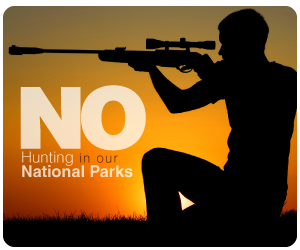
“Say no to recreational hunting in NSW National Parks”
This story comes from the ABC. Journalist is Gus Goswell.
Image: VNPA
The Victorian Government has been ordered to hand over internal documents relating to its alpine cattle grazing trial.
The controversial trial in the Alpine National Park was blocked by the Federal Government but the State Government has launched an appeal.
It says the trial was designed to reduce the bushfire risk, based on scientific evidence.
The Victorian Civil and Administrative Tribunal (VCAT) has ordered that Department of Sustainability and Environment emails and scientific documents be made public.
The Environment Defenders Office applied for the documents on behalf of the Victorian National Parks Association.
Lawyer Felicity Milner from the Environment Defenders Office says the VCAT order is significant.
“We’re concerned about the scientific basis for the alpine cattle grazing trial,” she said.
“Certainly we want to see the documents to apply scrutiny to that decision and see whether or not it could be said to be backed up by proper science.
“If it is not backed up by proper science then we will be attacking the Government’s decision.
“The cattle grazing trial, as I understand it, has not gone ahead because the Federal Government has said it is unacceptable but the State Government is challenging that decision in the Federal Court.
“Based on public statements from the Government and the department we are of the understanding at this stage that they intend to continue with the alpine grazing trial if they are legally allowed to.”
Victorian Premier Ted Baillieu has defended spending taxpayer dollars to try to stop the documents being released.
“The Government has taken a view about what material ought to be made public,” he said.
“You would expect the Government to reinforce the view it has about information and our understanding of the legislation.”
Mr Baillieu has not ruled out challenging the VCAT order.
“The Government will have a look at that judgment and we’ll make an assessment of it,” he said.
However, Mr Baillieu has confirmed the Government still wants to push ahead with the cattle grazing trial.
“We certainly maintain the view that the Commonwealth when it made its decisions didn’t do it on a basis that was thorough and comprehensive,” he said.
A report into the sustainability of Victoria’s alpine resorts has found Lake Mountain and Mount Baw Baw need continued government assistance to support their long-term viability.
A report by the auditor-general found the resorts have recorded financial losses and asset depreciation over the past five years, despite funding from the Department of Sustainability and Environment.
It identifies workforce and contractor costs as contributing to their poor performance, demonstrating the need for structural change.
The auditor-general’s office says the findings raise concerns about the long-term sustainability of the alpine resorts.
I am a big fan of infill, but 6 storey development in a mountain environment seems a bit excessive.
The following comes from The Age, journalist Simon Johanson.
Mt Buller from Stirling
A LARGE development at the Mount Buller ski resort will go ahead despite objections from the Grollo family, which owns a neighbouring property and extensive other interests there.
The proposed four-storey building on the YHA Hostel site in the heart of Buller village will have shops, a 64-bed short-stay unit and nine apartments.
The plans were approved in August last year by the state government, which oversees all Crown land at the resort.
The Grollo Group, headed by Rino Grollo, has extensive property, hotel and ski-lift operations on Mount Buller.
Its leisure and tourism arm, which owns the neighbouring Kooroora Hotel, objected to the development, seeking a review at the Victorian Civil and Administrative Tribunal.
The Grollo Group, an active property developer in its own right, said the revamp of the YHA site did not comply with the resort’s planning guidelines.
It said the plans would remove snow gums unnecessarily and limit the Grollo Group’s ability to redevelop the Kooroora Hotel.
But their objections were rejected by VCAT, which upheld the development’s permit with some slight modifications.
”The development has taken sufficient account of the snow gums on the review site, and has been designed to minimise the number of trees required to be removed,” the tribunal said.
More big projects are expected to rise from Mount Buller’s snow after the resort’s management approved a master plan encouraging buildings up to six storeys in the village.
Nick Whitby, the managing director of Grollo Leisure and Tourism, would not comment on the matter.
This article comes from The Age, journalist is Bridie Smith, April 19, 2012
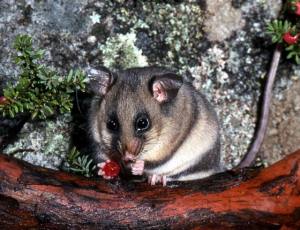
Mountain Pygmy-possum (Burramys parvus). Source: Department of the Environment and Heritage
POSSUM Researchers have intervened in an emergency move to deepen the gene pool of one of Australia’s rarest marsupials, the threatened Mountain Pygmy-possum. Studies showed as few as two or three males from the isolated Mt Buller population were successfully mating with females each year, contributing further to genetic depletion of the threatened species.
However scientists from the DSE and Melb Uni have combined to ‘genetically rescue’ the Mt Buller population by removing six males from Mt Hotham and introducing them to the females on Mt Buller.
They have since tested the results of this intervention – and this year found that half the offspring are hybrids (Dad from Mt Hotham, Mum from Mt Buller). It’s good news, as the hybrids are genetically more robust than pure Mt Buller animals.
The following article comes from Stephen Lacey, writing for Climate Progress.
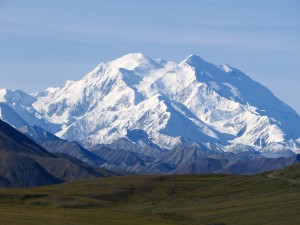
Denali, Alaska. Image: ThinkProgress
While many Australians are keenly aware of the increasingly erratic winters we have been getting and forecasts of shorter seasons (for instance see here) it is worth remembering this is a global phenomena – and hence requires a global solution.
Glacial melt. Invasive species. Mudslides. Erosion. Mountains around the world are seeing major changes accelerated by a warming planet.
Mountains represent 25% of the earth’s surface and host 13% of the world’s population. Warming-fueled changes are threatening sensitive ecosystems, water resources, climbing routes, and, in turn, the way of life in local communities.
Below is a list of five iconic mountains — known for their cultural, resource, and recreational significance — that are being directly impacted by climate change.
These include:
Everest, The Matterhorn, Denali (Mount McKinley), Kilimanjaro and Cotopaxi in Ecuador.
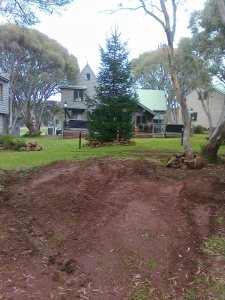
We have previously pointed out that the Alphutte pizza restaurant at Dinner Plain destroyed all the remnant indigenous groundcover on their property last autumn.
Sadly, they continue their irresponsible behaviour, planting out various exotics, including herbs and succulents, on their property, which have the potential to go wild.
Dinner Plain village is an enclave of private land within the Alpine National Park, about 10 kilometres from Mt Hotham. Despite local Council requiring people to use indigenous species in any plantings, a growing number of residents are choosing to ignore this requirement.
It’s a shame that people who are lucky enough to have access to such a beautiful mountain environment are happy to put potential environmental weeds into the local habitat.
If this concerns you, you may want to avoid Alphutte when you visit Dinner Plain. Local café Mountain Kitchen sells indigenous plants, which are also available via the Alpine Shire.
This article was written by David Bain orignally published as the first of the Global Snapshot series, bi-weekly essays written by Protect Our Winters (POW) supporters, which give their local perspective of climate change.
The home of our snow industry is a unique and highly specialised sensitive alpine environment. So sensitive is much of our alpine environment that motorised vehicles of any kind are basically not allowed outside of the resort boundaries.
This environment is unique partly as a result of the old age of the mountains and lack of mountain building, being in the middle of a continental plate. Only minor glacial activity has occurred, being last present between 10,000 and 30,000 years ago. The total area of the true alpine environment (above the tree line) is small, approximately only 770 km2, which is found as a series of ‘islands’ on top of mountains within a sub-alpine ‘sea’. In the order of some 6,500 km2 of alpine and sub-alpine areas annually receives some snowfall. Our endemic alpine species have largely evolved in isolation from other continents and often on isolated mountain tops only tens of kilometres apart.
The following comes from the Sydney Morning Herald and Age newspapers, journalist is Ben Cubby. March 30, 2012
THE state electricity agency TransGrid has admitted its contractors sprayed herbicide across a swathe of wilderness in the Kosciuszko National Park, scarring the landscape and killing thousands of alpine plants.
Patches along a 17-kilometre stretch of power line, amounting to about 20 hectares, were affected by the herbicide, and the NSW Office of Environment and Heritage is investigating the electricity agency.
Contractors were undertaking ”routine vegetation management” on behalf of TransGrid along the route of the transmission line in rugged country between Khancoban and the Guthega ski fields last year, when an ad hoc decision was made to spray the area without approval.
In December, National Parks and Wildlife Service staff spotted what one described as a ”moonscape” of dead vegetation in some areas. TransGrid had not reported the herbicide use to government agencies.
It is not the first time TransGrid has been caught destroying vegetation in the area’s protected wilderness. In 2001, it was found to have mown down trees along cable routes in the Brindabella, Namadgi and Kosciuszko national parks, and was eventually fined $130,000.
This week the electricity agency said it had approval to clear some vegetation from around the power line but conceded herbicide should not have been used.
”TransGrid acknowledges … its contractor undertook vegetation management using a method which was not approved under the specifications of the [environmental impact assessment],” a spokeswoman said.
”TransGrid has investigated the incident and is working closely with the NSW National Parks and Wildlife Service and the NSW Office of Environment and Heritage to implement a specific and targeted rehabilitation plan.”
The agency said about 2 per cent of the area, which forms a corridor about 17 kilometres long and 60 metres wide, was affected. No threatened species of plant or animal was affected, it said.
The National Parks and Wildlife Service said it was contemplating further action.
”NPWS considers vegetation damage of this type to be a serious potential breach of the National Parks and Wildlife Act and regulations,” said the regional manager, Dave Darlington.
”NPWS asked TransGrid for a comprehensive report into the incident and for their remediation proposals … the report forms part of the investigation by NPWS into the Transgrid incident and that investigation is ongoing.”
 I normally do a quick pre season assessment of developments around the resorts when it comes to environmental initatives, but given the lack of new initatives, it hardly seemed worthwhile this year.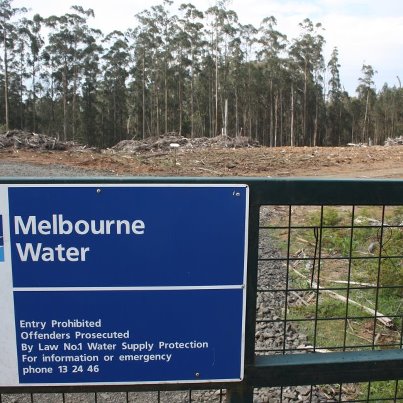




Recent Comments