Winter Wildlands Alliance created the Backcountry Film Festival in 2005 to help grassroots and professional filmmakers to show audiences their love of the winter outdoors.
Since then, the annual festival has been shown in more than 30 towns and cities, and raised thousands of dollars to help efforts to preserve our winter environment.
The festival highlights the fun and magic of the winter backcountry. At the same time, it raises funds to help grassroots groups to continue to protect wild areas.
Australian mountain climber Lincoln Hall has died from mesothelioma. He was 56.
The world-renowned mountaineer, who was a member of the 1984 first Australian Everest expedition, died “peacefully” in a Sydney hospital yesterday, Simon Baulderstone, chairman of the Australian Himalayan Foundation, said.
A well-known writer and adventurer, Hall lived in the Blue Mountains and was a founding director of the Australian Himalayan Foundation.
He was best known for his miraculous survival after he became confused and collapsed near the summit of Mt Everest on May 25, 2006. A rescue attempt was made by sherpas, but they were told to leave Hall and return to camp for the night. Hall’s expedition team released a statement to his friends and families the following morning that he had died on the mountain. Incredibly, he was found alive by another team after 12 hours exposed on the mountainside.
“Sitting to our left, about two feet from a 10,000 foot drop, was a man,” UK climber Myles Osborne said. “Not dead, not sleeping, but sitting cross-legged, in the process of changing his shirt. “‘I imagine you’re surprised to see me here,’ he said.
“Now, this was a moment of total disbelief to us all. Here was a gentleman, apparently lucid, who had spent the night without oxygen at 8600m, without proper equipment and barely clothed. And alive.” The team stayed with Hall until a rescue team of 12 sherpas arrived to help him to safety.
Hall became a celebrity on his arrival back home, featuring in several documentaries and writing a book about his ordeal, Dead Lucky.
Another year has zipped by in a blur. I have to say I have really enjoyed writing for the journal these past 12 months. Trying to keep regular posts going means I track lots of the media from around the Alps and this has been giving me a sense of what’s happening right across the mountains, rather than just the corners I mostly hang out in.
As we start to ease into autumn, I feel grateful that we have had another mild summer with no major fires. Last winter started strong but dwindled off to a whimper. The summer flowers have been amazing, and I feel lucky to have been out in some great country, slowly filling the gaps in my experience ‘map’ of the Alps.
The following is a reflection on what’s been popular on the site, and some of the issues that have affected the Alps over the past year.
The following comes from the Border Mail, journalist SARAH DEAN. Photo: Tara Ashworth.
Students down as national park closed
Image: Tara Ashworth, Border Mail
A GROUP of school children stuck on Mount Buffalo after a landslide have been able to travel home this morning after a night spent on the peak.
Quick work by roads crews this morning saw a section of rock debris blocking Mount Buffalo Road to be blasted away allowing vehicles to descend from the peak.
The students from a Mansfield high school, some sightseers and a ranger were able to drive through a gap between boulders which fell on to the road about midday yesterday.
A VicRoads spokeswoman said the road not been closed from the bottom of the mountain and Parks Victoria had shut Mount Buffalo National Park for the weekend.
Works crews will continue to assess the best method to clear the boulders.
The students were among visitors forced to spend last night on the mountain after 300mm of rain this week triggered the landslide.
Machinery from Tallangatta was brought in late yesterday to start work on clearing the road.
The Victorian Government wants to continue the trial to see if it reduces the bushfire fuel load.
The Victorian Government has asked the Federal Court to review the decision by the Federal Environment Minister, Tony Burke, to ban alpine cattle grazing.
The State Government wants to continue with a trial of grazing in the Alpine National Park to reduce bushfire fuel load.
Earlier this month, Mr Burke stopped the trial, saying it would damage the park’s heritage values.
Victorian Environment Minister, Ryan Smith, says he wants the decision tested in the Federal Court. Victorian Environment Minister, Ryan Smith, says he wants the decision tested in the Federal Court.
The Victorian National Parks Association (VNPA) has described the challenge as a waste of time and money.
Phil Ingamels from the VNPA says the State Government still has not come up with a design for the grazing experiment.
“They’ve never answered the question why this can’t be done outside the national park, where, if they had a design, if there was a good reason to do it it, could easily be done outside the national park,” he said.
“The whole thing is just getting sillier and sillier.”
The following comes from the Australian Alps national parks Co-operative Management Program.
“The Australian Alps Education Kit is designed for students, teachers and anyone else keen to learn about this spectacular region of Australia. These educational materials form an organised resource focusing on iconic, awe-inspiring and accessible areas within the Australian Alps.
The contents range from the resilient yet fragile plant communities that grow in the harsh alpine environment, to thecultural impact of the Snowy Mountains Hydro-electricity Scheme; and from the First People’s connection with the mountain landscape to the Alps’ cycles of weather and climate”.
“Get out your dancing shoes and head to Lake Mountain over the Labour Day March weekend – when the Mountain will hold the “Thank You Victoria Lake Mountain Music Festival” on Sunday March 11, 2012 to thank Victorians for their contribution to the mountain’s recovery from the 2009 Black Saturday bushfires”.
“The festival, featuring performances by artists including Deb Conway & Willy Zygier, is an opportunity for Victorians who donated to the Black Saturday Appeal to see how the mountain has recovered – and experience the range of new summer activities”.
“Lake Mountain Alpine Resort is back in business – and bigger and better than ever – with new summer activities including dune buggies and flying foxes, a new function centre and an action packed winter planned for 2012”.
(I’ll save my tirade about the stupidity of having dune buggies on the mountain for another day …)
UPDATE: On tuesday January 31, Federal Environment Minister Tony Burke banned cattle grazing in the state’s Alpine National Park.
Mr Burke rejected the state government’s proposal to reintroduce 400 cattle into the park to graze for up to five months a year for five years.
He said his decision was based on departmental advice that cattle grazing would damage the pristine environment, rather than his own personal opposition to the proposal.
‘Mountain cattlemen ignore history in claiming their place in the Alps’. Maybe it’s time to remember some of the other voices of the mountains? Article available here.
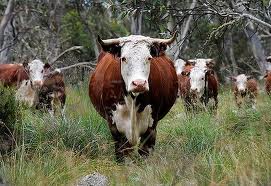
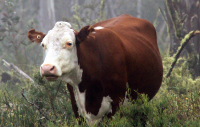
Cattlemen says it’s almost too late to put cattle into Victoria’s Alpine National Park this summer.
It’s been two weeks since Federal Minister for Environment, Tony Burke, was expected to make a decision on whether farmers can resume a cattle grazing trial in the Park.
Mark Coleman, president of the Mountain Cattleman’s Association, says the situation has become too caught up in politics and Minister Burke needs to make a decision.
“I believe that the fate of that alpine area rests at his feet and next time we do get a major holocaust through there where our complete ecosystems are completely wiped out from these super hot fires.
“I just hope he’ll be accountable for that till the day he dies.”
Personally I love the statement from the MCAV that “the situation has become too caught up in politics”. Its been about politics from day 1, and the MCAV were quite happy to ‘secretly’ put cattle back in the Park and be involved in ‘politics’ when it suited them. Yet suddenly they’re concerned about politics coming into play – sounds like a case of the ‘Pot calling the Kettle Black’.
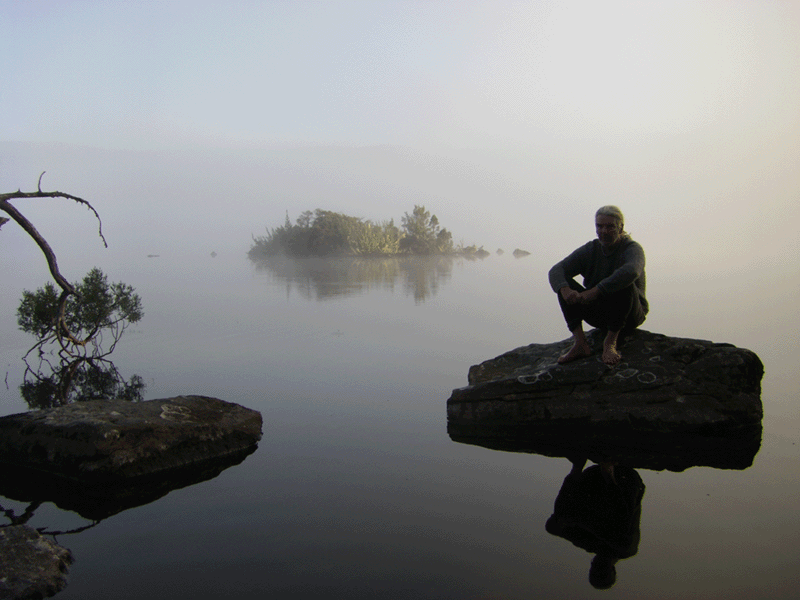
Castlemaine-based artist Ben Laycock continues his series of reports from mountainous places, this time he’s fresh off the Overland Track. Rumour has it that his musically inclined party was welcomed by some travellers but not universally accepted on the trails. One would have thought that if you wanted a quiet ‘nature experience’ you wouldn’t be staying in a hut on one of the busiest walking tracks in the country in peak season …. but as they say, ‘you can’t please all the hikers all the time’.
His report-back from the walk, which involves limited accounts of littering, cannibalism and minor embellishment of facts, will upset fans of Lord of the Rings and can be found here.
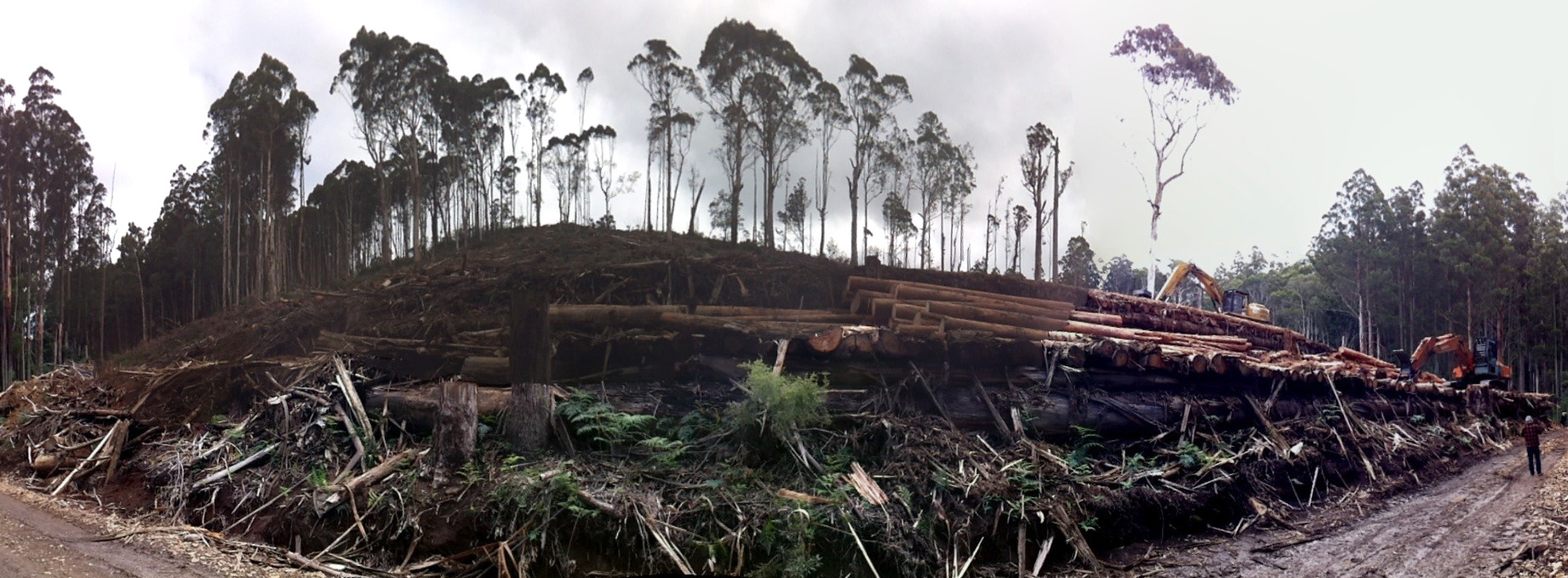
For the past two days, more than 30 people from the Central Highlands Action Group and local Toolangi and Healesville residents have been occupying a large logging coupe on Yellowdindi rd in Toolangi state forest.
Two 30m tree sits, which are suspended by ropes attached to two log-harvesters and two ‘bunnies’ with their arms locked through the tracks of a third machine have ensured that no clear-felling took place in the coupe on Monday January 16.
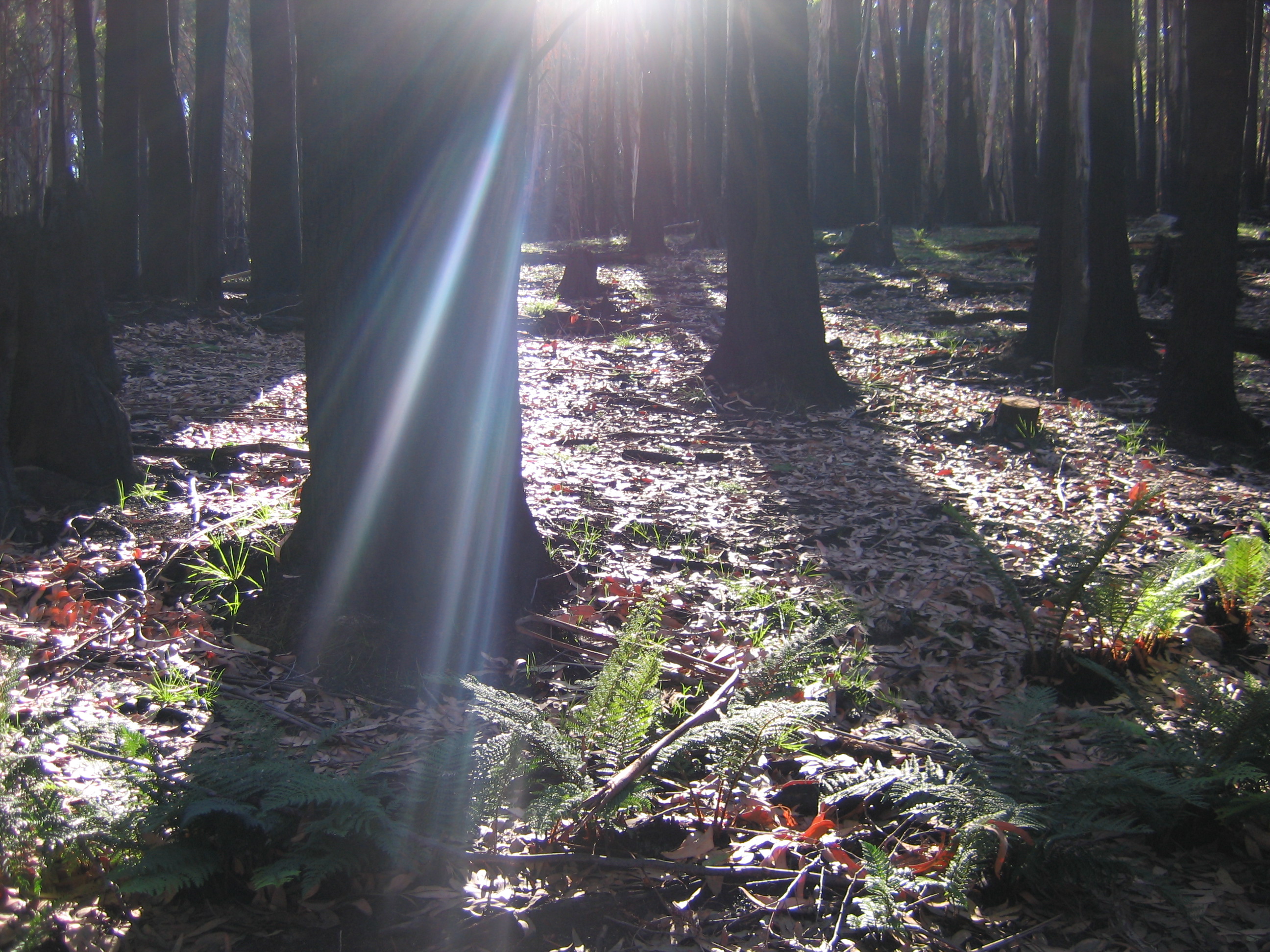
Much of the Toolangi forests were burnt in the fires of 2009. One Toolangi local said that “residents are concerned that following the Black Saturday fires in 2009 that clear-fell logging in the area will increase the risk of mega-fires due to the large amount of wood waste which is left behind in coupes. The resulting mono-species regeneration after logging operations is far more combustible than the mature age forests which are being removed. This is a recipe for further fire disasters”. They point to research by eminent forest ecologist Dr David Lindenmayer, which clearly indicates that clear-felling practices in the Central highlands notably increases fire risk and thus threatens the whole region.
Activists also point to other values of the forests: “These forests give us protection against climate change and provide habitat for native fauna which is such a feature of this area.”
This piece comes from Treehugger, and looks at impacts in the European Alps, but obviously warming of alpine environments is a real issue here in Australia as well (for instance, see the recent piece Alps could be snow free by 2050). The author is David DeFranza.
Aster bellidiastrum. Image: Alpine Exploratory
It seems obvious: As the average temperatures of alpine climates increase, cold-loving plant and animal species are forced to move up to higher elevations to find the conditions they are best suited for. New research, however, has found a surprise in this simple process—that it’s happening much faster than previously thought.
By analyzing plant samples from 60 summits in 13 European nations, researchers found that the phenomenon is continental in scale. Michael Gottfried, a researcher with the Austria-based Global Observation Research Initiative in Alpine Environments, explained that the team “expected to find a greater number of warm-loving plants at higher altitudes, but we did not expect to find such a significant change in such a short space of time
“Many cold-loving species are literally running out of mountain,” he continued, “in some of the lower mountains in Europe, we could see alpine meadows disappearing and dwarf shrubs taking over within the next few decades.”
Researchers compared data collected between 2001 and 2008, indicating the change is happening much more quickly than previously thought.








Recent Comments