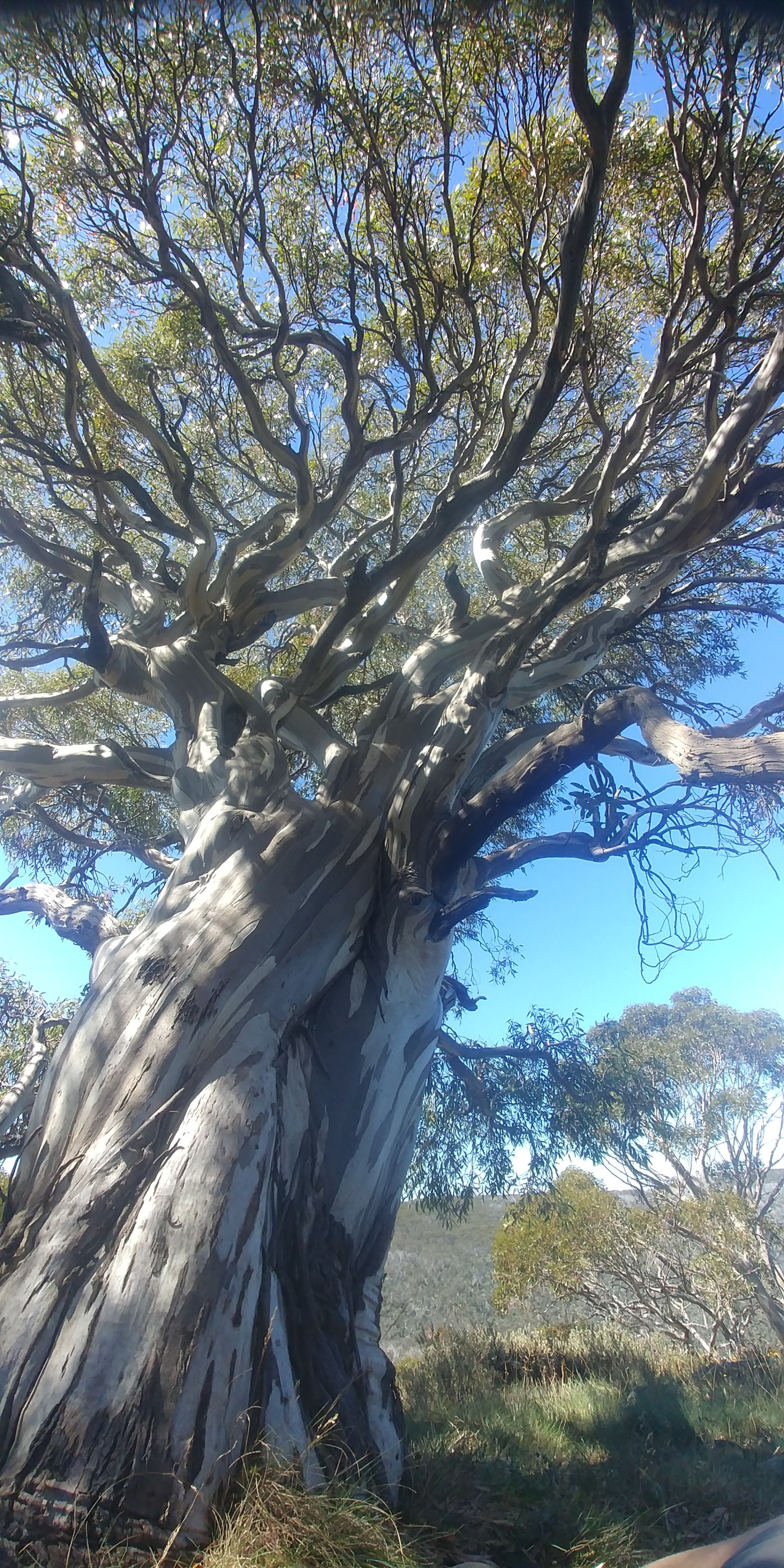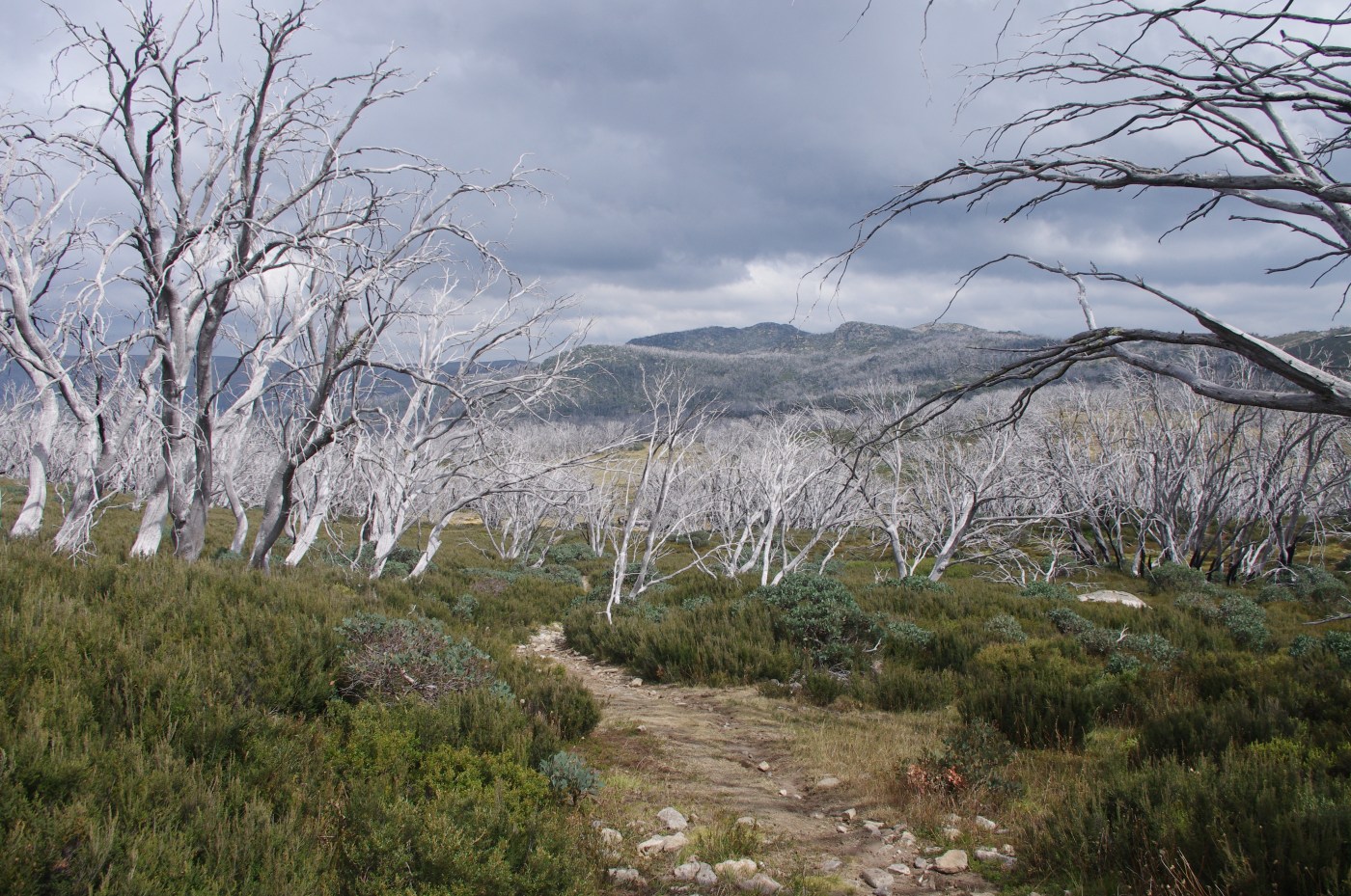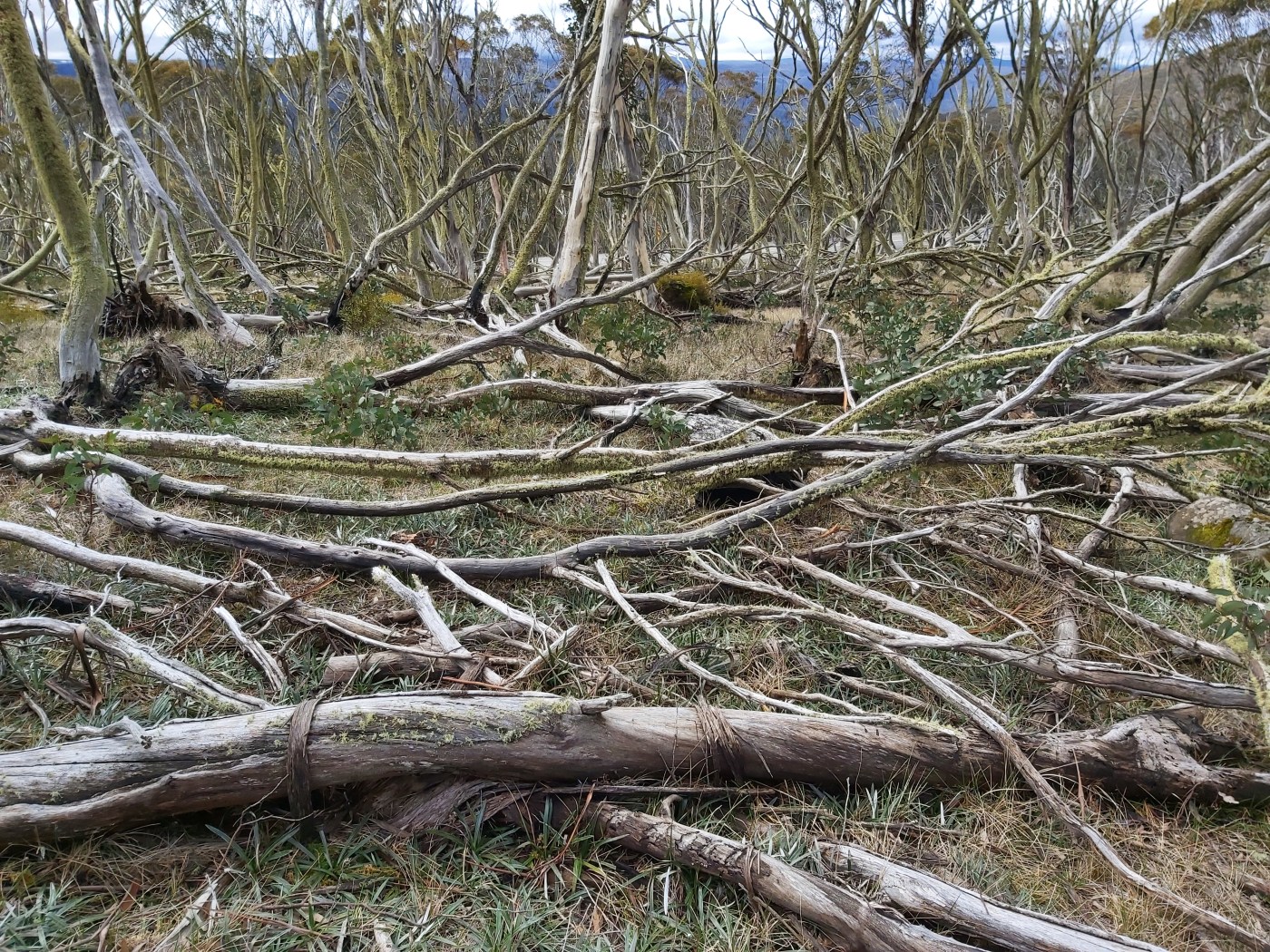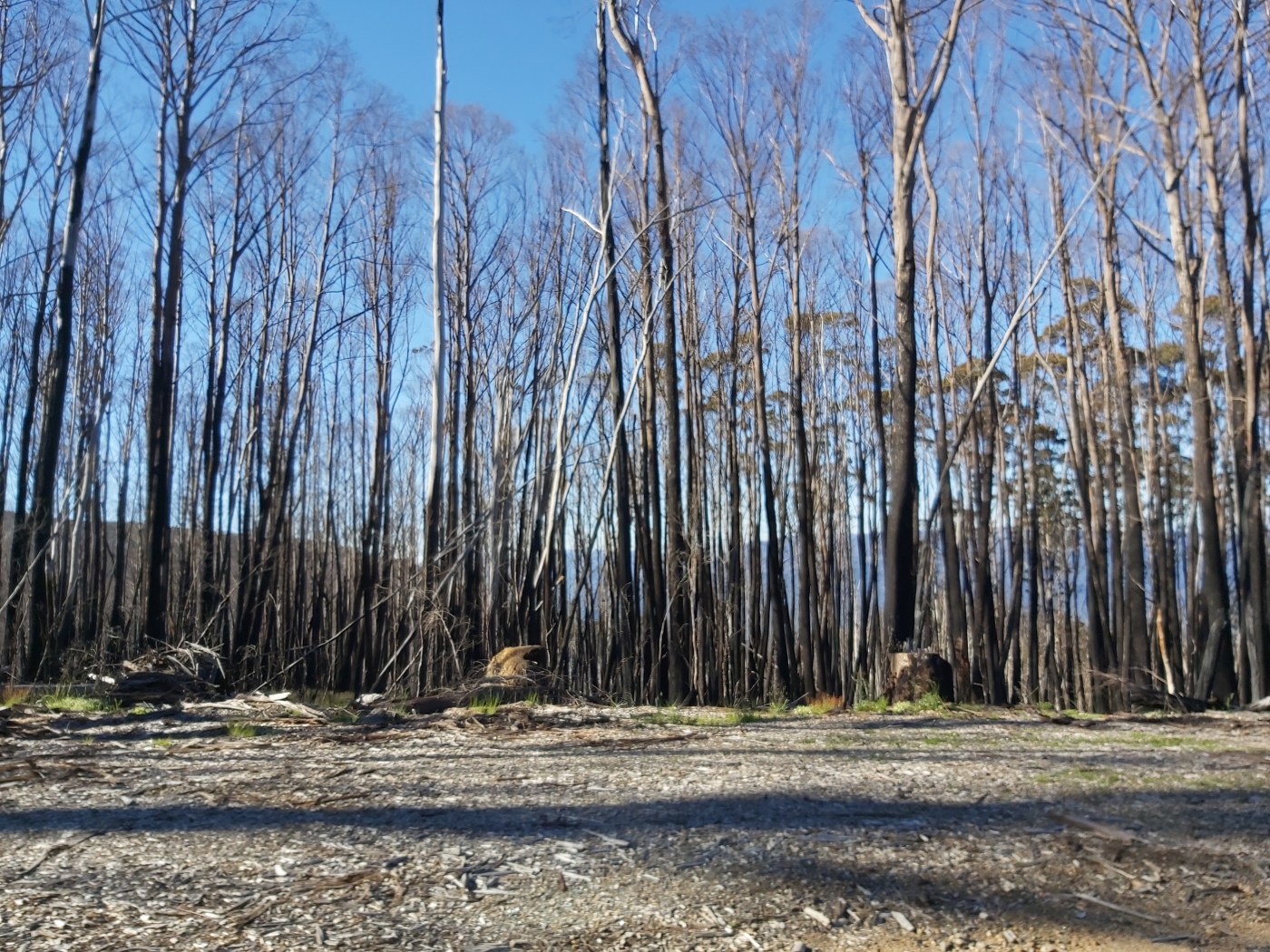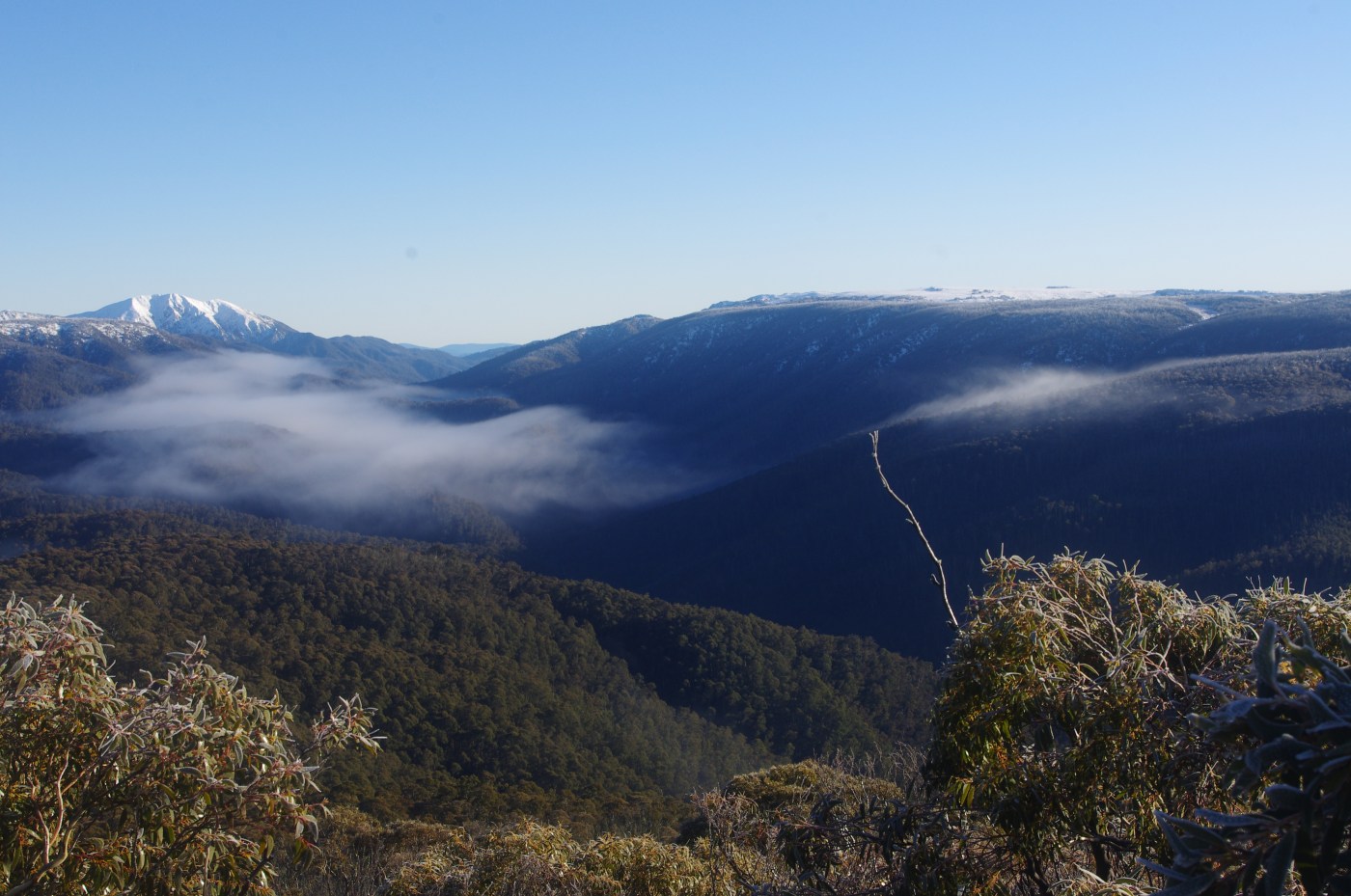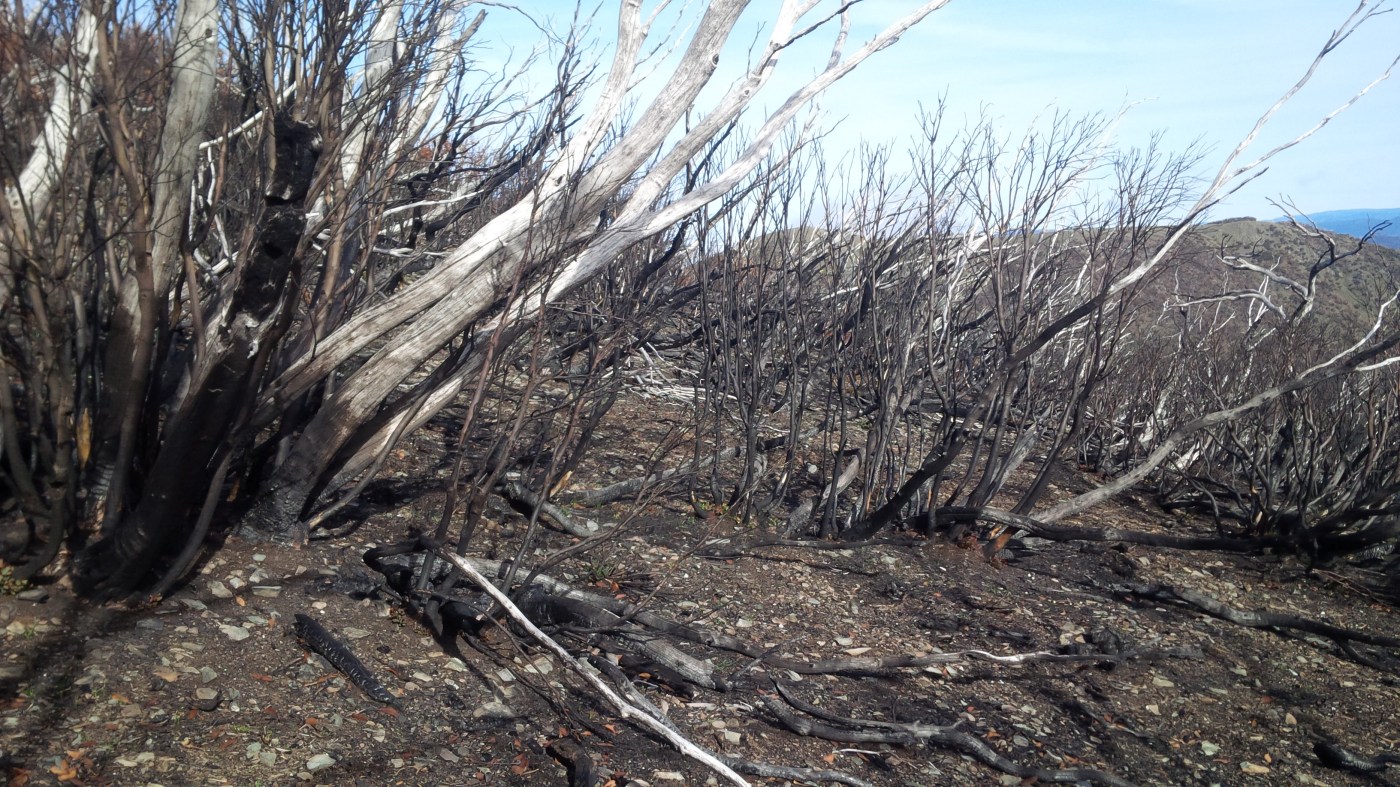
Over 90% of the Victorian distribution of snow gums has been burned at least once since 2003. Some areas have been burnt multiple times, and this is impacting on the ability of these forests to recover. Like other Eucalypts, Snow Gums are fire adapted and can recover via new seedlings or regrowth from the base of the tree. However, repeated fires within a short period of time can kill the parent forest and destroy seedlings.
We know that climate change is making fire seasons longer and more intense. This is happening globally. It has enormous implications for the landscapes that we love, how we prepare for and fight fires, and even how we live in fire prone areas.
These fires are transforming the landscapes we know and love. Anyone who has driven out of Jindabyne into the Snowy Mountains, or Mt Beauty towards the Bogong High Plains knows what I am talking about – endless walls of grey, dead trees. Only 0.47% of old growth Alpine Ash still exists in Victoria. This has huge implications for the aesthetics of our mountain areas, and significant ecological implications.
Increased fire frequency could see mountain forests like Alpine Ash replaced by wattle woodlands. As recently noted by Brett McNamara, the manager of Namadgi National Park:
Recovery happens but it is “tainted with a sense of what does the future hold for us if we are to experience fire again and again with such intensity. This is where the question is unanswered. What these mountains will look like well into the future?”
The huge volumes of dead trees from previous fires also creates a lot of fuel that is already dry and hence ready to burn in future fires. What are the implications of this for our fire fighting and land management efforts?
The Bushfire Recovery Project, led by five scientists, is tracking forest regrowth in NSW and Victoria after last summer’s fires, using data gathered by citizen scientists.
Their report has found that while low elevation forests on the NSW south coast appear to be recovering well, forests in some subalpine areas ‘near Mount Kosciuszko and in Victoria’s East Gippsland region are struggling to recover from the 2019-20 bushfires’.
This is consistent with everything we already know about the impact of climate driven fire seasons on the higher elevation Alpine Ash forests and Snow Gum woodlands.
Continue reading “Subalpine forests struggle to recover after 2019-20 bushfires”
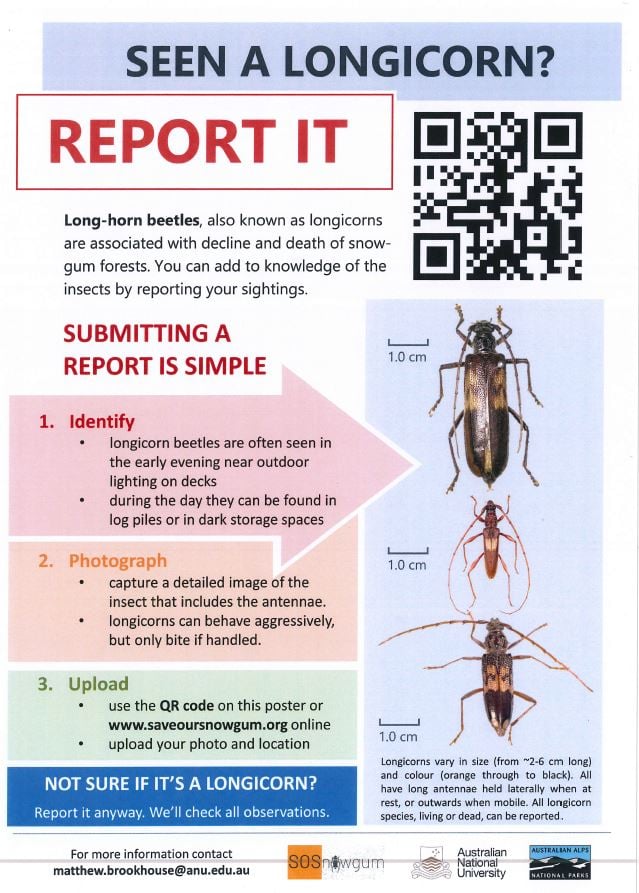
Snow gums are experiencing dieback in Kosciuszko National Park, largely because of the impacts of the native longicorn (or ‘longhorn’) beetle. These beetles prefer to lay their eggs on moisture-stressed trees and, in warmer weather, the longicorn beetle can hatch and grow up to 75% faster. It is understood that climate change is helping the spread of dieback because of background warming.
Now spread of dieback is being seen more frequently in the mountain forests of Victoria. Gillian Anderson reports back on some recent observations of snow gum dieback on the Bogong High Plains.
Continue reading “A ‘mountain’ of loss – Snow Gum dieback in Victoria”
Snow gums are experiencing dieback in Kosciuszko National Park, largely because of the impacts of the native longicorn (or ‘longhorn’) beetle. These beetles prefer to lay their eggs on moisture-stressed trees and, in warmer weather, the longicorn beetle can hatch and grow up to 75% faster.
According to work published in the Resort Roundup winter 2019 edition (produced by the NSW government), ‘reduced snowfall, high summer temperatures such as January 2019 where temperatures at Thredbo top station were 4.4oC above average, and a reduction in autumn rainfall mean that snow gums are under much greater moisture stress than in the past.’ This means that larger beetle populations are causing more frequent dieback of some snow gum trees.
The SOS Snowgum program is asking people to log instances of dieback in mountain areas.
Continue reading “Please track and report Snow Gum dieback”Many people know the story of the Pine beetle which has been devastating huge areas of forest across North America because of climate change. There is a similar scenario emerging in Australia’s mountain forests, although it is much less known.
Snow gums are experiencing dieback in Kosciuszko National Park, largely because of the impacts of the native longicorn (or ‘longhorn’) beetle. These beetles prefer to lay their eggs on moisture-stressed trees and, in warmer weather, the longicorn beetle can hatch and grow up to 75% faster.
On December 10, Dr Matthew Brookhouse, Project leader of the SOSnowgum program, will deliver a public online seminar on snow-gum dieback. The seminar will focus on recognition of dieback, the research being done into dieback, and a citizen-science program that is providing information on the spread of dieback.
Continue reading “Public Seminar – Snow-gum dieback and forest decline”I don’t know about you, but I’m a winter person. I daydream about snow through summer, sneak off to the mountains in autumn to get that sense of oncoming winter, and once the snow arrives, I’m there. My New Year’s Eve is the end of the ski season. Having New Years in the middle of endless summer heat never made sense to me, but the end of the season, when thousands start to head off the mountains and quiet returns, really marks the end of the year for me.
Like other snow addicts I anxiously check the season outlook. Those big falls in May and early June gave me hope for a good season in 2020, in spite of the fact that we just had two great winters and three in a row was going to be pushing our luck.
Then came lockdown 1 and 2, the closure of the VIC resorts, and a pretty ‘uninspiring’ winter.
Continue reading “Winter of The Little Things”Snow gums are experiencing dieback in Kosciuszko National Park, largely because of the impacts of the native longicorn (or ‘longhorn’) beetle. These beetles prefer to lay their eggs on moisture-stressed trees and, in warmer weather, the longicorn beetle can hatch and grow up to 75% faster (reports here). This has been linked to climate change because of warmer temperatures in alpine areas.
So far, impacts seem to be limited to areas in the Snowy Mountains among two distinct subspecies of snow gum – in the Guthega and Perisher areas and parts of Thredbo.
This is an update on the research into the impacts of dieback in these areas.
Fires are still burning out of control across much of the Australian High Country. Yet we are already well into the blame game, where some people and groups are blaming environmental activists and/ or The Greens party for ‘stopping’ fuel reduction burning and hence making the fires worse. While this is not true, this resonates with certain anti green and conservative demographics (check here for an alternative view of the conversation).
There is no doubt that fuel reduction burning has a role to play in how we manage forests and other landscapes. The problem is that it is often seen as a ‘one size fits all’ tool that will reduce fire intensity in all environments. But in reality, it works well in some ecosystems and is counter productive in others. This is a subtlety that is lost on the ‘fuel reduction is the answer’ boosters.
The argument that we need to increase fuel reduction burns in snow gum and true alpine environments is already caught up in the broader land management debate, and will continue in the coming months. So it’s worth taking a good look at what science says about the value of fuel reduction in our high mountain areas.
Continue reading “Fires and snow gums. To keep these forests we need less fire.”

Recent Comments