Now in it’s third year, the Splitfest DownUnder is THE gathering for anyone interested in trying out splitboarding or just meeting other people who are into backcountry boarding.
Splitfest is getting closer. Main Range of the Snowies, over the weekend of August 29 – 31.
The training will be done by Dave Enright. Dave is the guy you would have seen in the film “Further” from the Japan section. Dave was Jeremy Jones avalanche advisor/guide while filming.
Dave is the owner of Evergreen Outdoor in Hakuba. This is a great opportunity to get some Avi training from one of the best in the world.
There are two courses available, of 8 persons per course. Dates are 27-28th of Aug and 30-31st of Aug.
Get in quick so you don’t miss out. Email me at info@mrbc.com.au indicating which dates suit you to confirm your spot. This will book out fast so “first in best dressed”.
This is a free event, there are no guides so you must be able to make your own terrain decisions.
While avalanches are not uncommon in Australia’s high country, they are certainly not a day-to-day part of the backcountry experience.
But the late start to the season, which saw excellent and deep falls across the Alps has seen some strange consolidation in many places, with a resulting increased number of slides as the snow base settles in.
Since the big fall in early July, there has been warmer and cooler cycles and continued snow showers across the Alps. Mt Buller saw a large slide avalanche in the Chutes last week, Stanley Bowl on Mt Stirling was closed, and a lot of the terrain around Feathertop and Hotham felt sketchy in the more avalanche prone areas. There are many reports of cornice collapse and slides from the Main Range of the Snowies.
When we checked snow conditions above the slopes at Stanley Bowl at the weekend (12/ 13 July) there was a clear heavier layer of slightly rain affected snow as the base, with a covering of new snow that cleaved off very easily. While only a few cm deep in places (depending on the aspect, deeper on slopes that collect spindrift) it was certainly a classic avalanche profile. This upper layer is getting heavier and compacting but in our cross sections was a separate strata to the base layer. Slopes that were more sun affected appeared to be in a more stable condition.
Two experienced backcountry snowboarders, Martin Buckland and Daniel Kerry, are currently missing on Mt Bogong and there have been fears stated by search and rescue about avalanche risk on the mountain. Let’s hope they turn up safe and sound soon. (As a tragic update to this story, on July 14, Victoria Police announced they had found one body, subsequently identified as Daniel Kerr, and that an avalanche had caused his death. On July 16, Victoria Police also announced that they had found Martie Buckland’s body).
STAY SAFE
The take home message here is that there are some incredible conditions out there at present and you’d be mad to miss some of the best snow in a decade.
And as pointed out by Bruce Easton, owner of Wilderness Sports and with 30 years experience in the backcountry, people have been reporting “best ever” backcountry conditions. Conditions have been better than average to date, and if people use common sense and stay within experience and what they know, they can have great experiences.
But there is also an enhanced risk of slides, so take care, and check before you drop in on any large backcountry lines. It’s a good idea to ask for some local intell from ski patrol before heading out if you’re starting near a resort, or check sites like Backcountry Forum or Wilderness Sports for conditions in the backcountry.
Personally I don’t carry an avalanche beacon, but a growing number of BC skiers and boarders do. I started, and was caught in, a slide avalanche on the bottom section of Pink Hamburg near Mt Hotham a few years ago. Since then I have been doubly aware of the value of carrying a snow shovel even when touring the side country, and the dangers of skiing/ riding alone. A trip intentions plan – with good geographic detail about where you intend to ski/ ride, and a reliable person at home who has a definite time to call the emergency services – is really important for small groups intending to ski / board bigger and more remote terrain.
And if a slope is questionable but you do decide to ski/ ride it, then establish basic safety protocol: identify the likely points where a slope may give way and if there are any escape routes or safe points on the way down. Go one at a time while other the party members stand somewhere safe which allows them to observe the full slope so if a slide does happen they can pin point quickly where the debris has settled.
And if you’re not familiar with how to assess terrain for avalanche danger, then consider doing a course. There are 2 courses being offered this year in the Snowies, organised by Main Range Backcountry. They are being held Aug 27 & 28 and Aug 30 & 31st. Full details available here. Its money well spent.
There is a great short film by Fitz Cahall called Strong, about a man who survives an avalanche and goes back a year later to ski the line that almost took his life. The final words from that film says it all:
The western faces of the Main Range of the Snowy Mountains contain the largest section of big skiing and riding terrain in Australia. In good snow conditions you can find runs of up to 1,000 metres of vertical.
While most serious backcountry skiers and riders have the western faces on their ‘to do’ list, do not underestimate the serious nature of the terrain. They contain steep and serious slopes, with cliffs and chutes, often in dangerously icy conditions. The main faces and ridges, such as Watsons Crags, are not suitable for beginner skiers and riders. Do not drop in to one of the major lines without scoping it first (eg from an opposite ridgeline) to ascertain how icy or wind affected it is, or whether it may be subject to avalanche danger. Do not ski/ ride here alone. Ensure you have all appropriate backcountry gear, including avalanche beacon/ probe/ shovel, and know how to use it. And be aware that even in spring like conditions, soft snow can quickly become dangerously icy in the afternoon as you climb out – I would recommend ski crampons as a minimum. Some teams also carry ice axes.
Be aware that whatever you do, you need to head UP to get help, not down into the trees. If injured or exhausted seek help via calling 000 rather than heading DOWN.
After a slow start, the winter of 2014 is shaping up to be a great season.
This trip report comes from John Blankenstein who lives on the Far south Coast of NSW. John has been frequenting the mountains since he was 15, where he fell in love with the sport of snowboarding.
He has just returned from boarding the iconic Watsons Crags on the western face of the main range of the Snowy Mountains.
Watson Crags provide some serious and challenging terrain. John timed his trip to be able to experience perfect conditions.
So, the first major dump has passed over the Alps, with snow everywhere!
This update comes from Bruce at Wilderness Sports in Jindabyne.
A deep low, well to the south of Tasmania is moving slowly to the southeast. A ridge of high pressure extends across the far north of New South Wales from a high centred over South Australia. The high should move to the Tasman Sea on Friday. The next major cold front is expected to reach the far west of the state Friday night, before bringing another vigorous and colder west to southwesterly airstream over the weekend.
In terms of backcountry conditions on the Main Range:
BACKCOUNTRY:
Lots of wind and drifting snow continuing to build the snow cover on the Main Range with a further 20+cms over higher peaks. Looks so promising with the forecast of solid snowfalls continuing this week. The base will have consolidated improving backcountry skiing & Snowshoes are pretty useful at the moment to get about. Once the weather clears it will be really good but while the weather is wild and woolly patience will be rewarded so use more sheltered spots to get out. Resort Cams show building snow cover!
The NEW Cam looking towards Mount Kosciuszko is sensational to assess conditions (But not when blizzard conditions prevail).
“From field observations exposed slopes in the area averaged 40-50cms. Cross loaded terrain averaged between 50-80 cms. Protected slopes snow depths started at 70 to130+cms”.
For the past four years, the backcountry film festival has been attracting good numbers of people and is showing in more locations.
It seems like it might be time to have our own festival – with films made in Australia.
At previous Melbourne shows, we have added a film about skiing and boarding on The Bluff, and this year saw OFF GRID, a new effort on Mt Bogong from SoO Airtime.
The plan is to hold an Australian backcountry film festival in late spring 2014 with only local content. There are some fantastic film makers out there, and we hope to be able to showcase some of these.
We are seeking expressions of interest from film makers who would like to submit films.
Any human and gravity powered backcountry adventure would be welcome: walking, skiing, boarding, MTBing, paddling, climbing, …
As this is an entirely volunteer effort, with no budget, we are not able to offer payment for showing the films.
Films can be in two length categories. We hope to show an hours worth of short films (3 to 7 minutes) then up to 2 longer films (30 – 40 minutes).
At this point we are looking at doing a Melbourne showing, with the ability to offer the festival to other places once its packaged up.
“In 2012 seven adventurous skiers explored the Australian High Country. They camped, skied and filmed across one week’.
This short film is the result. Focused on the experience of climbing and riding on Mt Bogong and its ‘camo snow’, OFF GRID is a celebration of Australian backcountry skiing and boarding.
OFF GRID was produced by Joey Corcoran and Watkin McLennan of SoO Airtime (“a movie, an event, a community and bunch of Australian skiers that love sharing their Airtime”).
NB: please note that this year, because of the venue, we won’t have drinks for sale.
Co-hosted with Melbourne University Ski Club.
The festival is run by not-for-profit hosts, and in Australia, all funds raised will support the Friends of the Earth (FoE) climate campaign. Funds will go to FoE’s work with regional communities to stop the development of new coal mines and unconventional gas drilling across southern Victoria.
The festival is run by not-for-profit hosts, and in Australia, all funds raised will support the Friends of the Earth campaign against new coal and gas.
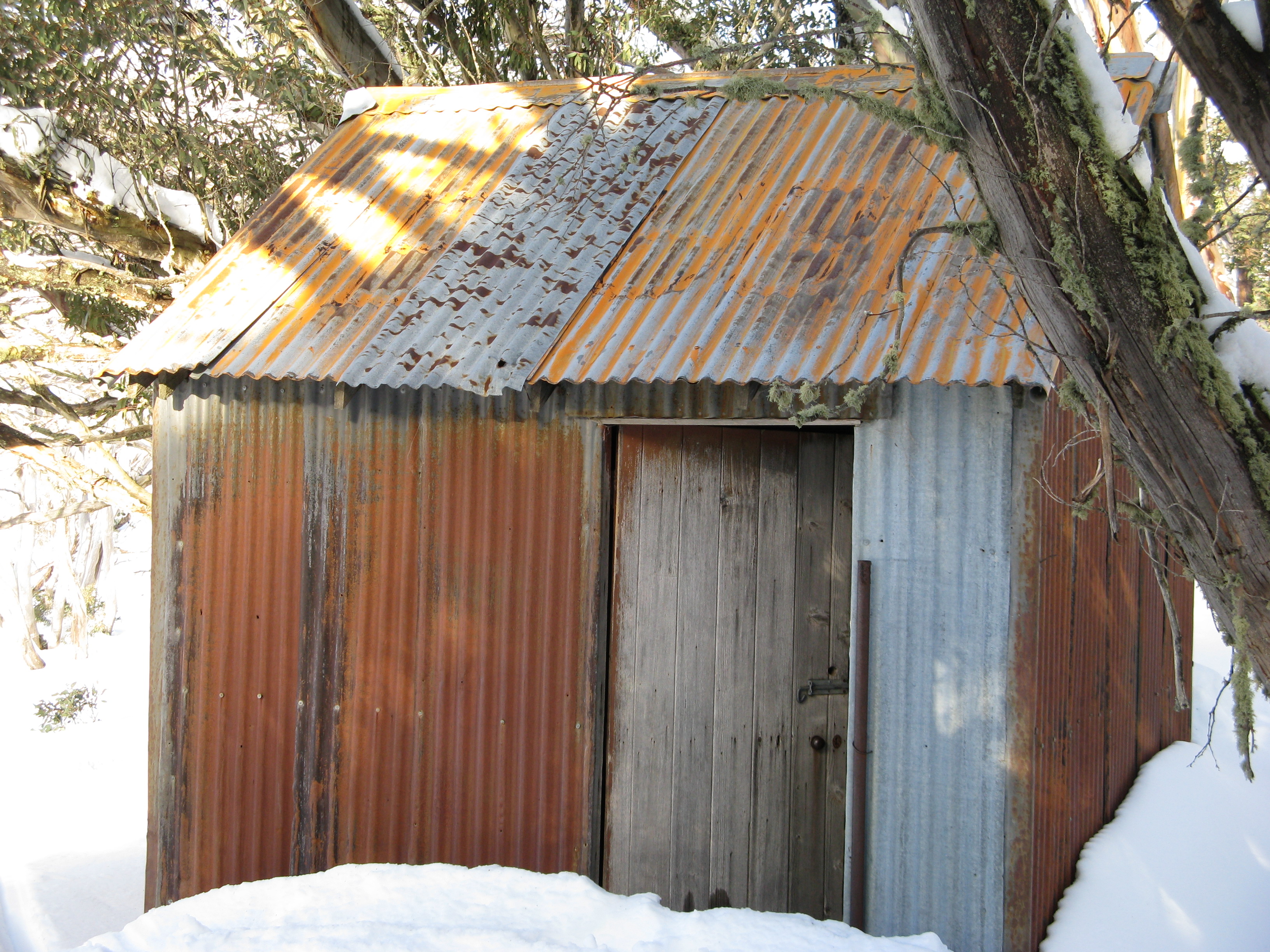
Huts in the mountains can be a vexed issue. Huts will tend to attract people and so tend to concentrate visitation within a larger area. As one example, most people who climb Mt Bogong tend to then turn towards Cleve Cole hut rather than head across to the Hooker Plateau. This tendency to influence visitation can be both good and bad.
They are part of the cultural history of the high country, and reflect major stages in the post colonisation era: cattle grazing, forestry, hydro, even fire watch towers and, more recently, huts built for recreational purposes. We also have a number of strange and random anomalies, ones that don’t really make sense: Craig’s hut near Mt Stirling as an example, which was built as a set for a film. There are, of course, those whose primary function is safety, such as Seaman’s hut near Mt Kosciusko, and huts that belong to clubs or even schools (Geelong Grammar on Mt Stirling).
I have always tended towards the position that we don’t need more huts in the high country. With incremental pressure as ski resorts increase their footprint and the risk of private developments within Victorian national parks and the precedent of private enterprise in a number of Tasmanian parks, I don’t think we need more infrastructure. There have been some hut removals that make ecological sense (such as Albina Lodge, above the western slopes of the Main Range in the Snowy Mountains). I certainly understand the need for huts in strategic spots for safety. And I do appreciate the history of these places, the incredible work of getting materials into hut sites in the early days and the bush skills of the builders. I love the work of Klaus Hueneke, who has chronicled the heritage of the huts.
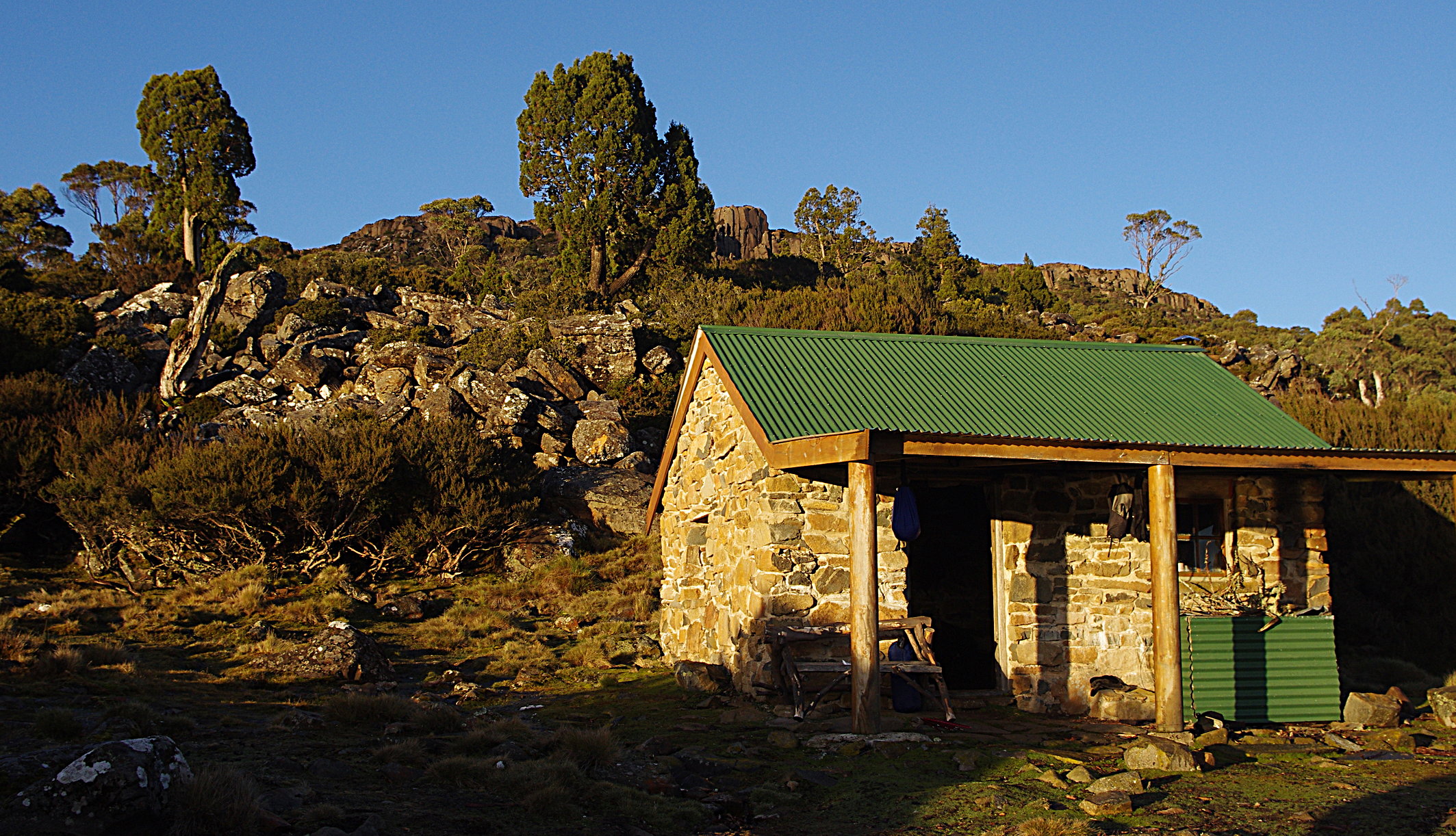
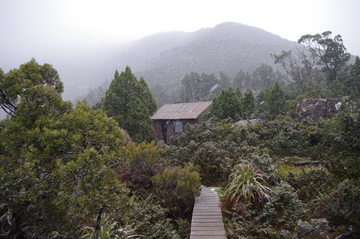
the hut at Lake Nameless, Central TAS
With the rise in wildfire over the past decade, we have lost many of the iconic huts. There have been some excellent rebuild efforts, such as Michel’s at Mt Bogong. The Victorian High Country Huts Association was founded after the major bushfires of February 2003, to try and preserve remaining huts. Some huts are looked after by organisations and this can give people a strong connection to ‘their’ hut, and various groups exist to look out for huts in general (partial list below).
For me, it’s a rare thing to find a hut that is more appealing than a tent, but amongst my favourites are Seamen’s and the ‘Schlink Hilton’ in the Snowies, Vallejo Gantner at Macalister Springs, Cleve Cole on Bogong (of course), and the hut at Lake Nameless in Central Tasmania. I love the location of the ridiculously ugly house on Mt Wills.
For hut fans, we have recently been posting photos on Mountain Journal’s facebook page. Please feel free to join in and post your favourite pics.
the hut at Newgate Tarn, TAS
I recently spotted the article below, highlighting the value of the ‘secret’ hut stash around many resorts, the little known hang out spot. I remember a rough hut that lasted several years on the northern slopes of The Bluff in Victoria which was popular with some backcountry skiers and boarders. I went to look for it one spring and it was gone (it had been tarp and pole heavy, more a glorified camp than a hut).
What I loved about this article is that it highlights that for all of us who use huts, there are personal and social memories that build up: of friendship, adventure, good dinners, long and late night conversations with strangers. I held my 30th birthday at Vallejo Gantner hut and have spent the last 4 new years at Bluff Spur hut on Mt Stirling with a big gang of friends. Part of the cultural – as opposed to technical – history is preserved in log books and, increasingly, on line. For instance, check the newsletters from the Mt Bogong Club, who have been looking after the Cleve Cole hut since 1965. In many countries there is the tradition of the hut warden, which can add to the sense of hut culture. I like the short film Winters of my Life, an appreciation of the decades-long service of Howard Weamer, who for the past 35 years has spent his winters as a hutkeeper in Yosemite’s backcountry.
Secret stashes, shacks included, are a part of skiing in the same way that early mornings and long drives are. If you are dedicated you will have yours, you’ll know the good ones, and the people to share them with inbounds and out. People who love the mountains cultivated them, probably long before you got there.
Splitfest – Australia’s backcountry boarding festival
Now in it’s third year, the Splitfest DownUnder is THE gathering for anyone interested in trying out splitboarding or just meeting other people who are into backcountry boarding.
We will be holding the Friday night entertainment at the Banjo Paterson Inn Starting @ 6pm (1 Kosciuszko Road Jindabyne Snowy Mountains New South Wales 2627).
There will be all the usual trimmings, T-Shirts, give a ways, raffles and loads of fun. Some of the prize categories include worst DIY job, most inventive Splitboard design etc. etc.
An official list will be out soon so stay tuned!
You have the option to stay in Jindabyne, camp in the National Park or my favorite camp on the peaks.
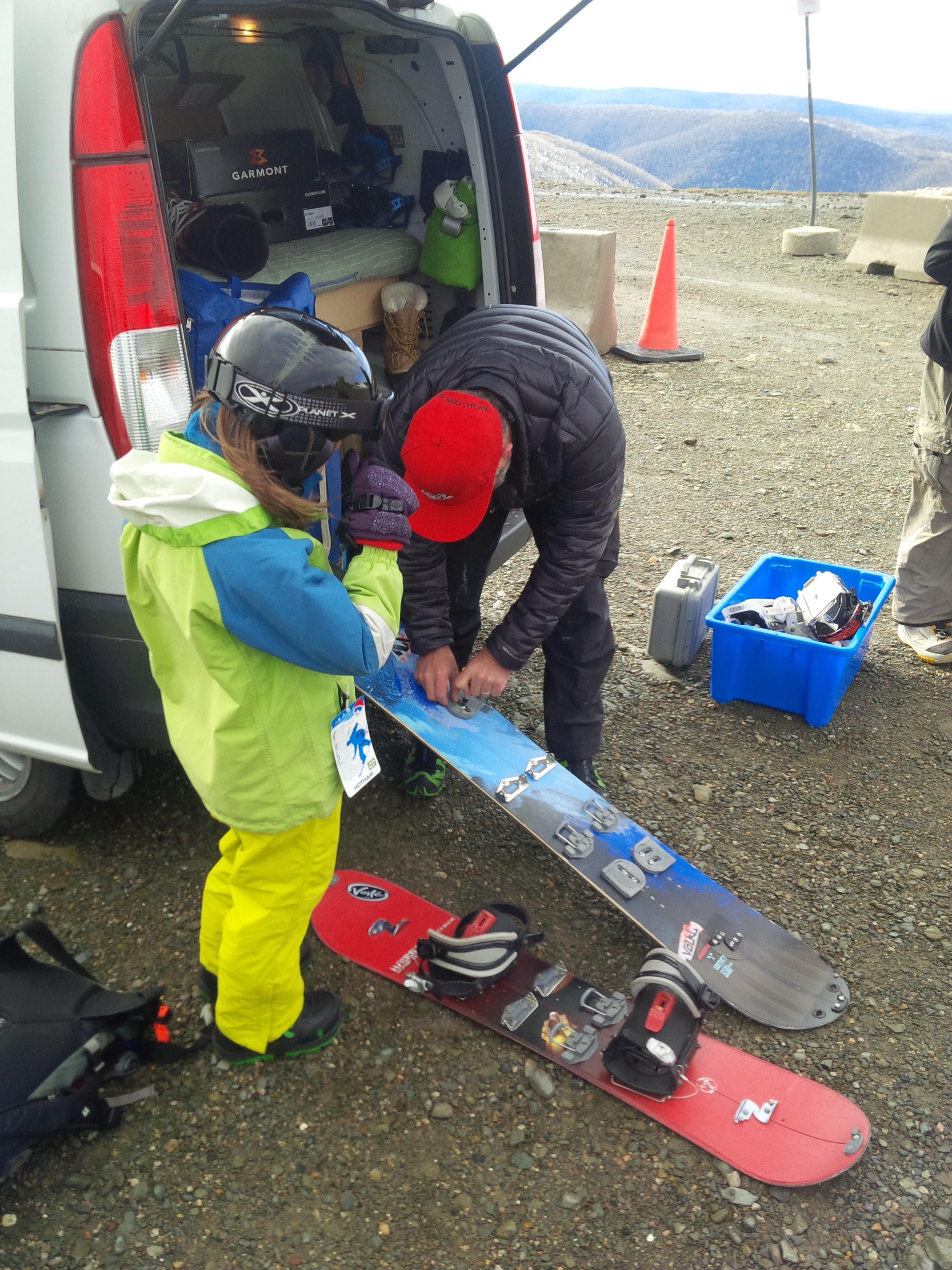
There will be rental gear available to those who need it. Jump on board and meet some new touring partners, the more the merrier!
This is a free event, there are no guides so you must be able to make your own terrain decisions.
Ok, it’s late summer. Its been stinking hot, dry, and fires have been going for weeks in East Gippsland and a number of spots in the high country. We still have a long warm spell ahead of us.
We all need some cheering up. This short film from Mark Allen, and coming via Backcountry magazine may do the job. Nine days of snow storms sounds kind of like a nice option when compared with the smokey humidity of late February … Enjoy.
The blurb about the film:
“Outdoor Research Athletes Mark Allen and Sheldon Kerr have grand ideas of first ski descents in a remote area of Glacier Bay National Park in Southeast Alaska. After hiring a bush pilot to fly them deep into the park from Haines everything goes well, at first. The ski mountaineering powder fest turns in to some major tent time and days filled by camp maintenance while pinned in a storm for 9 days. The two try to figure out how to stay fed with 7 days of rations in an unchanging situation. Once the two learned the pilot was not coming back, the adventure began”.








Recent Comments