This article was written by David Bain orignally published as the first of the Global Snapshot series, bi-weekly essays written by Protect Our Winters (POW) supporters, which give their local perspective of climate change.
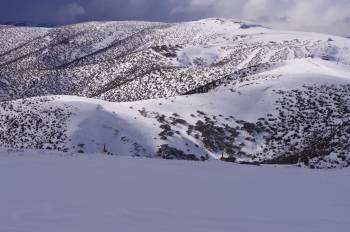
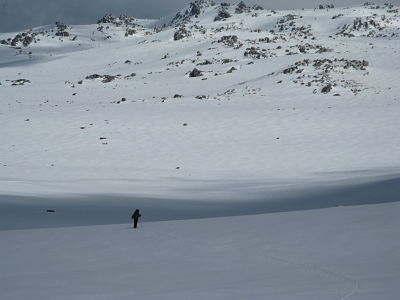
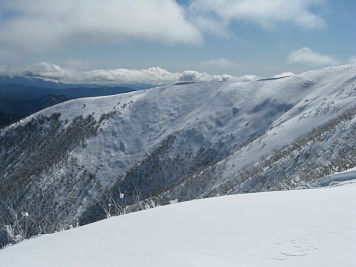
The home of our snow industry is a unique and highly specialised sensitive alpine environment. So sensitive is much of our alpine environment that motorised vehicles of any kind are basically not allowed outside of the resort boundaries.
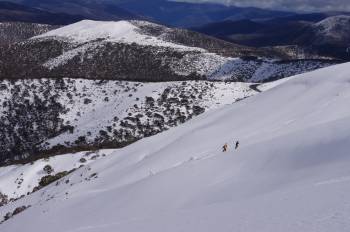
This environment is unique partly as a result of the old age of the mountains and lack of mountain building, being in the middle of a continental plate. Only minor glacial activity has occurred, being last present between 10,000 and 30,000 years ago. The total area of the true alpine environment (above the tree line) is small, approximately only 770 km2, which is found as a series of ‘islands’ on top of mountains within a sub-alpine ‘sea’. In the order of some 6,500 km2 of alpine and sub-alpine areas annually receives some snowfall. Our endemic alpine species have largely evolved in isolation from other continents and often on isolated mountain tops only tens of kilometres apart.
The following comes from the Australian Alps national parks Co-operative Management Program.
“The Australian Alps Education Kit is designed for students, teachers and anyone else keen to learn about this spectacular region of Australia. These educational materials form an organised resource focusing on iconic, awe-inspiring and accessible areas within the Australian Alps.
The contents range from the resilient yet fragile plant communities that grow in the harsh alpine environment, to thecultural impact of the Snowy Mountains Hydro-electricity Scheme; and from the First People’s connection with the mountain landscape to the Alps’ cycles of weather and climate”.
This piece comes from Treehugger, and looks at impacts in the European Alps, but obviously warming of alpine environments is a real issue here in Australia as well (for instance, see the recent piece Alps could be snow free by 2050). The author is David DeFranza.
Aster bellidiastrum. Image: Alpine Exploratory
It seems obvious: As the average temperatures of alpine climates increase, cold-loving plant and animal species are forced to move up to higher elevations to find the conditions they are best suited for. New research, however, has found a surprise in this simple process—that it’s happening much faster than previously thought.
By analyzing plant samples from 60 summits in 13 European nations, researchers found that the phenomenon is continental in scale. Michael Gottfried, a researcher with the Austria-based Global Observation Research Initiative in Alpine Environments, explained that the team “expected to find a greater number of warm-loving plants at higher altitudes, but we did not expect to find such a significant change in such a short space of time
“Many cold-loving species are literally running out of mountain,” he continued, “in some of the lower mountains in Europe, we could see alpine meadows disappearing and dwarf shrubs taking over within the next few decades.”
Researchers compared data collected between 2001 and 2008, indicating the change is happening much more quickly than previously thought.
The effects of climate change on Australia’s alpine areas could mean the end of the ski season.
AUSTRALIA’S ski slopes could be completely bare of natural winter snow by 2050 unless concerted action is taken against global warming, according to a government-commissioned report that paints a grim picture of the effects of climate change on alpine areas.
The report, Caring for our Australian Alps Catchments, has found the Alps, which stretch from Victoria through New South Wales to the Australian Capital Territory, face an average temperature rise of between 0.6 and 2.9 degrees by 2050, depending on how much action the international community takes to combat climate change.
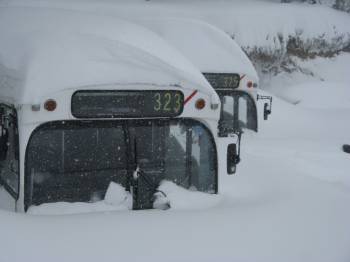
Seems the wheels have fallen off the 'sustainability' bus
With winter almost in view, the resorts are announcing their highlights and new activities for 2011.
In Victoria, there are the usual snow making investment announcements and continued diversification of activities. At Falls Creek, the final stage of the Slalom Plaza redevelopment has been opened. Apparently Falls also has new aerial walkways, which take pedestrians through the village via a network of elevated stairways. At Hotham, in contrast, the main new announcement is some extra investment in snow making.
Mt Buller has put another $1 million into new snow guns and the snow grooming fleet.
However, on the environment front, I doubt I have ever seen such an un-inspiring effort.
In a rather bizarre move, some reports say that Buller now has a heated walkway from the Village Square up to the Ski and Snowboard School and the Buller Kids Centre. This would be great if Buller was pitching itself as a nudist colony, but most of us wear boots in the snow, and it seems like they must have money (and carbon) to burn if they think using energy to heat an outdoor pathway is a good idea.
Hotham is pushing air travel to get to the snow. Falls and Hotham continue to push the gas guzzling obscenity that is the 6 minute heli link ride so you can ski two mountains. Great for people with no values but a healthy credit card limit. Hotham runs kids snowmobile operations. Mention of environmental initiatives seems to have disappeared almost completely from resort promotional material in 2011 (for instance, there is a one paragraph mention of environmental practise in this years 50 page booklet from Hotham).
Meanwhile, Falls has announced that 10 ‘brand new luxury Snowmobiles’ have been added to the tours fleet, allowing guests to ride or pillion on their own snowmobile into the ‘pristine backcountry’ of Falls Creek.
Not content with imposing their operations on ‘pristine’ areas within the resort boundary with last years tours run by Steve Lee, they appear to be wanting to increase their noise and carbon footprint with these new skidoos.
On the positive side, Falls has made access to their many groomed cross country trails free. Perhaps encouraging more people to get away from the resort will balance out some of the increased carbon footprint that comes with putting a bunch of new snowmobiles into the backcountry.
Lake Mountain has substantial new building infrastructure and snow making and needs support as it recovers from the devastating fires of 2009. Baw Baw stands out amongst the Victorian resorts because it continues to focus on its ‘green’ image.
Just a few years ago, environmental initiatives were reasonably prominent in a number of the main resorts. From actively spruiking the Keep Winter Cool behaviour change program to buying green power to run some of their tows, resorts seemed serious about reducing their ecological footprint. Sadly, that all seems to have evaporated this year. Rather than acting decisively to reduce their greenhouse footprint, most have gone all out to re-badge themselves as ‘year round’ resorts. That’s where the money has gone, into mountain bike trails and many out of season festivals and events. All of that is great, and a common sense way of stretching use of existing infrastructure. But the loss of responsible activity and leadership by resort management on the environmental front is deeply disappointing.
We will also be showing the festival at Dinner Plain in August. Stay tuned for details.
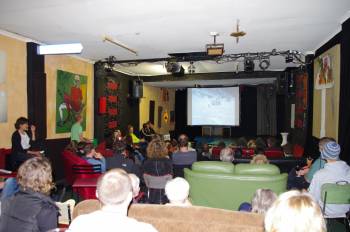
Showing in Melbourne, April 2011
Many thanks to everyone who showed up. We will need a bigger venue next time ...
The Winter Wildlands Alliance created the Backcountry Film Festival in 2005 to help grassroots and professional filmmakers to show audiences their love of the winter outdoors. Since then, the annual festival has been shown in more than 30 towns and cities, and raised thousands of dollars to help efforts to preserve our winter environment.
The 2011 film festival is showing in Australia.
This tuesday, April 12
Films start at 8 pm. Please feel free to arrive earlier to grab a drink.
At 303 (303 High street, Northcote, Melbourne), tram stop #32 on the #86 tram. Its just next door to the Northcote Social Club.
Protect Our Winters is the environmental centre point of the winter sports community, united towards a common goal of reducing climate change’s effects on our sport and local mountain communities.
We believe that to really effect things, consumer behaviour needs to change and that the power of an actively participating and united community can have a direct influence on climate change, now and for generations behind us.
This year’s festival features:
Best of the Festival: Teton Gravity Research’s festival cut of “Deeper” follows legendary snowboarder Jeremy Jones and other top riders as they forsake helicopters, snowmobiles and lifts to venture deep into untouched terrain under their own power.
Best Short Film: “Desert River” from Sweetgrass Productions, is a beautiful ski adventure into Alaska.
Best Environmental Film: “Whitebark Warrior” from TreeFight and Snaz Media, chronicles the decline of thousand-year old whitebark pines due to climate change and efforts underway to save these iconic high alpine trees.
Australia has any number of well known sports people. What sometimes surprises me is how few prominent skiers/ boarders – that is people connected with our mountains – actually speak out on environmental issues. This example from the excellent Wend magazine profiles extreme skier from the USA, Alison Gannett, and her advocacy work on climate change.
There are plenty of people out there talking about climate change. But how many are actually doing something about it? Even those of us who spend a lot of time outdoors can be guilty of contributing to the destruction of the natural environment we love. We fly in jets from place to place for the sake of adventure. And many of us are still driving low gas mileage, carbon emitting SUVs. Our active lifestyles can really hurt the planet. So that’s why we can all take a few lessons from professional skier and environmental advocate Alison Gannett.
“I went to school for climate change and majored in education for environmental issues. And then I went to school for solar design for alternative home building,” she said. “At the same time, I had a professional skiing career, doing crazy things like the X-Games and jumping off cliffs for a living.” While she had two careers running parallel to one another, Gannett suffered a devastating crash at the X-Games and because she was badly injured and unable to compete, several of her sponsors immediately dropped her. That got Gannett to thinking.
“I realized how shallow a lot of my ski industry sponsors were,” she said. “I decided, wouldn’t it be cool to partner with companies that have more at stake and care more about than just selling clothing?” Though many of the competitors and colleagues thought she was crazy for chasing the more lucrative sponsorship deals, Gannett changed her professional priorities to work instead with companies who share her environmentally conscious values. “I want to chase ethics,” she said. “I want to work with companies that have the same beliefs that I do.”
It turns out that there are plenty of sponsors out there willing to support Gannett’s mission to raise awareness for the ongoing crisis of climate change. Blending her interests in sustainable living and an active lifestyle, she’s proven to be a very effective spokesperson for both. “As an athlete getting older, I’d have to say that I have better sponsor relationships now than I ever did,” she said. “And now working with the Save Our Snow Foundation and working with schools, working with Congress, working with the White House I’m saving our snow, saving our planet and making the world a better place.”
Allison Gannett is the kind of adventure athlete that walks her talk. While still leading an exciting life as a professional skier, she’s making a big difference in educating the general public on the realities of climate change. And through her work at the Save Our Snow Foundation and on her own organic farm in Colorado, she’s showing us what we each can to do to slow it down.
With the prospect of the Coalition taking power following yesterday’s state election it is worth taking a few minutes to think about what this might mean in terms of a change in attitude to the Victorian High Country.
The most obvious short term implication would be if the Coalition was actually able to implement its promise to return cattle to the Alpine National Park. (Phil Ingamells of the Victorian National Parks Association recently explained why this is most unlikely).
The Mountain Cattlemen’s Association of Victoria (MCAV) is hoping the Coalition will act on it’s promise to re-introduce cows to the Alpine National Park. They say this would be a good thing because “cattle grazing (is) a proven management tool to reduce fuel loads”.
You don’t have to be a genius to know that a cow, given the choice between a succulent plant and a prickly shrub, will choose to eat the former. Over time, at at scale, this drives sub alpine vegetation towards scrubbier vegetation types – which will be more flammable. ‘Alpine grazing reduces blazing’ has been consistently proven incorrect by a number of studies. There are a range of other reasons to keep cattle out of the headwaters of our most significant river systems, not least of which is water quality. Lets hope common sense will prevail on this one.
They have also announced that they would intensify logging and replace native forest ecosystems with Mountain Ash ‘plantations’.
Another, longer term issue is climate change. As we know, climate science tells us that the Alps are at grave risk from climate change unless we can greatly reduce greenhouse emissions in the near future.
The Victorian Coalition was noticeably absent from the climate change debate through most of this year, and didn’t even bother to release their climate change policy before the election.
They did release an energy policy (just 4 days out from the election) and there are various points of detail in that policy that should worry anyone who is wanting action on climate change from the Party that forms the next state government.
This includes the fact that:
they have provided very little detail on how Victoria might meet the existing 20% emissions reduction target,
there is no mention of the scale of the problem of climate change,
there is no direct commitment to a phase-out of Hazelwood or any other coal fired power station,
finally, it includes a regressive policy on wind farms.
As leader, Ted Baillieu has shown a complete lack of interest in the issue of climate change. The next few years are pivotal if the global community is to respond effectively to the threat of global warming. Victoria must do a fair share of this work. Based on their actions over the past year, it seems clear that a Coalition government would send Victoria backwards on this most pressing of issues.
In the build up to the election, environment groups released a series of scorecards assessing Party policies. In the final version, the Greens scored 93%, the ALP was next best on 52% and the Coalition was far behind on just 22%.
As a growing number of Australian ski resorts bill them selves as being ‘green’, there are some developmemts in the Northern hemisphere that show how much further we could go if we want to take our attempts to reduce environmental impacts seriously.
Image: Mt. Abram
Obviously energy use (for lifts and snow making operations) is a major environmental issue for all resorts in that it will be a major component of the resorts overall greenhouse emissions. Some Australian resorts have sought to reduce their environmental footprint through purchasing ‘green’ power, at least for some of their tows.
One problem with this is that if they are buying hydro power – generally the cheapest form of commercial renewable energy – they are in effect buying ‘old’ energy – that is, renewable power that has been in production for years and therefore does not actually displace coal and hence reduce greenhouse emissions. For instance, the major hydroschemes on mainland Australia were built decades ago. The Kiewa Hydroelectric Scheme in north eastern Victoria was originally constructed between 1938 and 1961. The one exception would probably be where resorts purchase RECs (Renewable Energy Certificates) from the Bogong power station in north east Victoria, which has recently increased its energy production substantially. It was opened in late 2009. Hence RECs from Bogong could constitute ‘new’ green energy which potentially is displacing coal from energy production. The main reservoir for the scheme is the Rocky Valley Dam, on the Bogong High Plains. Check here for some information on the recent expansion of the Bogong plant.
But a small resort in the USA has gone much further – it has decided to produce its own energy. Mt Abram, located outside of Bethel, Maine, is in the permitting stage of a plan to install 3,190 solar panels spread over an area of 2 acres. When completed, the ski area is poised to become North America’s first net negative ski area when it comes to energy production.
Mt Abram plans to sell their excessive power back to the Central Maine Power Company grid.
According to writer Shanie Matthews, in addition to producing their own power, the ski area has been taking steps to reduce their demands for electricity. In April 2010, they received a $40,000 grant from the National Ski Areas Association (NSAA) to be used for 10 high efficiency snowmaking guns. Mt Abram will purchase 50 more guns as well. The new guns can reduce energy consumption by as much as 75%. NSAA reports that snowmaking costs account for an average of 67% of electrical costs in a resort.
Mt Abram owner Matt Hancock says the solar panels will be paid for by energy savings as well as the revenues from selling their unused energy back to local utility company.
The resort bills itself as a “friendly winter resort” and is located near Bethel, Maine, in the New England region of the north eastern USA. Mt. Abram offers a variety of terrain from beginner’s to ungroomed expert glade runs and race courses, and is serviced by five lifts and has 44 trails.
The US-based Mountain Riders Alliance has now gone global:
Bon Accord spur, VIC
“A new paradigm is emerging in ski area management: one that’s globally-based, rider-centric, environmentally sustainable, sensitive to local needs, and skier-and-snowboarder-owned
“Rising lift ticket costs, negative impacts on ski communities and the environment, and the desire to combat climate change have all led concerned skiers and snowboarders to form a global collaborative group, Mountain Rider’s Alliance (MRA).
“MRA is a movement of snow enthusiasts who are dedicated to changing the ways ski areas are run. MRA’s mission is to create rider-owned-and-operated ski areas that are rider-centric, environmentally sustainable and sensitive to local cultural, social and economic concerns”.
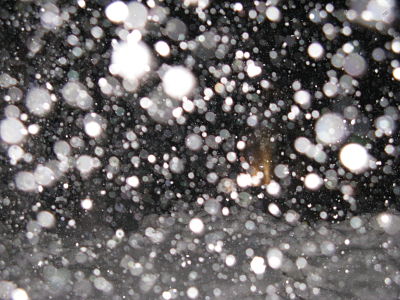
late August, snow buckets down day & night across the Alps
Its hard not to feel envious when you look at those photos from the late 19th century that were taken as the miners and loggers made their way up the deep valleys below the alpine peaks and built villages and new towns. Places like Harrietville, at the head of the Ovens River below Mt Feathertop, seem to have had regular dumps of snow through the winter months. Now, if we just get some snow flurries down that far it rates as an event.
Of course, Australian weather has always been famous for being erratic. And if you look at the snow pack records that chart winter snow depths over the past 3 decades you can see wild variety between the seasons.
Climate skeptics love to point to cold weather and hard winters as ‘proof’ that climate change is not real, but this just reveals more about their ignorance of how climate change is expected to work than proving any other point. Some climate campaigners prefer to use the word ‘climate chaos’ because this gives a better indication of what the science tells us is coming: ever more erractic and extreme weather events. In our part of the world, this will include drought, flood, fire, and extreme weather events like torrential rain.
This info is easy to find. It is not the stuff of hysterical greenies hiding in caves. It is from the mainstream of the climate science community. In a democracy we can think what we like. But having an opinion which runs counter to science doesn’t mean climate change is not happening. One of the things that strikes me – in a week where much of western and north eastern Victoria has been flooded, people evacuated, the road to Falls Creek was cut, and a landslip closed operations briefly at Hotham resort, is how quickly we can adapt to changed conditions and accept them as the ‘new’ normal behaviour of the weather. Just a week before that we had those wild snowfalls that blocked the Hotham Road for a day and a half and dumped almost a metre of powder across the alps. Then throw your mind back to July, and the gray rainy skies that brought miserable conditions and mediocre snow.
My point here is not to stir up fear, or to slate all this strange winter to climate change. Its just to remind ourselves that what we have experienced has not been an ‘ordinary’ winter. Sure, we need to grab the good winters when they do come along, and ski or board as hard as we can. We probably need to grumble and find other things to do in the winters that don’t happen. But we should never lose sight of the fact that all of whats happening is consistent with what climate science tells us is coming, unless we decide to do something serious as a global community to greatly reduce our greenhouse emissions.
And for me that’s reason enough to do what we can where can, to reduce our impact, and to get action at the community, corporate and government level.
Protect Our Winters was created as a way to bring the winter sports community together to fight climate change and its effects on our mountains.
It is the environmental center point of the winter sports community, united towards a common goal of reducing climate change’s effects on our sport and local mountain communities.
POW has just released their 2010 trailer video.
You can watch it here.
For details on POW in Australia, check here.







Recent Comments