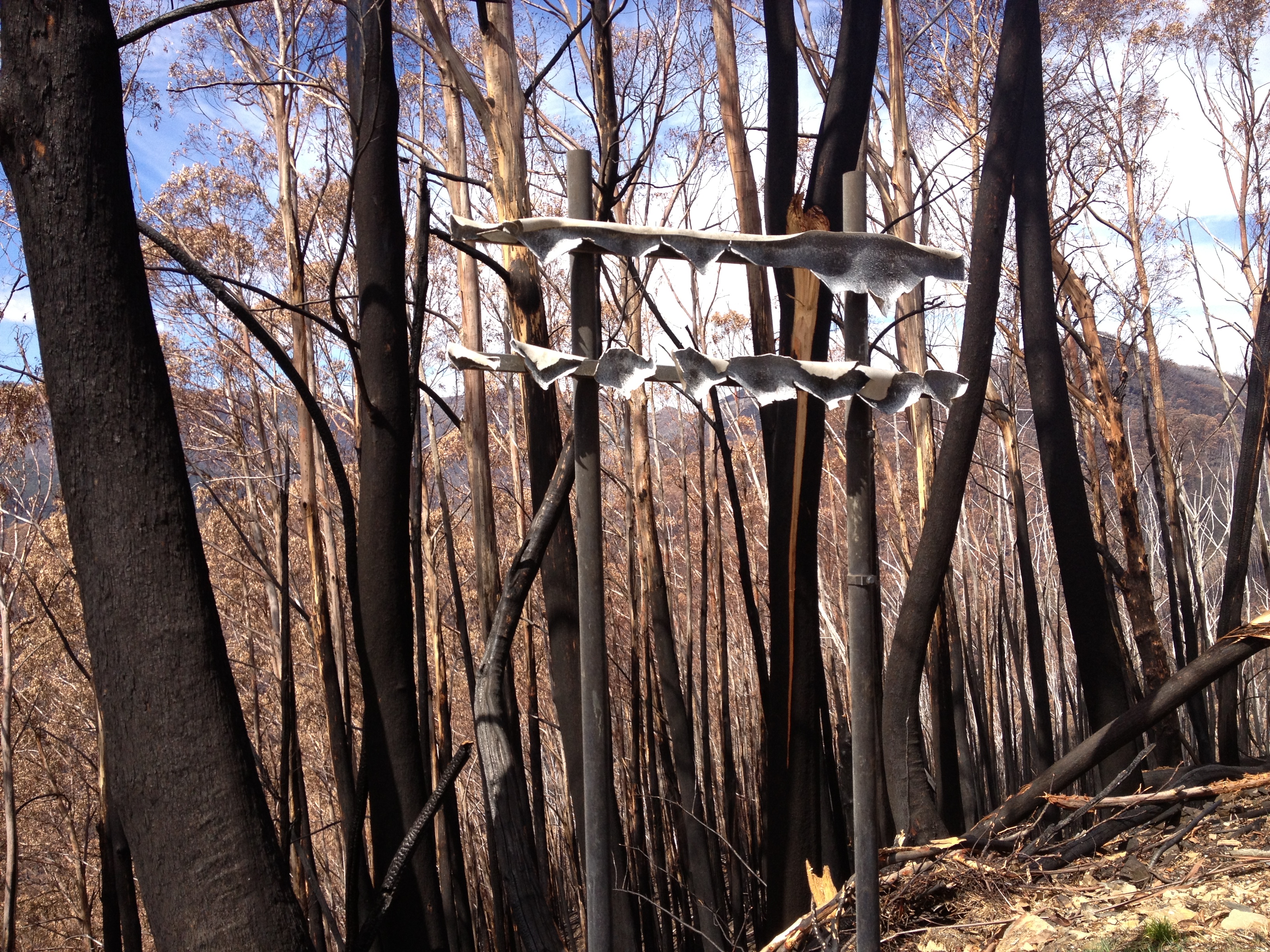
The 2013 state of the environment report, produced by the Commissioner for Environmental Sustainability, has just been released. Apart from providing a fascinating, and worrying, snapshot of the state of the Victorian environment, it offers some significant insights to how we respond to fire risk.
The Age reports that
“Across the 30 indicators the report uses to assess Victoria’s environment – across climate, biodiversity, land, inland waters, coasts and human settlements – 16 were considered in poor health, six fair and just one good.
When it comes to fire and fuel reduction:
“The report … says the state government should withdraw support for a recommendation by the 2009 Bushfire Royal Commission to burn five per cent of public land each year to prevent bushfires. The report says this target could mean some areas will be exposed to fire frequency above its tolerance, impacting biodiversity.
In the section on fire, the report says:
“altered burning regimes, which we expect to be driven by climate change, have the potential to severely impact biodiversity and ecosystem function and services”.
(page 10, chapter 3)
The Age report continues:
“Professor Auty recommends instead a new approach be developed focusing on protecting key assets from bushfires for both public and private land, with the results reported to demonstrate the risk reduction achieved. She also notes the government is yet to report on the biodiversity impacts of planned burns, a recommendation of the Royal Commission”.
Many ecologists have criticised the 5% burn target because of the political imperative for land managers to burn to meet their quotas, sometimes resulting in burns in less than optimum conditions (with the risk of fires escaping), burns in remote areas where asset protection is meaningless, and burns in areas regardless of the ecological impacts of the operation.
Let’s hope the report has some influence on how the state government manages fire risk, starting the shift from a simple ‘hectares target’ approach into a more nuanced and ecologically targeted approach which will protect human assets.
The full reports are available here.
Some comments received on this post:
MD:
From my observations in some areas that I am familiar with, and that have been burned for fuel reduction, you can end up with more fuel after the burn. Loads of fine fuels quickly return to pre-burn levels but the fire and heat kills a lot of the understory leaving a lot of coarser ‘ladder’ fuel that previously wasn’t there. The fuel reduction dogma cart is before the horse.
—
There’s no doubt that fire has been instrumental in shaping the Australian landscape but it’s more nuanced than ‘fire = good’, ‘no fire = bad’. If, for example, industrial logging and fuel reduction regimes remove or disturb forests at higher elevations, wet forests, rainforests and riparian and other communities that by their physical nature act to limit and mitigate fire spread across wide geographic areas, one potential result is fire regimes that burn over larger areas at hotter temperatures. That will create natural selection processes that favor fire respondent species and have a homogenising effect across previously diverse ecosystems. The potential for negative feedback loops is evident. Indiscriminately napalming vast tracts of forest from helicopters with a budget constrained skeleton crew operating on the fringes is possibly not the best approach to implementing a scientifically and ecologically informed fire regime.
—
I would also add there’s no point point in burning remote areas to reach arbitrary fuel reduction targets when the real problem is at the urban interface where populations and planning laws keep pushing into forested areas. As city fringes become more urbanised and “safe”, the growing population means there are always people pushing out into high risk areas. In most cases, these sites will never be defendable on extreme days no matter how much you burn or how many dollars they charge for the fire levy.





Recent Comments