As spring bears down on us, I know lots of people are off on last minute missions to the hills before its all over. Am off soon to Mt Stirling to see whats on offer in Stanley Bowl. It reminded me of this nice little story from my friend Andrew from last spring.
“Below, one last drop before the long summer and dusty roads and work and endless heat, waiting for those cold fronts to push through off the southern ocean. Just before I drop, I feel on the cusp of height and gravity, a small, fleeting moment of grace. I wait a minute more, weightless and happy and alone and yet in company. The whole world below beckons, and I treasure the thought of those few minutes of turns and no time for any other thoughts, and then push off into that space and that moment. One last time”.
The following is an excert from a longer article written by Gus Hearl and Peter Southwell-Kealy.
Etheridge Ridge, Snowy Mountains
On Saturday 2 July, 2011 the cross country skiing community was devastated to learn of the death of Ross Martin in a cycling accident. Anybody who came into contact with Ross would have found him to be at times, a charming, and at other times, a challenging companion. He was, however, always interesting and always happy to share his opinions with whoever was prepared to listen.
He was, for many people, the embodiment of cross country skiing in this country. Indeed, Ross was such a larger-than-life character that, even though his on snow feats have been surpassed by many skiers, his standing as one of the great cross country skiers produced by this country remains undiminished. If anyone was a legend and an elder statesman in cross-country skiing in Australia, it was Ross.
Ross’ uncle, the late Bruce Haslingden, competed in the 1952 Oslo Winter Olympics and seems to have been the catalyst for Ross’ interest in cross country skiing. Ross worked for Bruce as a jackaroo for a while after leaving school and, through Bruce, established a lifelong association with both Kosciusko Alpine Club and Cooma Ski Club. He is rightly recognised as a legend of both those esteemed organisations and the active members of each of those clubs could dine out for years to come on Ross Martin stories (some of which are actually true).
Ross joined KAC as a junior member in 1956 and also became a member of Cooma Ski Club at about the same time. He had skied in cross-country races every year since 1961. It was his idea to start the KAC Martini Cross Cross-Country Classic in 1972 and he competed in every one of those races until 2010, one of only three people to achieve that milestone. In recent times he had also been actively involved in re-invigorating the Charlotte Pass Open
Ross was very fortunate in that he started his racing career in the early 1960’s, when the local sport was dominated by Robbie Kilpinnen from Finland, Kore Grunnsund from Norway and Otto Pinkas from Austria. They took Ross under their wings, as it were, and he learnt much from them: not just skiing technique but toughness, a love of the mountains and a sense that nothing which came easy in life was necessarily worthwhile. Often they would use the Jagungal Wilderness between Kiandra and Grey Mare Hut as their training ground, skiing in the winter and running in the summer.
The following comes from the Mountain Watch website:
So you might have heard that yesterday the resorts copped a little bit of a soaking? Don’t panic! It is completely normal! Here at Mountainwatch we consulted our resident meteorology sensei “The Grasshopper” for a few words about the weather of the last few days.
“It’s a real shame to see all of that beautiful early season snow washed away, but unfortunately rain like we’ve just witnessed was always a strong possibility,” the Grasshopper said.
The weather pattern of the last few weeks has been a strong indicator of a great season ahead. The typical pattern in early to mid May in the last few seasons has seen the mid latitude band of high pressure systems become well established over SA, pushing a lot of the cold moist weather south of the continent. Luckily this year these ‘blocking highs’ haven’t become properly established, letting the cold fronts push north and bringing with them cold moist winds.
Seems the wheels have fallen off the 'sustainability' bus
With winter almost in view, the resorts are announcing their highlights and new activities for 2011.
In Victoria, there are the usual snow making investment announcements and continued diversification of activities. At Falls Creek, the final stage of the Slalom Plaza redevelopment has been opened. Apparently Falls also has new aerial walkways, which take pedestrians through the village via a network of elevated stairways. At Hotham, in contrast, the main new announcement is some extra investment in snow making.
Mt Buller has put another $1 million into new snow guns and the snow grooming fleet.
However, on the environment front, I doubt I have ever seen such an un-inspiring effort.
In a rather bizarre move, some reports say that Buller now has a heated walkway from the Village Square up to the Ski and Snowboard School and the Buller Kids Centre. This would be great if Buller was pitching itself as a nudist colony, but most of us wear boots in the snow, and it seems like they must have money (and carbon) to burn if they think using energy to heat an outdoor pathway is a good idea.
Hotham is pushing air travel to get to the snow. Falls and Hotham continue to push the gas guzzling obscenity that is the 6 minute heli link ride so you can ski two mountains. Great for people with no values but a healthy credit card limit. Hotham runs kids snowmobile operations. Mention of environmental initiatives seems to have disappeared almost completely from resort promotional material in 2011 (for instance, there is a one paragraph mention of environmental practise in this years 50 page booklet from Hotham).
Meanwhile, Falls has announced that 10 ‘brand new luxury Snowmobiles’ have been added to the tours fleet, allowing guests to ride or pillion on their own snowmobile into the ‘pristine backcountry’ of Falls Creek.
Not content with imposing their operations on ‘pristine’ areas within the resort boundary with last years tours run by Steve Lee, they appear to be wanting to increase their noise and carbon footprint with these new skidoos.
On the positive side, Falls has made access to their many groomed cross country trails free. Perhaps encouraging more people to get away from the resort will balance out some of the increased carbon footprint that comes with putting a bunch of new snowmobiles into the backcountry.
Lake Mountain has substantial new building infrastructure and snow making and needs support as it recovers from the devastating fires of 2009. Baw Baw stands out amongst the Victorian resorts because it continues to focus on its ‘green’ image.
Just a few years ago, environmental initiatives were reasonably prominent in a number of the main resorts. From actively spruiking the Keep Winter Cool behaviour change program to buying green power to run some of their tows, resorts seemed serious about reducing their ecological footprint. Sadly, that all seems to have evaporated this year. Rather than acting decisively to reduce their greenhouse footprint, most have gone all out to re-badge themselves as ‘year round’ resorts. That’s where the money has gone, into mountain bike trails and many out of season festivals and events. All of that is great, and a common sense way of stretching use of existing infrastructure. But the loss of responsible activity and leadership by resort management on the environmental front is deeply disappointing.
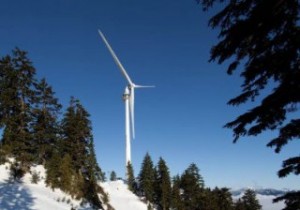
A Leitwind turbine at Grouse Mountain, British Columbia. Image: New West snow blog.
This article, by Kristen Lummis writing on the New West snow blog, has a number of salient points for people interested in local renewable energy. Unlike in Australia, a growing number of resorts in North America and elsewhere are moving down the path of producing their own energy to run their operations. Many of them are using turbines. And the turbines are proving to be tourist draw cards.
Maybe we could start thinking outside the box when it comes to reducing the environmental footprint of our resorts while also driving greater decentralisation of energy supply? Having a turbine in the background is a good reminder that the energy running the lifts and buildings (and possibly making snow) has to come from somewhere, so it’s better if its environmentally benign.
We will also be showing the festival at Dinner Plain in August. Stay tuned for details.
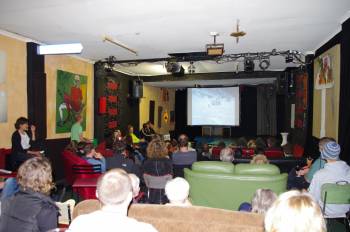
Showing in Melbourne, April 2011
Many thanks to everyone who showed up. We will need a bigger venue next time ...
The Winter Wildlands Alliance created the Backcountry Film Festival in 2005 to help grassroots and professional filmmakers to show audiences their love of the winter outdoors. Since then, the annual festival has been shown in more than 30 towns and cities, and raised thousands of dollars to help efforts to preserve our winter environment.
The 2011 film festival is showing in Australia.
This tuesday, April 12
Films start at 8 pm. Please feel free to arrive earlier to grab a drink.
At 303 (303 High street, Northcote, Melbourne), tram stop #32 on the #86 tram. Its just next door to the Northcote Social Club.
Protect Our Winters is the environmental centre point of the winter sports community, united towards a common goal of reducing climate change’s effects on our sport and local mountain communities.
We believe that to really effect things, consumer behaviour needs to change and that the power of an actively participating and united community can have a direct influence on climate change, now and for generations behind us.
This year’s festival features:
Best of the Festival: Teton Gravity Research’s festival cut of “Deeper” follows legendary snowboarder Jeremy Jones and other top riders as they forsake helicopters, snowmobiles and lifts to venture deep into untouched terrain under their own power.
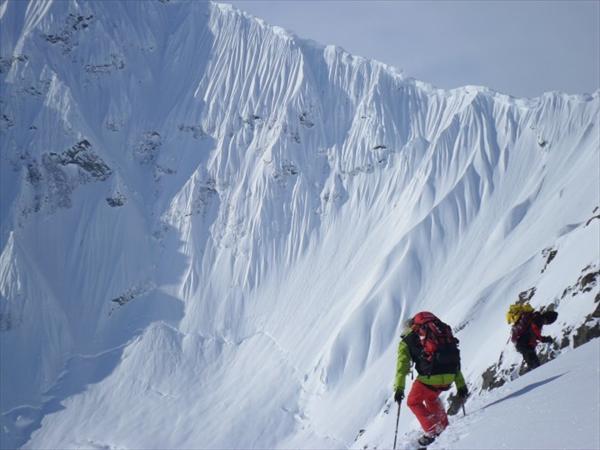
Best Short Film: “Desert River” from Sweetgrass Productions, is a beautiful ski adventure into Alaska.
Best Environmental Film: “Whitebark Warrior” from TreeFight and Snaz Media, chronicles the decline of thousand-year old whitebark pines due to climate change and efforts underway to save these iconic high alpine trees.
Australia has any number of well known sports people. What sometimes surprises me is how few prominent skiers/ boarders – that is people connected with our mountains – actually speak out on environmental issues. This example from the excellent Wend magazine profiles extreme skier from the USA, Alison Gannett, and her advocacy work on climate change.
There are plenty of people out there talking about climate change. But how many are actually doing something about it? Even those of us who spend a lot of time outdoors can be guilty of contributing to the destruction of the natural environment we love. We fly in jets from place to place for the sake of adventure. And many of us are still driving low gas mileage, carbon emitting SUVs. Our active lifestyles can really hurt the planet. So that’s why we can all take a few lessons from professional skier and environmental advocate Alison Gannett.
“I went to school for climate change and majored in education for environmental issues. And then I went to school for solar design for alternative home building,” she said. “At the same time, I had a professional skiing career, doing crazy things like the X-Games and jumping off cliffs for a living.” While she had two careers running parallel to one another, Gannett suffered a devastating crash at the X-Games and because she was badly injured and unable to compete, several of her sponsors immediately dropped her. That got Gannett to thinking.
“I realized how shallow a lot of my ski industry sponsors were,” she said. “I decided, wouldn’t it be cool to partner with companies that have more at stake and care more about than just selling clothing?” Though many of the competitors and colleagues thought she was crazy for chasing the more lucrative sponsorship deals, Gannett changed her professional priorities to work instead with companies who share her environmentally conscious values. “I want to chase ethics,” she said. “I want to work with companies that have the same beliefs that I do.”
It turns out that there are plenty of sponsors out there willing to support Gannett’s mission to raise awareness for the ongoing crisis of climate change. Blending her interests in sustainable living and an active lifestyle, she’s proven to be a very effective spokesperson for both. “As an athlete getting older, I’d have to say that I have better sponsor relationships now than I ever did,” she said. “And now working with the Save Our Snow Foundation and working with schools, working with Congress, working with the White House I’m saving our snow, saving our planet and making the world a better place.”
Allison Gannett is the kind of adventure athlete that walks her talk. While still leading an exciting life as a professional skier, she’s making a big difference in educating the general public on the realities of climate change. And through her work at the Save Our Snow Foundation and on her own organic farm in Colorado, she’s showing us what we each can to do to slow it down.
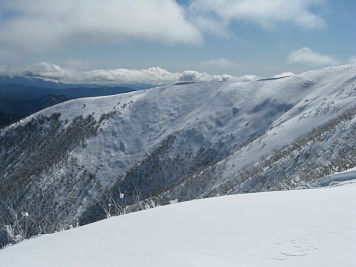
As spring kicks in and the snowmass melts, it feels like time to acknowledge what an incredible winter it has been: massive snow falls interspaced with rain and warmer weather and crazy storms. A number of resorts were isolated as treefall and landslips cut roadways. In August almost 2 metres of snow fell across the alps, and now (early October) there is still good skiable snow across much of the higher areas.
The following are some images from the Hotham/ Feathertop area in Victoria from June until now.
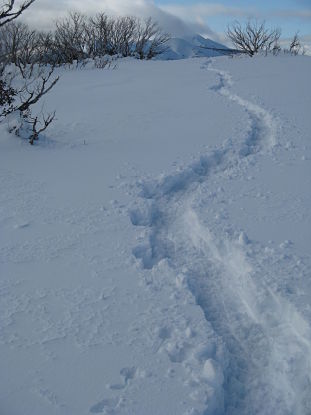
Near Mt McKay, heading to Pretty Valley, Bogong High Plains, VIC
If you’re an Australian skier or boarder, and unless you’ve been living under a log these past few months, you will know that ski legend Steve Lee has been running commercial backcountry ski tours out of Falls Creek resort this winter.
This is great. Getting people out of resorts and into the backcountry is to be supported and encouraged.
What is less great is the emphasis on the use of snowmobiles to get people out there. His tours are geared towards ‘strong’ intermediate skiers and boarders. So if people are fit enough to ski/ board hard terrain, then surely they are fit enough to get on some skis to actually get out there.
In my opinion, this ‘cheap grace’ approach to getting backcountry is a sad development in Victoria. Certainly, the tours are confined to the alpine resort area (even though this is ecologically part of the Bogong High Plains). However, they come with a high annoyance cost to people who are out there under their own steam. It is not clear what ecological assessment, if any, has been made of the tours – for instance, is there an impact on endangered species or vegetation? There is also a bigger picture here: there is the fact that these tours could be a precedent for future snowmobile based developments elsewhere in the alps.
Anyone who has skied backcountry in North America will know the many problems that come with rampant and often uncontrolled snowmobile use. While here in Australia recreational use of snowmobiles is supposedly controlled or banned (for instance in national parks), how often is this actually enforced? As one example, there is growing use within the Alpine national park in the area between Dinner Plain and Mt Hotham and around Dinner Plain village with apparently no intervention from land managers.
Snowmobiles are essential tools in resort management and search and rescue operations. However, the blanket endorsement of commercial use of snowmobiles in the backcountry in almost all Falls Creek promotional materials this winter shows that resorts ‘commitment’ to the environment as being shallow at best and probably a form of green wash.
We should be very cautious about the further introduction of a potentially destructive development in our alpine areas, which appears to have jumped all the approvals ‘hoops’ simply because the proponent of the development is an alpine ‘personality’.
Falls Creek Resort says that it is deeply concerned about good environmental management:
“We are extremely proud of Falls Creek’s reputation as an industry leader in the field of sustainable alpine tourism and development. Our environmental programs reduce our impact on the local environment and acknowledge the importance of maintaining a healthy world beyond our boundary”.
Further information on their approach to the environment is here.
If you have an opinion about the expansion of snowmobiles into the backcountry you may wish to let the resort management know about them.
fcrm@fallscreek.com.au
The US-based Mountain Riders Alliance has now gone global:
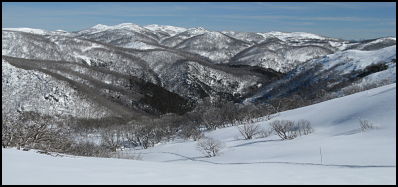
Bon Accord spur, VIC
“A new paradigm is emerging in ski area management: one that’s globally-based, rider-centric, environmentally sustainable, sensitive to local needs, and skier-and-snowboarder-owned
“Rising lift ticket costs, negative impacts on ski communities and the environment, and the desire to combat climate change have all led concerned skiers and snowboarders to form a global collaborative group, Mountain Rider’s Alliance (MRA).
“MRA is a movement of snow enthusiasts who are dedicated to changing the ways ski areas are run. MRA’s mission is to create rider-owned-and-operated ski areas that are rider-centric, environmentally sustainable and sensitive to local cultural, social and economic concerns”.
late August, snow buckets down day & night across the Alps
Its hard not to feel envious when you look at those photos from the late 19th century that were taken as the miners and loggers made their way up the deep valleys below the alpine peaks and built villages and new towns. Places like Harrietville, at the head of the Ovens River below Mt Feathertop, seem to have had regular dumps of snow through the winter months. Now, if we just get some snow flurries down that far it rates as an event.
Of course, Australian weather has always been famous for being erratic. And if you look at the snow pack records that chart winter snow depths over the past 3 decades you can see wild variety between the seasons.
Climate skeptics love to point to cold weather and hard winters as ‘proof’ that climate change is not real, but this just reveals more about their ignorance of how climate change is expected to work than proving any other point. Some climate campaigners prefer to use the word ‘climate chaos’ because this gives a better indication of what the science tells us is coming: ever more erractic and extreme weather events. In our part of the world, this will include drought, flood, fire, and extreme weather events like torrential rain.
This info is easy to find. It is not the stuff of hysterical greenies hiding in caves. It is from the mainstream of the climate science community. In a democracy we can think what we like. But having an opinion which runs counter to science doesn’t mean climate change is not happening. One of the things that strikes me – in a week where much of western and north eastern Victoria has been flooded, people evacuated, the road to Falls Creek was cut, and a landslip closed operations briefly at Hotham resort, is how quickly we can adapt to changed conditions and accept them as the ‘new’ normal behaviour of the weather. Just a week before that we had those wild snowfalls that blocked the Hotham Road for a day and a half and dumped almost a metre of powder across the alps. Then throw your mind back to July, and the gray rainy skies that brought miserable conditions and mediocre snow.
My point here is not to stir up fear, or to slate all this strange winter to climate change. Its just to remind ourselves that what we have experienced has not been an ‘ordinary’ winter. Sure, we need to grab the good winters when they do come along, and ski or board as hard as we can. We probably need to grumble and find other things to do in the winters that don’t happen. But we should never lose sight of the fact that all of whats happening is consistent with what climate science tells us is coming, unless we decide to do something serious as a global community to greatly reduce our greenhouse emissions.
And for me that’s reason enough to do what we can where can, to reduce our impact, and to get action at the community, corporate and government level.
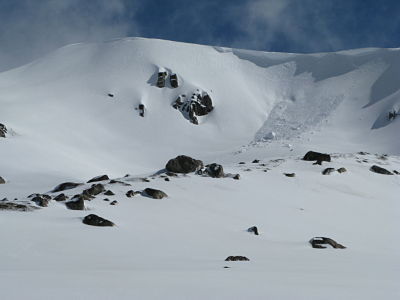
With the fantastic snowfalls of the past week, theres no shortage of great skiing and boarding options across the Alps.
But many of the backcountry destinations are equally fantastic. For people not experienced in backcountry trips (often remote, and sometimes requiring long access) a good ‘warm up’ option is to get out in the ‘side country’ – those areas just outside ski resorts with easy access.
This quick guide canvasses some of the options available close to Mount Hotham in Victoria. There are similar opportunities at almost every other resort in the country.
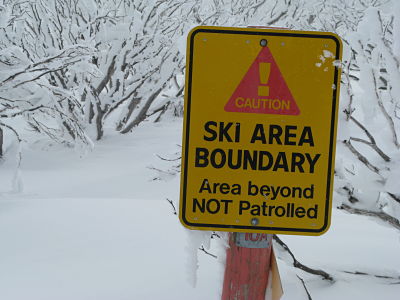
BE AWARE that there is some avalanche risk with a number of these slopes at present. If you’re not familiar with avalanche risk assessment, please don’t visit these areas.






Recent Comments