Search

Mountain Journal

Environment, news, culture from the Australian Alps

Tag

snow sports

Become a founding member of the Mountain Sports Collective

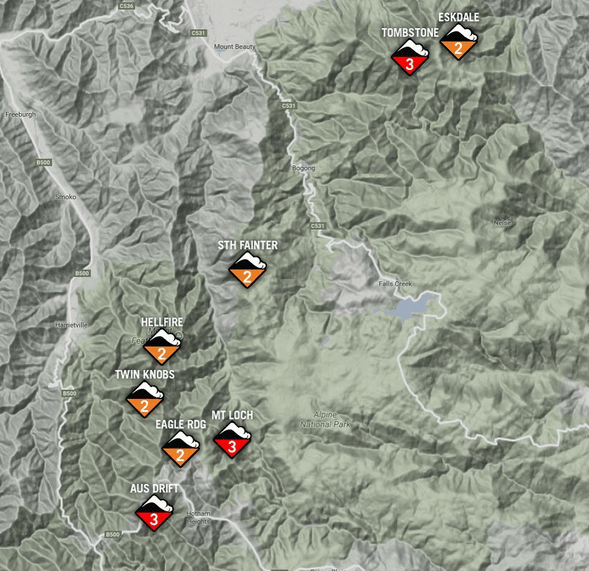
If you ski or ride in the backcountry, you’re probably already using the resources provided by Mountain Sports Collective (MSC). MSC was created by the amalgamation of the nation’s foremost alpine safety platforms Snowsafety.com.au and Snowsense.org. These sites offer an Alpine Travel Advisory, and issues information regarding alpine travel safety across all aspects of the prevailing conditions above snowline from 1 June – 31st October each year. Snowsafety and Snowsense have joined forces to create MSC not only with the goal of delivering a more streamlined and concise picture of the conditions in the mountains, in one single easy view, but we are now also a legal entity, established as a not-for-profit association.

MSC aims to be the voice for the human powered backcountry community in Australia. While there are similar organisations overseas (for instance the Winter Wildlands Alliance in the USA) there is no single voice for all forms of human powered winter backcountry adventurers here in Australia. There are a range of walking clubs, Nordic ski climbs, climbing organisations and so on. We feel that, with an ever growing number of people heading into the winter backcountry, the time is right for a group that can help co-ordinate and focus the voice of this diverse community.

Continue reading “Become a founding member of the Mountain Sports Collective”

Auden Schendler on climate change – skiers can make a difference

After a decade of inaction, the Australian snow industry is finally starting to engage meaningfully on the issue of climate change. With Perisher having been bought by the Vail Resorts group, it has been swept along in that companies efforts to achieve carbon neutrality for it’s operations by 2030. And Thredbo recently became the first Australian resort to formally join Protect Our Winters (POW) the activist group seeking to mobilise the snow sports community.

There is, of course, still plenty of room to move. Many resorts, like Mt Hotham, are still effectively in denial about climate change, opting for the ‘we’ll just invest more in snow making capacity’ option. But as the recent visit by POW founder Jeremy Jones showed, there is a significant interest in the snow community about climate change.

We are starting to see some great leadership from prominent skiers and riders like Nat Segal, who is a vocal advocate for climate action. The interview below comes from Powder magazine and features a conversation with Auden Schendler of the Aspen resort. Auden is often seen as a key global spokesperson on climate because of his work at putting Aspen on a sustainable footing. This reflection has some significant things to say about what is and what isn’t possible in the resorts and what is required if we are to take effective action to limit climate change.

Two salient points that stand out for me from this interview are:

“We have to acknowledge or understand as a starting point that to be sustainable has got to mean solving climate change.

On climate, if you’re not at risk politically or from public criticism, and if you don’t feel uncomfortable, if it doesn’t hurt, you’re probably not doing enough on climate”.

The take home message from Auden is that making your operations greener is not an end point. It’s part of the pathway to solving climate change. This is going to involve sustained and public advocacy for the adoption of policies which will tackle climate change in a meaningful way – ie, engagement in good old fashioned politics. As he eloquently puts it, it means advocating for ‘systemic change’.

He reminds us that the current option adopted by most resorts is simply not going to work:

‘You can’t adapt to where we’re headed … we’re headed toward four degrees Celsius’.

Continue reading “Auden Schendler on climate change – skiers can make a difference”

Blizzard of Oz 3.0?

Another mass of extremely cold air has hit the Alps, with snowfalls occurring to low levels, and the intense weather is expected to continue for much of the week. MountainWatch has declared it to be ‘the storm of the season’, even better than the ‘Blizzard of Oz’. Apart from lots of fresh, the current storm does bring blizzard conditions, the possibility of lightning in some areas, and the likelihood of increased avalanche risk on steeper slopes.

Continue reading “Blizzard of Oz 3.0?”

Australian snow pack in decline since 1957

Anyone who is paying attention to the state of our winters knows that they are getting more erratic. Often they start later (it’s a rare thing to ski on natural snow on opening weekend) and subject to more rain events, with big impacts on snow pack. While our climatic patterns go through natural wetter and drier cycles, climate science tells us that these patters will become more extreme, with less overall snow and shorter seasons.

Anecdotes and personal experience are one thing. But when did the snow pack actually start to decline?

While all resorts track snowfall, the benchmark of snowfall in Australia over time comes from Spencers Creek, at a site at 1,800 metres above sea level, in the Main Range of the Snowy Mountains. The following article comes from ABC Rural and gives a sense of the decades worth of data that is available from this site, and the process of getting the data. The measuring site was originally established to give the Snowy Hydro managers a sense of what water was trapped in the snow pack and hence how much water would be released in the spring. As skiers and riders, what it gives us is a long term summary of the trends in snowpack over the past six decades.

The take home message is that, overall, snowpack has been declining for decades and unabated climate change will make that worse. While the article does not drill into this issue in detail, previous analysis of this data by Terry Giesecke suggests that:

“There has been a downwards trend (in snow pack) from 1957 to 1989. It then goes up dramatically for about four years, before resuming a downwards path”. This research suggests that the increase in snow depth between 1990 and 1994 could have been due to global cooling which occurred as a result of major volcanic activity in the Philippines in 1991. Using data collected up until 2016, it also notes:

“There is evidence of further decline in the first 16 years of the 21st century.”

The full article is below.

Continue reading “Australian snow pack in decline since 1957”

Windy Corner becomes Falls Creek Cross Country

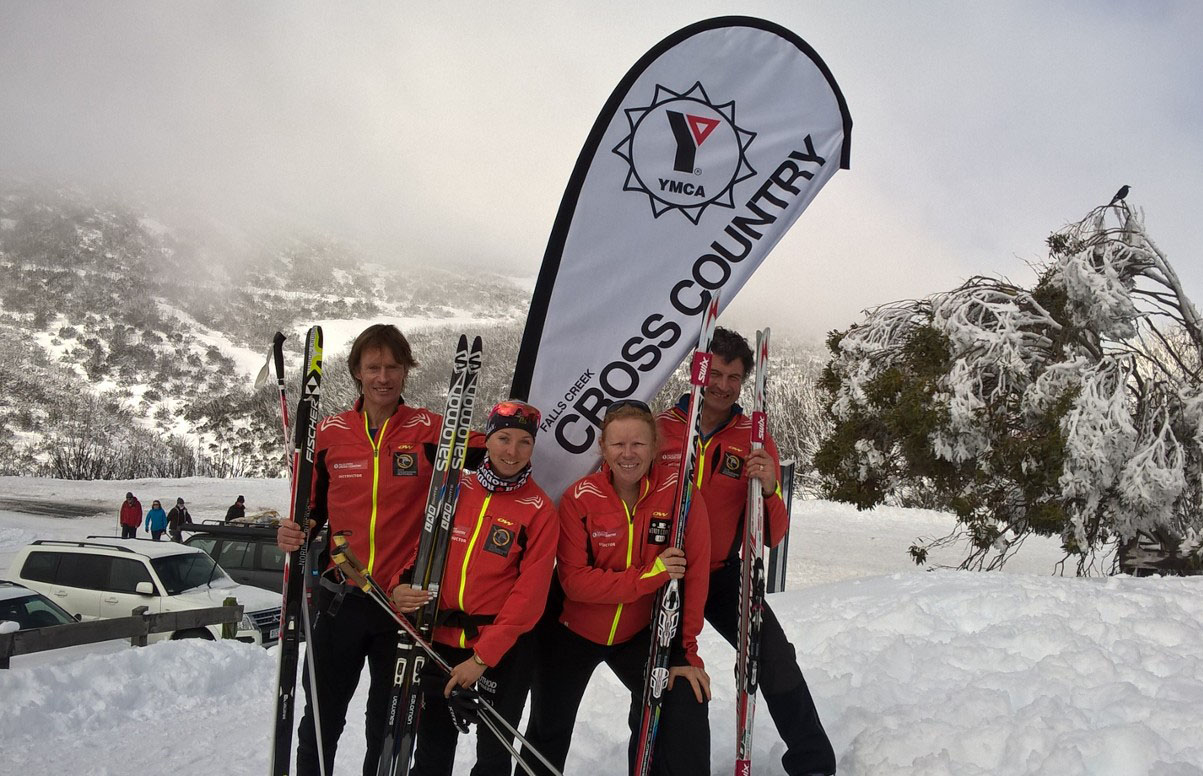
Many people will know the Windy Corner day shelter/ café/ ski hire shop above the top car park at Falls Creek. It is the ‘skiing arm’ of the YMCA operated Howmans Gap Alpine Centre, located just down the road, literally at the gateway of the resort. Both Howmans Gap and Windy Corner have undergone some major changes this season as part of an ambitious campaign to be more accessible to people, families and groups and to lift the profile of cross country skiing/ alpine recreation to people of all ages and ability levels. They are seeking to encourage a greater diversity of people to visit the resort, and also act as the base for Disabled Wintersport Australia. As part of this process the Windy Corner facility has been renamed as Falls Creek Cross Country.

This seems like a great initiative to broaden the appeal and accessibility of resorts. It seems to be working, with ski rental having increased by 300% this season. The following comes from Sandra Bucovaz.

Continue reading “Windy Corner becomes Falls Creek Cross Country”

Is this the big one?

Skiers and snowboarders are the eternal optimists. No matter how bad the snow, how miserable the rain, how strong the winds, there is always hope that it will get better when the next storm arrives. We’re aided in sustaining our hopeful addiction by snow forecasting. But like any relationship based on co-addiction, this has its ups and downs.

Continue reading “Is this the big one?”

Vail aims to become a ‘sustainable tourism destination’

Mountain Journal recently reported that the famous Colorado resort of Vail had announced its intention to ‘commit to zero net emissions (partly through use of renewable energy to run its operations), zero waste to landfill and zero net operating impact to forests and habitat by the year 2030’.

Vail is a town built around ski field development. While only about 5,500 people live there (supported by a large ‘down valley’ community in towns like Avon and Edwards who must commute to work) it hosts as many as 2.8 million visitors a year.

Aspen, located to the south west, is probably better known for its sustainability efforts, but Vail’s commitment is ambitious. The recent announcement on energy and waste came from Vail Resorts Inc, the company that runs the resort operations. There is also a commitment from the Town of Vail, based in the valley below the resort, to become North Americas first sustainable tourist destination certified through the Global Sustainable Tourism Council.

Continue reading “Vail aims to become a ‘sustainable tourism destination’”

Big slide on Mt Bogong

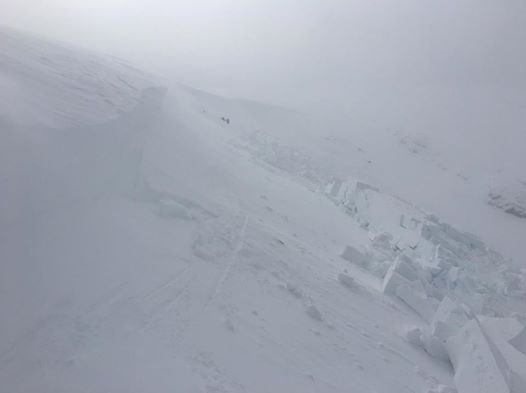
After a slow start to the winter, we’re getting some serious top up to the base in the backcountry. Whenever you get sun affected snow covered by fresh, there is a chance you will get the potential for avalanche conditions to form on any steeper slopes at higher altitudes. This week there were reports of a ‘monster avalanche’ on Mt Bogong. What makes this concerning is the fact that (as Snowsense puts it) ‘from observations at Hotham and Falls, we had no indicator that Bogong was ready to let rip’.

This highlights the need to check conditions both before you head off and while you’re out in the mountains. Luckily there is a fantastic website to help with this: brought to you by the Mountain Sports Collective.

Continue reading “Big slide on Mt Bogong”

The ski industry and climate change. The denial continues

We’re now into early July and the only skiable ski in any of the resorts is there because of snow making. And while everyone in the ski industry knows what’s happening when it comes to climate change, they continue happily on the pathway of ‘diversification’, expanding activities in the ‘green season’ and investment in snow making equipment, to the exclusion of any meaningful action on climate change.

I always struggle to understand this. Surely any smart business can ‘walk and chew gum’ at the same time – in this case that would mean diversifying your year-round tourism ‘offerings’ while investing in snow making while also walking the talk on climate. Its also called mitigation, it means doing things like shifting your operations to using renewable energy instead of coal. What is astonishing is that there is so little meaningful action by Australian resorts.

Continue reading “The ski industry and climate change. The denial continues”

A perspective on the future of Australian snow

Dave Bain

This piece follows on from a previous article I wrote in 2012 for Protect Our Winters (POW) (Bain 2012). It takes a quick look at what the observed trends have been in Australian snowfalls over the past few decades. Regardless of people’s stance on climate change, these observations are a hard look at the likely future of Australia’s alpine environment, and our winter enjoyment.

Continue reading “A perspective on the future of Australian snow”

Avalanche AST1 & CRS Courses at Mt Hotham

With the continued interest in backcountry terrain in Australia, and a growing number of Australian skiers and riders heading out of bounds in NZ and the northern hemisphere, there are more opportunities to learn avalanche skills here.

Mountain Journal has previously advertised avalanche courses that are being held in NSW and Victoria this year by Main Range BackCountry.

Now Survive First Aid has teamed up with Dave Enright from Evergreen Outdoor Centre Hakuba to provide Avalanche AST1 & CRS Courses at Mt Hotham this winter.

Continue reading “Avalanche AST1 & CRS Courses at Mt Hotham”

Action now means more snow later

We all know that winter is in trouble. Climate change is already impacting on snowfalls and winters are becoming more erratic.

A recent report commissioned by the Alpine Resorts Co-ordinating Committee (ARCC) confirmed, yet again, the grim prognosis facing the snow industry and snow lovers if we don’t take serious action to radically reduce our contribution to global warming.

Continue reading “Action now means more snow later”

Blog at WordPress.com.

Up ↑